
Spaghetti Pomodoro (from 'the Bear')
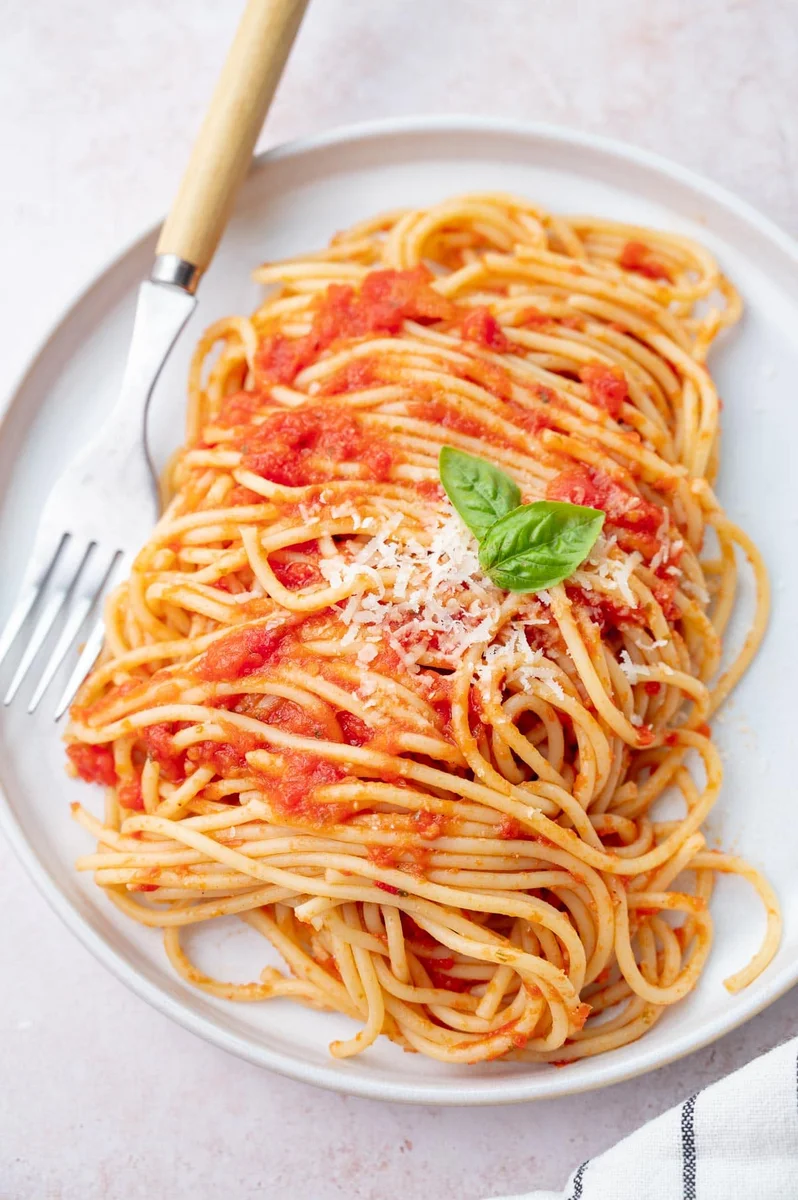
This spaghetti pomodoro pairs pasta with a slow-simmered tomato sauce enriched with garlic, basil and butter. Inspired by The Bear, it makes a flavourful family meal in about 30 minutes.
Ingredients
- 60 ml (¼ cup)olive oil
- A pinch, or to tastered pepper flakes
- 5 clovesgarlic
- 1 mediumonion
- 2 tablespoonsbutter
- A handfulbasil leaves
- 1 can, 800 ml (28 oz)crushed tomatoes or whole San Marzano tomatoes
- 400 g (14 oz)uncooked spaghetti
- ½–1 teaspoon, optionalbrown sugar
- To serveParmesan cheese
Instructions
- 1
Infuse the oil
Add the olive oil, peeled garlic cloves cut in half, basil leaves and stems, and red pepper flakes to a large pot. Warm over low heat until the basil wilts but does not crisp. Remove the basil to a medium bowl, then continue cooking until the garlic is lightly golden. Transfer the oil and garlic to the bowl and leave to cool slightly.
- 2
Brown the onion
Add the butter to the pot. Once it is hot and bubbling, add the peeled onion, cut in half, and cook until the onion and butter are lightly browned.
- 3
Simmer the tomatoes
Add the tomatoes and a small pinch of salt. Cover and cook over low heat for 20–25 minutes. If using whole tomatoes rather than crushed, mash them with a potato masher.
- 4
Blend the aromatics
While the sauce cooks, put the infused olive oil, red pepper flakes, garlic, basil leaves (discard the stems), and a small piece of onion from the pot into a food processor. Blend on low until smooth; do not use high speed, as it can make the olive oil bitter. Stir this mixture into the tomato sauce.
- 5
Cook the spaghetti
While the sauce cooks, boil the pasta until al dente, so it still has a bite. Slightly undercook it, as it will finish cooking when tossed with the sauce. Reserve some pasta cooking water.
- 6
Season and toss
When the sauce has finished cooking, discard the remaining onion. Season the sauce with salt, pepper and sugar. Toss with the cooked pasta and a small amount of reserved pasta water.
- 7
Add the Parmesan
Serve with a generous sprinkling of Parmesan cheese.
- 8
Enjoy
Enjoy the spaghetti while it is freshly tossed.
What is spaghetti pomodoro?
Spaghetti pomodoro is pasta served with a tomato-based sauce; pomodoro means tomato in Italian. This version takes its inspiration from The Bear and builds flavour by infusing oil with garlic, basil and chilli before adding the tomatoes.
The butter-browned onion gives the sauce another savoury layer, while blending some of the infused oil into it helps bring the aromatic ingredients together.
Nutrition and macros by portion
The nutrition label shows one serving as written: 623 calories, 0g protein, 0g carbs, 0g fat.
| Portion | Adjustment | kcal | Protein | Carbs | Fat |
|---|---|---|---|---|---|
| Lighter | Use less oil and butter | 436 kcal | 0g | 0g | 0g |
| This serving | As written | 623 kcal | 0g | 0g | 0g |
| Hungry | Add extra spaghetti | 935 kcal | 0g | 0g | 0g |
The spaghetti supplies most of the carbohydrates, while olive oil, butter and Parmesan contribute much of the fat. The tomatoes and Parmesan add some protein, though this is primarily a pasta-based dish; serve it with vegetables and a protein-rich side such as beans to make the plate more substantial.
The flavour-building ingredients
Infused oil: Gently warming the garlic, basil and red pepper flakes releases their flavour into the olive oil. Keep the heat low so the basil wilts rather than crisps and the garlic turns golden without burning.
Tomatoes and butter: Crushed tomatoes make a smoother sauce, while whole tomatoes can be mashed as they cook. Butter and browned onion add richness and sweetness to balance the tomato.
Take care when blending
Low speed: Blend the reserved oil and aromatics only until smooth, using the food processor on low. The method cautions against high speed because it can make the olive oil bitter.
Basil stems: Add the leaves to the processor but discard the stems, as directed. Blend in a small piece of the cooked onion for a more cohesive mixture.
Look for these texture cues
Garlic: It should be lightly golden before you transfer it from the pot; take care not to let it darken too far. The basil should be wilted, not crisp.
Pasta: Cook it until it still has a bite, then let it finish in the sauce. A splash of reserved pasta water helps the sauce coat the strands.
Keep the timing in view
Sauce: Simmer the covered tomatoes over low heat for 20–25 minutes. Prepare the infused oil mixture and cook the pasta while the sauce simmers.
Finishing: Toss the pasta with the sauce shortly before serving so it can absorb some flavour without becoming overcooked. Add pasta water a little at a time.
What to serve alongside
A green salad or simply dressed vegetables make a fresh contrast to the rich tomato sauce. Crusty bread can help scoop up any sauce left on the plate.
Finish each serving with Parmesan, as in the recipe, and bring extra to the table for anyone who would like more.
Recipe notes & tips
- Keep the oil over low heat while infusing it so the garlic and basil do not burn.
- Remove the basil once it has wilted, then let the garlic continue until lightly golden.
- Use a potato masher to break down whole tomatoes during their simmer.
- Reserve pasta water before draining, as it helps the sauce cling to the spaghetti.
- Undercook the pasta slightly so it can finish in the sauce.
Variations
- Make it milder: Use fewer red pepper flakes or leave them out.
- Choose whole tomatoes: Mash them with a potato masher as they simmer.
- Add more basil: Finish each serving with a few fresh basil leaves.
- Adjust the sweetness: Start with ½ teaspoon brown sugar and add more only if needed.
- Serve it cheeseless: Leave off the Parmesan for a dairy-free serving.
Common mistakes to avoid
- Burning the garlic: Keep the heat low and remove it once it is lightly golden.
- Crisping the basil: Take it out of the oil as soon as it wilts.
- Blending on high: Use low speed to avoid making the olive oil bitter.
- Overcooking the pasta: Stop when it is al dente so it can finish in the sauce.
- Adding too much pasta water: Toss in a small amount at a time until the sauce coats the pasta.
How to store
Refrigerate leftover pasta and sauce in an airtight container for up to 3 days. Reheat gently in a pan or microwave, adding a splash of water if the sauce has thickened; add fresh Parmesan when serving.
Frequently asked questions
Can I use whole tomatoes instead of crushed tomatoes?
Yes. Use the whole San Marzano tomatoes and mash them with a potato masher while the sauce simmers.
How do I know when the spaghetti is al dente?
It should be cooked through but still have a slight bite. Slightly undercook it because it will finish cooking when tossed with the sauce.
Can I leave out the brown sugar?
Yes. It is optional, so you can season the sauce without it or add a small amount to taste.
Why should I reserve pasta water?
A small amount helps the sauce coat the spaghetti. Add it gradually when tossing so the sauce does not become too loose.
Can I make the sauce ahead?
You can prepare the tomato sauce ahead and refrigerate it in an airtight container for up to 3 days. Reheat it gently, then cook and toss the pasta just before serving.
Cook it from the original
This recipe comes from everyday-delicious.com. Their page has the author’s own photos, notes and tips — the best place to cook it from.
Open the recipe on everyday-delicious.com