
White Tapioca Tarts with Coconut Topping 椰丝白木薯
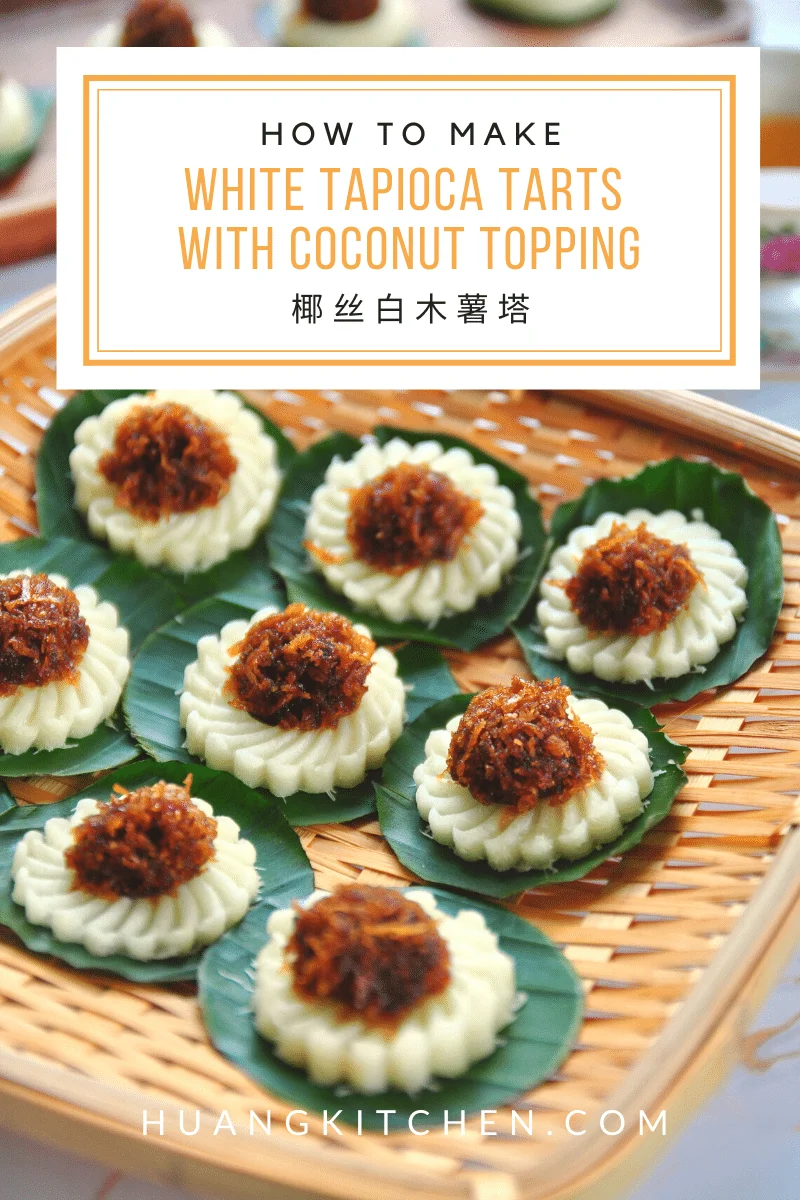
These Nyonya kuih are small, soft tapioca tarts topped with sweet coconut cooked in palm sugar and pandan. They make a distinctive afternoon snack or a sweet finish to a Malaysian-inspired meal.
Ingredients
- 100 gpalm sugar (chopped; coconut sugar)
- 1 tspsugar
- 4 tbspwater
- 2pandan leaves, knotted
- 1/2grated coconut (white part)
- 1/4 tspsalt
- 1 tspcornflour
- 600 gwhite tapioca
- 80 gsugar
- 1/2 tspsalt
- 60 ml (60–90 ml)santan (coconut milk)
- 2banana leaves, cut into 5 cm rounds
Instructions
- 1
Prepare the filling
Have the filling ingredients ready. Slice the palm sugar into small pieces and knot the pandan leaves.
- 2
Dissolve the sugar
Put the palm sugar, 4 tbsp water and pandan leaves in a saucepan or pot. Stir over the heat until the sugar has dissolved completely.
- 3
Cook the coconut
Put the grated white coconut in a bowl, add the cornflour and mix. Add this to the dissolved palm sugar and cook over low heat, stirring, until the coconut is cooked through, well combined and dry.
- 4
Cool the filling
Transfer the filling to a dish and leave it to cool. Use a teaspoon to shape it into small balls, then set them aside.
- 5
Prepare the tapioca
Peel, wash and cut the tapioca into chunks, removing the tough central fibre if possible. Put the pieces in a steaming tray.
- 6
Steam until soft
Bring the steamer water to a rolling boil. Steam the tapioca over high heat for 45 minutes, until very soft; check it with a fork.
- 7
Mix the dough
Take the tapioca out of the steamer and put it straight into the bowl of a stand mixer fitted with a paddle. Beat on low speed while adding the sugar and salt, then slowly pour in the santan to make a smooth, non-sticky dough.
- 8
Cut the leaves
Cut the banana leaves into 5 cm rounds to line the tarts.
- 9
Roll the dough
Lay a sheet of plastic on the work surface and place the dough on it. Divide the dough into two portions and work with one portion at a time, covering it with another sheet of plastic and pressing it down. Roll it to 0.5 cm thick.
- 10
Shape the tarts
Brush the tart cutter lightly with oil so the dough does not stick. Press it into the rolled dough to cut rounds, then line each round with a banana-leaf piece.
- 11
Add the topping
Repeat with the remaining dough, cutting rounds and lining them with banana leaves. Put a small dollop of filling in the centre of each tart.
- 12
Serve the tarts
Serve as a sweet dessert at a gathering or enjoy as a snack.
What are white tapioca tarts?
These tarts are a type of Nyonya kuih, the colourful and varied snack and dessert tradition associated with Peranakan communities in Malaysia and elsewhere in Southeast Asia. Their base is made from local tapioca, with a sweet coconut topping.
This version pairs a plain, gently chewy tapioca dough with coconut cooked in palm sugar and pandan. Banana-leaf rounds provide a traditional lining for each small tart.
Nutrition and macros by portion
The nutrition label shows one serving as written: 65 calories, 0g protein, 15g carbs, 2g fat.
| Portion | Adjustment | kcal | Protein | Carbs | Fat |
|---|---|---|---|---|---|
| Lighter | Smaller tarts, less topping | 46 kcal | 0g | 10g | 1g |
| This serving | As written | 65 kcal | 0g | 15g | 2g |
| Hungry | Larger portion | 98 kcal | 1g | 22g | 2g |
The tapioca and added sugars provide most of the carbohydrates, while the grated coconut supplies most of the fat; the recipe contains little protein. Pair a tart or two with unsweetened tea and a protein-rich snack or meal component if you want a more balanced plate.
The coconut filling
Palm sugar: Chopping it into small pieces helps it dissolve evenly in the water. Cook it with the knotted pandan leaves to infuse the syrup before adding the coconut.
Coconut: Mix the cornflour through the grated coconut before combining it with the syrup. Stir over low heat until the mixture looks dry and holds together, then cool it before shaping the filling.
Getting the tapioca tender
Preparation: Peel and cut the tapioca into chunks, and remove the central hard fibre where possible. The method calls for steaming over high heat for 45 minutes, with a fork test to check that the pieces are very soft.
Timing: The supplied recipe lists a total time of 40 minutes, but its steaming instruction alone specifies 45 minutes. Allow for the stated steaming time as well as the other preparation and shaping tasks.
Making a smooth dough
Hot tapioca: Transfer it straight from the steamer to the mixer and beat while it is still hot. Add the sugar and salt, then pour in the santan gradually rather than all at once.
Texture: Stop when the dough is smooth and no longer sticky. The recipe gives 60 ml of santan, with a range of 60–90 ml; add slowly and use only what is needed to reach the stated texture.
Rolling and cutting
Plastic sheets: Roll the dough between sheets to help keep it from sticking to the worktop and rolling pin. Work with one of the two portions at a time and aim for an even 0.5 cm thickness.
Cutter: Brush the tart cutter with a little oil before cutting. Press cleanly through the dough, then place each round on a 5 cm banana-leaf piece.
Serving the tarts
Filling: Add a small dollop of cooled coconut filling to the centre of each round. Keeping the topping in the centre leaves the tapioca base visible around it.
Pairing: Serve them with unsweetened tea or coffee as an afternoon snack. They also work as a small dessert after a meal with savoury dishes.
Recipe notes & tips
- Chop the palm sugar finely so it dissolves more readily.
- Let the coconut filling cool before shaping it into balls.
- Remove the tapioca's tough central fibre when you can.
- Check the steamed tapioca with a fork rather than relying on the timer alone.
- Pour the santan into the hot tapioca gradually so you can stop when the dough is smooth and non-sticky.
- Oil the tart cutter lightly before each round if the dough begins to cling.
Variations
- Pandan aroma: Keep the pandan leaves in the palm sugar syrup while it dissolves, then remove them before adding the coconut.
- Smaller bites: Cut smaller rounds and use a little less filling in each one.
- More coconut: Add a little extra grated coconut to the topping and cook it until the mixture is dry.
- Less sweet: Reduce the sugar in the dough to suit your taste.
- Leaf-free lining: Use small pieces of baking paper instead of banana leaves if they are unavailable.
Common mistakes to avoid
- Undercooked tapioca: Steam until very soft and check a piece with a fork before mixing.
- Lumpy syrup: Chop the palm sugar small and stir until it has fully dissolved.
- Wet filling: Keep stirring the coconut mixture over low heat until it is cooked through and dry.
- Sticky dough: Add the santan slowly and stop once the dough is smooth and non-sticky.
- Dough sticking to the cutter: Brush the cutter with a little oil before cutting the rounds.
- Warm filling: Allow it to cool before forming balls and placing it on the tarts.
How to store
Store the tarts in an airtight container in the refrigerator and eat within 2–3 days. Bring them to room temperature before serving, or warm briefly until just soft; avoid overheating, which can make the tapioca dough tougher.
Frequently asked questions
How do I know when the tapioca is ready?
The method says to steam it until very soft, about 45 minutes, then check with a fork. It should be tender enough to beat into a smooth dough.
How much santan should I use?
The ingredient list gives 60 ml, with a stated range of 60–90 ml. Add it gradually and stop when the dough is smooth and non-sticky.
Can I make the coconut filling ahead?
Yes. Cook it, let it cool, then cover and refrigerate it until you are ready to shape the tarts.
Do I have to use banana leaves?
They are the specified lining and give the tarts their traditional presentation. If you cannot find them, small pieces of baking paper can serve as a practical substitute.
Why does the listed total time seem shorter than the method?
The recipe lists 40 minutes total, but the method specifies 45 minutes of steaming alone. Plan for at least the stated steaming time, plus mixing and shaping.
Can I prepare the tarts in advance?
You can make them ahead and keep them covered in the refrigerator. Let them come closer to room temperature or warm them briefly before serving.
Cook it from the original
This recipe comes from huangkitchen.com. Their page has the author’s own photos, notes and tips — the best place to cook it from.
Open the recipe on huangkitchen.com