
Summer Berry Pavlova with Cherries
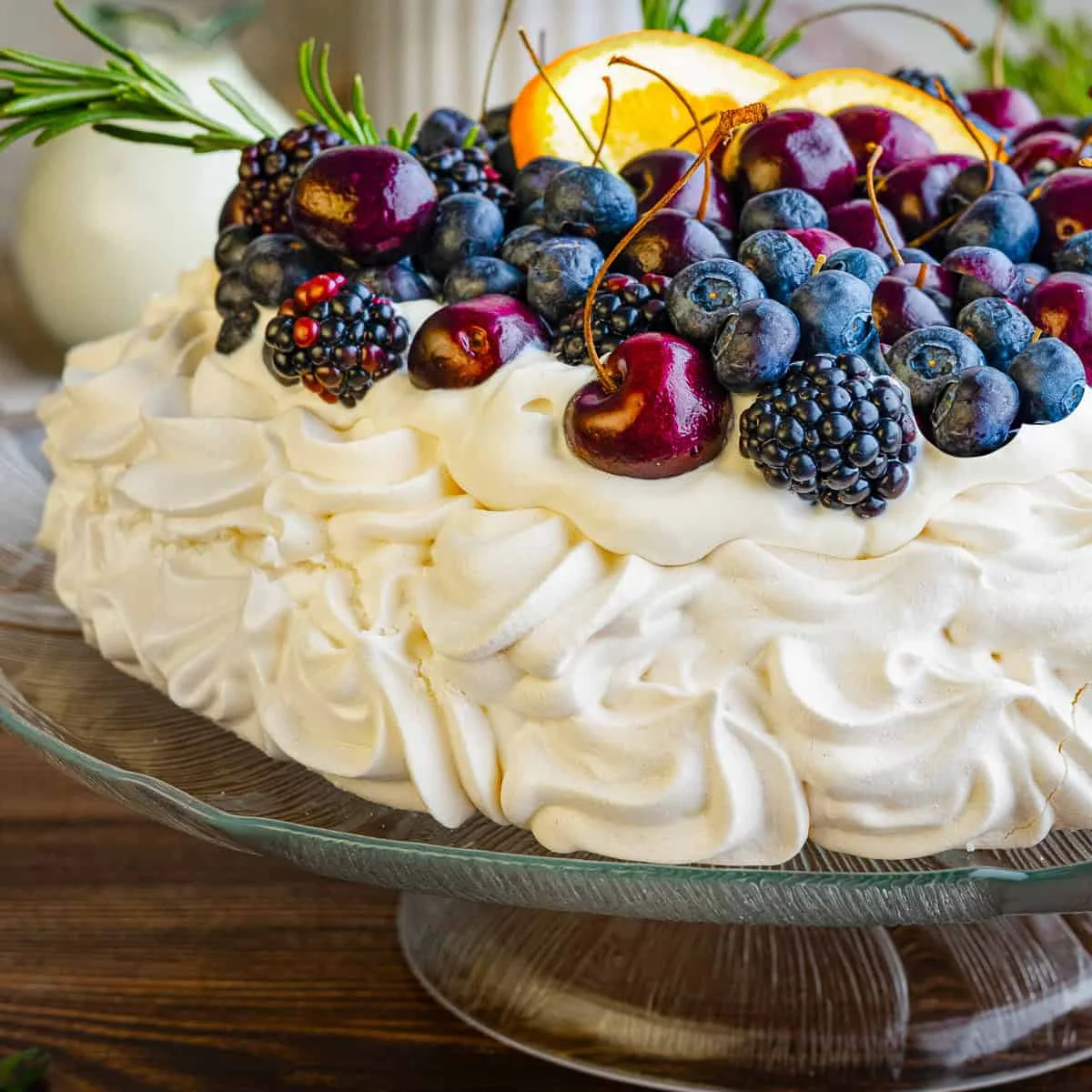
This Australian-style summer pavlova has a crisp meringue shell, a soft centre and a wreath of whipped cream, blueberries, blackberries and cherries. It is a make-ahead dessert designed to serve a crowd, with the fruit and cream added just before serving.
Ingredients
- 250 g (8 large)egg whites, at room temperature
- 500 g (2½ cups)granulated sugar, preferably superfine
- 2.5 ml (½ teaspoon)cream of tartar, or 5 ml (1 teaspoon) white vinegar or lemon juice
- 15 ml (1 tablespoon)cornflour
- 5 ml (1 teaspoon)vanilla extract
- 480 ml (2 cups)cold double cream or whipping cream
- 30 ml (3 tablespoons)icing sugar
- 5 ml (1 teaspoon)vanilla extract
- 225 g (1½ cups)fresh cherries, pitted and halved
- 150 g (1 cup)fresh blueberries
- 150 g (1 cup)fresh blackberries
Instructions
- 1
Prepare the tray
Line a large baking tray with baking parchment. Draw a 23 cm circle on it, then turn the paper over so the pencil marks are underneath. Wipe the mixer bowl and whisk with vinegar or lemon juice on kitchen paper to remove any grease.
- 2
Whisk the whites
Put the egg whites in the bowl of a stand mixer and beat on medium-high until foamy. Add the cream of tartar and continue whisking until soft peaks form.
- 3
Add the sugar
Add the sugar 1 tablespoon at a time, allowing a few seconds for each addition to dissolve. Once about a third has been added, pour in the rest in a slow, steady stream. Allow 8 to 10 minutes in total.
- 4
Whisk until glossy
Beat on high until the meringue is thick, glossy and holds stiff peaks. Rub a little between your fingers; if it feels gritty, keep beating until smooth.
- 5
Fold in flavourings
Sift the cornflour over the meringue, add the vanilla and fold gently with a spatula until evenly incorporated.
- 6
Shape the nest
Spoon a little over half the meringue onto the parchment and spread it inside the traced circle to make a nest. Smooth the centre so it remains low.
- 7
Pipe the rosettes
Spoon the remaining meringue into a piping bag fitted with a star nozzle. Pipe rosettes all the way around the nest, keeping them a similar size and making sure they touch.
- 8
Bake the pavlova
Heat the oven to 150°C. Put the pavlova in and immediately lower the temperature to 120°C. Bake for 1½ to 2 hours without opening the oven door.
- 9
Cool in the oven
The pavlova is ready when the shell is dry and pale and lifts cleanly from the parchment. Turn off the oven, prop the door open a few inches and leave the pavlova to cool inside for at least 3 hours or overnight.
- 10
Whip the cream
Beat the cold cream with the icing sugar and vanilla until it forms soft peaks.
- 11
Prepare the fruit
Pit and halve the cherries. Rinse the blueberries and blackberries, then pat them completely dry.
- 12
Top and serve
Just before serving, spoon the whipped cream into the pavlova's well and pile the fruit on top. Serve straight away.
What is pavlova?
Pavlova is a meringue dessert associated with Australia and New Zealand, with a crisp outside and a soft, marshmallow-like centre. This version is shaped as a nest, filled with whipped cream and finished with summer berries and cherries.
A slow bake and a long, gradual cooling help the shell dry without losing its tender middle. The piped rosettes make a decorative rim that also holds the topping in place.
Nutrition and macros by portion
The nutrition label shows one serving as written: 411 calories, 5g protein, 62g carbs, 18g fat.
| Portion | Adjustment | kcal | Protein | Carbs | Fat |
|---|---|---|---|---|---|
| Lighter | Smaller slice, more berries | 288 kcal | 4g | 43g | 13g |
| This serving | As written | 411 kcal | 5g | 62g | 18g |
| Hungry | Larger slice | 617 kcal | 8g | 93g | 27g |
Most of the carbohydrate comes from the sugar in the meringue, with additional carbohydrates from the fruit. The cream contributes most of the fat, while the egg whites provide much of the protein. For a more balanced plate, serve a smaller slice after a meal that includes vegetables and a protein source.
The meringue essentials
Clean equipment: Even a trace of grease can stop egg whites whipping properly, so wipe the bowl and whisk before starting. Room-temperature whites are easier to whip to volume.
Fine sugar: Superfine sugar dissolves more readily as it is added gradually. Check the finished meringue between your fingers; it should feel smooth rather than grainy.
Shape the nest carefully
Low centre: Spread the base within the traced circle, leaving a shallow well for the cream. A level, low centre makes the topping easier to arrange.
Joined rosettes: Pipe each rosette so it touches the next around the rim. Keeping them similar in size gives the edge a more even shape.
Bake and cool gently
Temperature change: Start at 150°C, then lower the oven straight away to 120°C as directed. Resist opening the door during baking, as the method relies on steady heat.
Slow cooling: Leave the pavlova in the switched-off oven for at least 3 hours or overnight, with the door propped open a few inches. This gives the shell time to cool gradually.
How to judge doneness
Dry shell: Look for a pale, dry exterior that lifts cleanly from the parchment. The centre is meant to remain soft, so the shell is a better guide than expecting the whole pavlova to feel firm.
Soft peaks: Whip the cream only until it holds soft peaks. That keeps it easy to spoon into the nest without making it stiff or grainy.
Finish just before serving
Dry fruit: Rinse the blueberries and blackberries, then pat them thoroughly dry. Excess water can make the cream and meringue damp.
Last-minute topping: Fill the pavlova with cream and fruit shortly before serving, then take it to the table promptly. This helps the shell stay crisp for longer.
Serving ideas
The fruit and cream make this pavlova a complete dessert, especially after a summer meal. Cut portions through the meringue rim and soft centre, taking care to include some of the topping with each slice.
If you are serving it alongside other desserts, offer smaller pieces; the crisp shell, soft middle and creamy topping make each portion rich and varied in texture.
Recipe notes & tips
- Separate the eggs carefully so no yolk gets into the whites.
- Add the sugar slowly to give it time to dissolve into the meringue.
- Use the traced circle as a guide, but turn the parchment pencil-side down before piping.
- Let the pavlova cool fully in the oven before moving it.
- Dry the berries well after rinsing them.
- Add the cream and fruit just before you plan to serve.
Variations
- Mixed berries: Swap some of the listed fruit for other fresh berries.
- Strawberry topping: Replace part of the fruit with hulled, sliced strawberries.
- Citrus note: Add finely grated lemon zest to the whipped cream.
- Vanilla bean: Use the seeds from a vanilla pod in place of one measure of extract.
- Smaller pavlovas: Shape individual nests instead, keeping an eye on them as they bake.
Common mistakes to avoid
- Greasy bowl: Wipe the bowl and whisk with vinegar or lemon juice before whipping the egg whites.
- Sugar added too quickly: Add it gradually so it has time to dissolve.
- Gritty meringue: Keep beating until a little rubbed between your fingers feels smooth.
- Oven door opened: Leave it shut during baking to avoid disturbing the steady heat.
- Wet fruit: Pat the berries completely dry before placing them on the cream.
- Topping added early: Wait until just before serving so the meringue does not soften as quickly.
How to store
Keep the cooled, untopped pavlova in an airtight container at room temperature and use it within 1 to 2 days; humidity can soften the shell. Store whipped cream and prepared fruit separately in the fridge, and assemble just before serving. Once topped, refrigerate leftovers and eat them as soon as possible, as the shell will soften.
Frequently asked questions
Can I make the pavlova base ahead?
Yes. Bake and cool it fully, then store the untopped base in an airtight container at room temperature. Add the cream and fruit just before serving.
Can I use vinegar instead of cream of tartar?
Yes. The ingredient list gives 1 teaspoon of white vinegar or lemon juice as an alternative to ½ teaspoon of cream of tartar.
Why is my meringue gritty?
The sugar may not have dissolved fully. Keep beating and check again by rubbing a small amount between your fingers.
How do I know when the pavlova is baked?
The shell should look dry and pale and lift cleanly from the parchment. The centre is intended to stay soft.
Can I use frozen berries?
Fresh fruit is best for this topping, as frozen berries can release liquid as they thaw. If you use them, thaw and drain them thoroughly, then pat them dry.
Why did my pavlova crack?
Some cracking can happen as meringue cools and does not prevent serving it. Cool it gradually in the oven as the method directs, and cover any cracks with cream and fruit.
Cook it from the original
This recipe comes from juliasalbum.com. Their page has the author’s own photos, notes and tips — the best place to cook it from.
Open the recipe on juliasalbum.com