
Classic French Lemon Tart (Tarte au Citron)
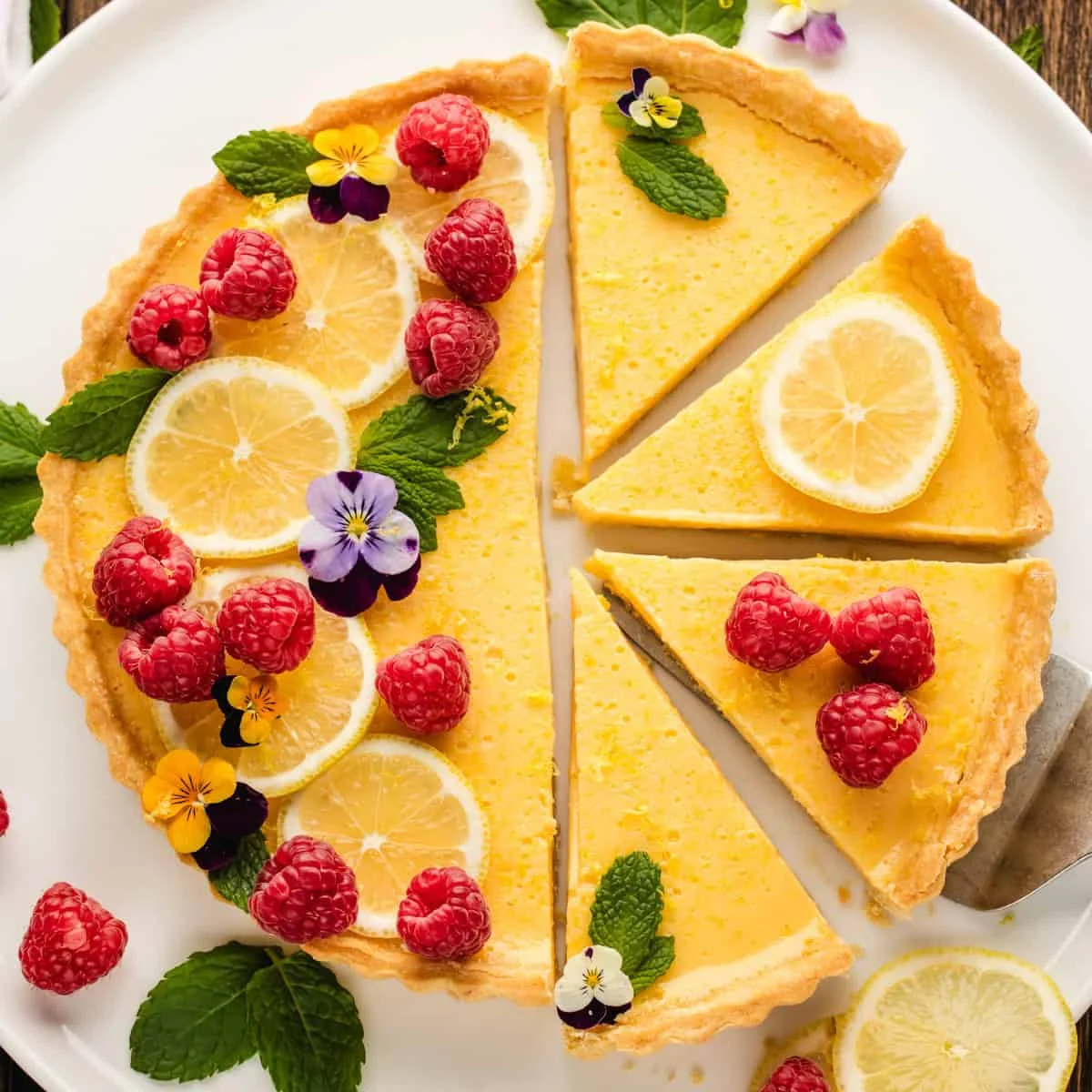
This French tarte au citron pairs a crisp, buttery shortcrust pastry with a smooth filling of fresh lemon juice, zest, eggs and cream. Bake it gently, then chill it well for clean slices and a bright, creamy finish.
Ingredients
- 155 g (1 1/4 cups)plain flour
- 113 g (1/2 cup), cold and cubedunsalted butter
- 30 g (1/4 cup)icing sugar
- 1 largeegg yolk
- 15 ml (1 tablespoon)cold water
- 5 largeeggs
- 250 g (1 1/4 cups)granulated sugar
- 160 ml (2/3 cup), about 4 to 5 lemonsfresh lemon juice
- zest of 4lemons
- 120 ml (1/2 cup)double cream
- to tastefresh lemon slices
- to tastefresh raspberries
- a few sprigsfresh mint
- to tastewhipped cream
- optional, to tasteedible flowers
Instructions
- 1
Make the pastry
Rub the cold cubed butter into the flour with a pastry cutter or your fingertips until it resembles fine crumbs. Stir in the icing sugar. Add the egg yolk and cold water, then cut them into the mixture with a knife until the dough just comes together. Briefly knead it in the bowl into a smooth ball, taking care not to overwork it. Flatten into a disc, wrap and chill for at least 30 minutes.
- 2
Line the tin
On a lightly floured surface, roll the chilled dough into a circle about 28 cm (11 inches) across. Drape it into a 23 cm (9-inch) tart tin and ease it over the base and up the sides. Press it into the corners, leave a slight overhang and trim that with a sharp knife. Refrigerate the lined pastry case for 20 minutes to firm up.
- 3
Blind bake pastry
Preheat the oven to 175°C (350°F). Prick the pastry base all over with a fork, line it with baking parchment and fill with pie weights. Bake for 15 minutes, then remove the weights and parchment and bake for another 10 to 12 minutes, until lightly golden and dry to the touch. If the edges have shrunk, gently press them back into place with the back of a spoon while the pastry is still warm.
- 4
Mix the filling
Whisk the eggs, sugar, lemon juice, lemon zest and double cream until smooth. Mix only until combined so you do not incorporate air. For the smoothest result, pass the filling through a fine-mesh sieve.
- 5
Lower the heat
Reduce the oven temperature to 165°C (325°F).
- 6
Fill and bake
Place the pastry case on the oven rack and carefully pour in the filling, stopping about 6 mm (1/4 inch) below the top edge of the crust. You may not need all the filling, depending on the depth of your tin. Bake for 25 to 30 minutes, until the edges are set and the centre still wobbles slightly when you gently shake the tin.
- 7
Cool and chill
Let the tart cool completely at room temperature, then refrigerate it for at least 2 hours. Chilling it overnight helps it slice especially neatly.
- 8
Decorate and serve
Just before serving, arrange lemon slices, raspberries, mint sprigs and, if using, edible flowers on top. Serve with whipped cream alongside.
What is a tarte au citron?
Tarte au citron is a French lemon tart built around a pastry case and a tangy, set lemon filling. Its appeal is the contrast between crisp pastry and a smooth, citrus-rich centre.
This version uses fresh juice and zest from four lemons, with cream to soften the filling. Baking it gently and chilling it thoroughly helps it set while keeping a delicate texture.
Nutrition and macros by portion
The nutrition label shows one serving as written: 344 calories, 6g protein, 46g carbs, 17g fat.
| Portion | Adjustment | kcal | Protein | Carbs | Fat |
|---|---|---|---|---|---|
| Lighter | Less whipped cream | 241 kcal | 4g | 32g | 12g |
| This serving | As written | 344 kcal | 6g | 46g | 17g |
| Hungry | Larger tart slice | 516 kcal | 9g | 69g | 26g |
The pastry and sugar provide most of the carbohydrates, while butter and cream contribute much of the fat. Eggs add protein, alongside some from the flour and cream. Pair a slice with fresh berries or another piece of fruit for a simple plate with more freshness.
A buttery pastry case
Cold butter: Rub it into the flour until the mixture looks like fine crumbs, then bring the dough together with the yolk and water. Stop mixing as soon as it forms a ball so the pastry stays tender.
Chilling: Rest the dough before rolling, then chill the lined tin again before baking. These rests firm the butter and make the pastry easier to handle.
Why blind baking matters
Weights first: Lining the pastry with parchment and pie weights helps hold its shape during the first bake. Removing them for the final 10 to 12 minutes lets the base dry and colour.
A warm repair: If the edges shrink a little, nudge them back with the back of a spoon while the pastry is warm. Handle the case gently to avoid cracks.
Keep the filling smooth
Gentle mixing: Whisk the eggs, sugar, lemon, zest and cream only until combined. Beating in lots of air can leave bubbles in the baked surface.
Fine texture: Straining the mixture through a fine-mesh sieve catches zest clumps or bits of egg. Pour carefully into the pastry case to avoid spills.
Look for a slight wobble
The edges should look set after 25 to 30 minutes, while the centre should still move slightly when the tin is shaken gently. It will continue to firm as the tart cools and chills.
Avoid waiting for the centre to look completely firm in the oven, as that can make the filling less soft. Let the tart cool fully before transferring it to the fridge.
Allow time to chill
The total time includes several rests: at least 30 minutes for the dough, 20 minutes for the lined case, and at least 2 hours for the baked tart to chill. Plan these pauses into your preparation.
For the cleanest slices, chill the tart overnight if you can. Add the fresh fruit, mint and optional flowers just before serving.
Serving the tart
Fresh lemon slices, raspberries and mint make a bright topping, while edible flowers are an optional finishing touch. Keep the decoration light so it does not hide the filling.
Serve slices with whipped cream alongside. A few berries or some fresh fruit also work well if you want a fresher contrast.
Recipe notes & tips
- Keep the butter cold while making the pastry so it rubs into the flour cleanly.
- Roll the dough between light dustings of flour to help prevent sticking.
- Use pie weights or another suitable blind-baking weight to support the pastry sides.
- Strain the filling if you want an especially smooth finish.
- Check the centre with a gentle shake near the end of baking; a slight wobble is expected.
- Wait until just before serving to add the fruit and mint.
Variations
- Berry topping: Add raspberries just before serving for a fruity contrast.
- Citrus mix: Replace some of the lemon juice with fresh orange juice for a milder citrus flavour.
- Extra zest: Add a little more finely grated lemon zest if you prefer a more pronounced lemon aroma.
- Plain finish: Leave off the fruit and flowers and serve with whipped cream on the side.
- Mint garnish: Use a few mint leaves instead of sprigs for a more delicate finish.
Common mistakes to avoid
- Overworking the dough: Stop as soon as it comes together, then knead only briefly to keep the pastry tender.
- Skipping the second chill: Refrigerate the lined pastry case for 20 minutes so it firms before baking.
- Filling an unbaked case: Blind bake until the pastry is dry to the touch before adding the lemon mixture.
- Whisking too vigorously: Mix only until smooth to avoid beating excess air into the filling.
- Overbaking the centre: Take the tart out when the edges are set and the middle still has a slight wobble.
- Cutting it while warm: Cool fully and chill for at least 2 hours before slicing.
How to store
Cover and refrigerate leftover tart for up to 3 days. Serve it chilled, or let a slice stand briefly at room temperature before eating; avoid reheating, which can soften the filling and pastry.
Frequently asked questions
Can I make the tart ahead?
Yes. Bake and chill it the day before, then keep it covered in the refrigerator. Add the fresh decorations just before serving.
How do I know when the filling is done?
The edges should be set and the centre should wobble slightly when you gently shake the tin. It firms further as it cools and chills.
Do I have to strain the filling?
No, but straining it through a fine-mesh sieve helps remove any zest clumps or bits of egg for a smoother result.
Why does the pastry need blind baking?
It gives the pastry a head start before the wet filling goes in, helping the case bake through and hold its shape.
Can I freeze the tart?
The recipe does not specify freezing. For the best pastry texture and fresh topping, refrigerate leftovers and serve them within 3 days.
What can I serve with lemon tart?
Serve it with whipped cream, as in the recipe, or add fresh raspberries and mint for a fruity, aromatic garnish.
Cook it from the original
This recipe comes from juliasalbum.com. Their page has the author’s own photos, notes and tips — the best place to cook it from.
Open the recipe on juliasalbum.com