
Delicious Siew Yoke I (Chinese Roast Pork)
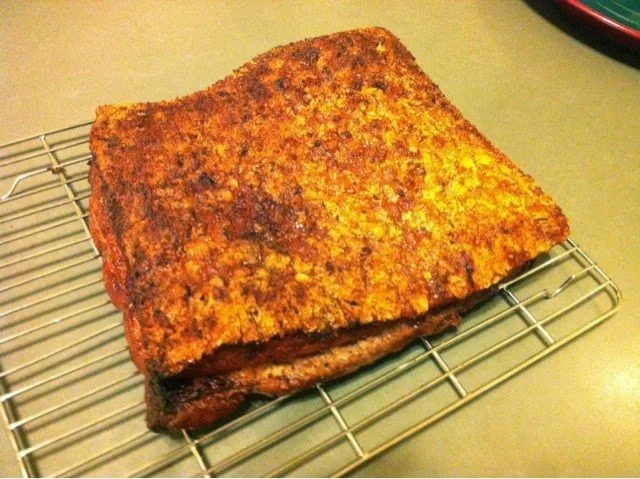
Siew yoke is Chinese roast pork belly prized for its crisp, crackling skin and layers of meat and fat. Drying the skin in the fridge before roasting helps it blister while the meat cooks beneath.
Ingredients
- 1 kgpork belly
- 1 tablespoonsalt, for rubbing on the pork skin
- 2 tablespoonswhite vinegar, for brushing on the pork skin after 20 minutes of roasting
- 1 cubefermented red bean curd (nam yue)
- ½ tablespoonChinese five-spice powder (Ng Heong Fun)
- ½ tablespoonwhite pepper
- ½ tablespoonsalt
- ½ tablespoonsugar
- 1 tablespoonrice wine
Instructions
- 1
Make the marinade
Rub the fermented bean curd, five-spice powder, white pepper, ½ tablespoon salt, sugar and rice wine over the meat side of the pork belly for a few minutes.
- 2
Arrange the pork
Set the pork belly meat-side down in a rectangular baking tray.
- 3
Salt the skin
Rub 1 tablespoon of salt all over the skin.
- 4
Dry overnight
Refrigerate the pork uncovered, preferably overnight, to dry the skin. Take it out 1 hour before roasting.
- 5
Preheat the oven
Heat the oven to 200°C with the upper and lower elements and the fan on.
- 6
Set up the rack
Place the pork belly on a rack in the middle of the oven. Put a pan covered with aluminium foil underneath to catch the dripping fat.
- 7
Roast and brush
Roast for 20 minutes, then switch the oven to the upper heating element or grill. Brush the skin with the white vinegar; the recipe notes that this can help it cook faster and turn light and crunchy.
- 8
Blot fat bubbles
If bubbles of liquid fat form on the skin, dab them with paper kitchen towels to expose the skin and help it crisp.
- 9
Watch the crackling
Keep an eye on the skin as it crisps. The recipe calls for it to become charred; scrape off charred bits with a serrated knife if needed.
- 10
Rest and chop
When ready, rest the pork for about 15 minutes, then chop it into bite-sized pieces to serve.
What is siew yoke?
Siew yoke is a Chinese roast pork dish built around pork belly with crisp, blistered skin. The exact version here uses a fermented red bean curd and spice marinade on the meat, while salt and a spell uncovered in the fridge prepare the skin for roasting.
Pork belly matters because its layers of meat and fat give the finished dish its characteristic rich texture. The high-heat finish focuses attention on the crackling, the part many cooks prize most.
Nutrition and macros by portion
The nutrition label shows one serving as written: 1295 calories, 23g protein, 3g carbs, 133g fat.
| Portion | Adjustment | kcal | Protein | Carbs | Fat |
|---|---|---|---|---|---|
| Lighter | Smaller pork belly portion | 906 kcal | 16g | 2g | 93g |
| This serving | As written | 1295 kcal | 23g | 3g | 133g |
| Hungry | Larger pork belly portion | 1943 kcal | 35g | 5g | 200g |
Pork belly supplies most of the calories and fat, along with some protein; the sugar and rice wine contribute a smaller amount of carbohydrate. Serve a modest portion with rice and plenty of vegetables to balance the richness.
Choose the right cut
Pork belly: Choose a piece with distinct layers of meat and fat rather than a lean cut. The recipe relies on those layers for its texture and flavour.
Skin: Keep the skin intact and dry it uncovered in the fridge. Moisture on the surface can hinder crisping, so avoid covering the pork during this stage.
Build flavour on the meat
Marinade: The fermented bean curd, five-spice, white pepper, salt, sugar and rice wine are rubbed into the meat side. Work the mixture over the meat for a few minutes, keeping it off the skin so that the skin can dry.
Skin salt: Rub the separate tablespoon of salt over the skin. The method does not specify removing it before roasting, so follow the recipe’s preparation as written.
Dry before roasting
Overnight chilling: Leaving the pork uncovered in the fridge allows air to dry the skin. The recipe recommends doing this overnight, then bringing the pork out 1 hour before it goes into the oven.
Before cooking: Put the pork on a rack so hot air can circulate around it, and set a foil-covered pan below to catch drips. The oven is set to 200°C with the fan and both heating elements on for the initial roast.
Finish the crackling carefully
Grill stage: After 20 minutes, the method switches to the upper element and brushes the skin with white vinegar. Watch the surface closely as it changes; the recipe gives no fixed duration for this stage.
Fat bubbles: If liquid fat bubbles collect on the skin, dab them carefully with paper kitchen towels as directed. The recipe aims for charred, dry, crunchy skin, and says any charred bits can be scraped away with a serrated knife.
Rest, chop and serve
Resting: Leave the cooked pork for about 15 minutes before cutting. This gives you time to prepare serving dishes and lets the meat settle before chopping.
Serving: Chop the pork into bite-sized pieces as the recipe directs. Rice and a sharp, fresh vegetable side make useful accompaniments to its rich, savoury flavour.
Recipe notes & tips
- Choose pork belly with clear layers of meat and fat rather than a lean piece.
- Leave the pork uncovered in the fridge overnight if possible to give the skin time to dry.
- Bring the pork out of the fridge 1 hour before roasting, as the recipe specifies.
- Use a rack over a foil-covered pan so the pork is lifted above the drippings.
- Stay close during the grill stage because the skin can change quickly.
- Rest the pork for about 15 minutes before chopping it into bite-sized pieces.
Variations
- Serve with rice: Pair the rich pork with plain rice for a simple meal.
- Add fresh greens: Offer blanched or steamed greens alongside the pork.
- Serve with cucumber: Add sliced cucumber for a cool, crisp contrast.
- Adjust the spice: Use a little less white pepper for a gentler heat.
- Make smaller pieces: Chop the rested pork into smaller bites for sharing.
Common mistakes to avoid
- Using lean pork: The recipe depends on belly’s layers of fat and meat; choose pork belly instead.
- Covering the pork in the fridge: Covering traps moisture; leave it uncovered so the skin can dry.
- Marinating the skin: Keep the marinade on the meat side so the skin remains dry.
- Skipping the rack: Set the pork on a rack above the foil-lined pan as directed.
- Walking away during grilling: Check the skin regularly and remove charred bits with a serrated knife if needed.
- Chopping straight away: Rest the cooked pork for about 15 minutes before cutting.
How to store
Refrigerate leftovers in an airtight container and use within 3 days. Reheat until piping hot; an oven or grill can help bring back some crispness, though the skin may soften in storage.
Frequently asked questions
Can I prepare the pork belly the night before?
Yes. The recipe recommends refrigerating it uncovered, preferably overnight, to dry the skin. Take it out 1 hour before roasting.
Why does the recipe use pork belly?
Its layers of meat and fat give siew yoke the texture the recipe is aiming for. A lean cut will not give the same result.
When do I brush on the vinegar?
Brush the skin with the white vinegar after the first 20 minutes of roasting, when you switch the oven to the upper element or grill.
How long should I grill the skin?
The recipe does not give a set time for this stage. Monitor the skin as it crisps and follow its appearance rather than relying on a fixed duration.
What should I do if the skin gets charred?
The method calls for charred skin as a sign that it has dried and crisped. Scrape off charred bits with a serrated knife if you prefer.
How long should the pork rest?
Rest it for about 15 minutes before chopping it into bite-sized pieces.
Cook it from the original
This recipe comes from huangkitchen.com. Their page has the author’s own photos, notes and tips — the best place to cook it from.
Open the recipe on huangkitchen.com