
Dutch Oven Pot Roast
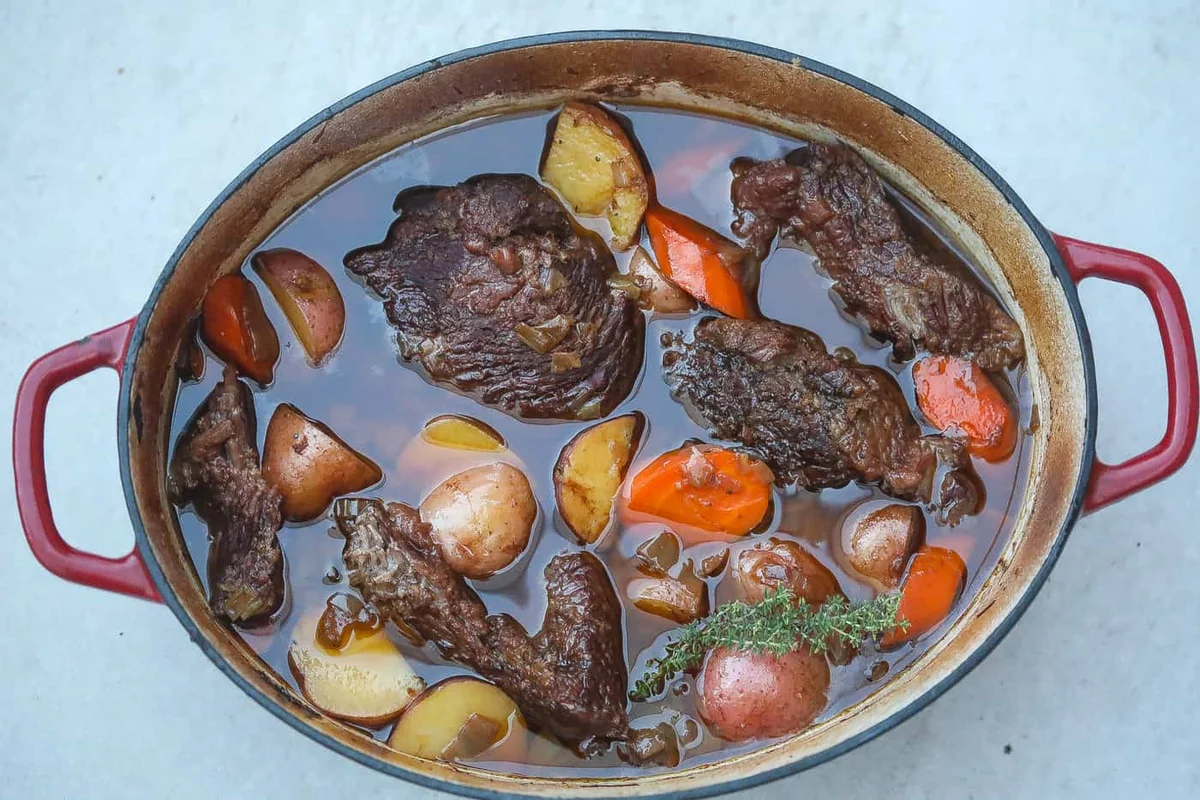
This Dutch oven pot roast braises brisket in red wine with leeks, carrots and new potatoes until tender. It makes a comforting one-pot dinner, with the vegetables cooking in the same savoury liquid as the beef.
Ingredients
- 1.36 kg (3 lb)beef brisket
- 30 ml (2 tbsp)olive oil
- 1 largeyellow onion, sliced
- 3leeks, sliced (white parts only)
- 6 clovesgarlic, diced
- 2 ribscelery, chopped
- 480 ml (2 cups)red wine (Malbec or Cabernet)
- 240 ml (1 cup)beef broth
- 60 ml (1/4 cup)Worcestershire sauce
- 2 sprigsfresh thyme
- 1bay leaf
- 15 ml (1 tbsp)allspice
- 15 ml (1 tbsp)paprika
- 15 ml (1 tbsp)kosher salt
- 15 ml (1 tbsp)black pepper
- 15 ml (1 tbsp)ghee or butter
- 3 largecarrots, peeled and cut diagonally into 6 mm slices
- 454 g (1 lb)new potatoes, halved
Instructions
- 1
Heat the oven
Preheat the oven to 163°C (325°F).
- 2
Cut and season
Cut the brisket into 6 individual pot-roast portions. Season them generously with salt and pepper.
- 3
Sear the brisket
Set a Dutch oven over medium heat. Once hot, add the olive oil, then sear the brisket portions well on all sides. Remove them and set aside.
- 4
Cook the vegetables
Add the onion and leeks and sauté for 2–3 minutes. Stir in three-quarters of the garlic and the celery and sauté for another 1–2 minutes. Add half the paprika, allspice, salt and pepper, and cook for a further 30 seconds.
- 5
Braise the beef
Pour in the red wine and scrape the bottom of the Dutch oven to deglaze it. Cook for about 2 minutes, then add the broth, Worcestershire sauce, thyme, bay leaf and remaining seasoning. Cover and cook in the oven for about 2 hours.
- 6
Warm the aromatics
Set a large frying pan over low heat and add the butter or ghee. Once melted, add fresh thyme and the remaining quarter of the garlic. Heat for 5–7 minutes.
- 7
Add the vegetables
Increase the heat to medium-high and sauté the carrots and potatoes for 2–3 minutes. Remove them from the pan and add them to the pot roast. Cover and return the Dutch oven to the oven for another 30 minutes.
What is Dutch oven pot roast?
Pot roast is an American-style braise: a large cut of beef cooks covered with liquid until tender. This version divides the brisket into individual portions and cooks it with red wine, aromatics and vegetables.
The Dutch oven moves from the hob to the oven, so the brisket can be browned first and then cooked covered in the same pot. Adding the carrots and potatoes later gives them less time in the braising liquid.
Nutrition and macros by portion
The nutrition label shows one serving as written: 613 calories, 51g protein, 32g carbs, 25g fat.
| Portion | Adjustment | kcal | Protein | Carbs | Fat |
|---|---|---|---|---|---|
| Lighter | Use less added fat | 429 kcal | 36g | 22g | 18g |
| This serving | As written | 613 kcal | 51g | 32g | 25g |
| Hungry | Larger brisket portion | 920 kcal | 77g | 48g | 38g |
The brisket supplies most of the protein and a substantial share of the fat, with additional fat from the olive oil and ghee or butter. Potatoes and carrots provide most of the carbohydrates. Balance a portion with a serving of green vegetables or salad.
Choosing the brisket and wine
Brisket: Cut it into six portions as directed, keeping the pieces as even in size as practical so they cook at a similar rate.
Red wine: Malbec or Cabernet are the suggested choices. Deglazing with the wine lifts the browned bits from the pot, while the broth and Worcestershire sauce form the rest of the braising liquid.
Build flavour before braising
Searing: Brown the beef on all sides in hot oil before removing it. This gives the pot a browned base for the vegetables and wine to pick up.
Aromatics: Give the onion and leeks their stated 2–3 minutes, then add the celery and most of the garlic. The brief 30-second spice cook is enough to combine them with the vegetables before the wine goes in.
Keep the vegetables in shape
Carrots: Cut them diagonally into evenly thick slices, around 6 mm as listed, so the pieces cook at a similar pace.
Potatoes: Halve the new potatoes and add them with the carrots for the final 30 minutes, rather than at the start of the braise. The recipe briefly sautés both in butter or ghee before they go into the pot.
Check the braise as it cooks
First stage: Keep the Dutch oven covered during the roughly 2-hour braise. The brisket should become tender as it cooks in the wine and broth.
Final stage: After the vegetables have had their additional 30 minutes, check that they are tender and that the beef is easy to cut. If either needs more time, return the covered pot to the oven and check again.
Serve it with the cooking liquid
Bring the brisket, carrots and potatoes to the table with some of the wine-based cooking liquid spooned over the top. The potatoes already make this a substantial plate.
For a fresh contrast, serve with a simple green salad or another green vegetable. That adds colour and vegetables without changing the one-pot preparation.
Recipe notes & tips
- Pat the brisket dry before seasoning to help it brown in the Dutch oven.
- Sear the portions in batches if needed so they brown rather than crowd together.
- Scrape the base of the pot well when adding the wine to lift the browned bits.
- Keep the lid on during the oven braise so the cooking liquid stays in the pot.
- Cut the potatoes and carrots into similar-sized pieces for more even cooking.
Variations
- Use another red wine: Choose a dry red wine in place of Malbec or Cabernet.
- Swap the herbs: Use rosemary in place of thyme for a different herbal note.
- Add mushrooms: Sauté them with the carrots and potatoes before adding them to the pot.
- Use pearl onions: Replace the sliced yellow onion with peeled pearl onions.
- Change the potato: Use another small waxy potato, halved, in place of new potatoes.
Common mistakes to avoid
- Crowding the beef: The portions may not brown well; sear them in batches.
- Skipping the deglaze: Scrape the pot as the wine goes in so browned bits do not stay stuck to the base.
- Adding vegetables too early: They may become overly soft; follow the recipe and add them for the final 30 minutes.
- Cooking uncovered: The liquid can reduce more quickly; keep the lid on during both oven stages.
- Cutting uneven portions: Pieces of different sizes can cook at different rates; divide the brisket into six similar portions.
How to store
Refrigerate leftovers in a covered container within 2 hours of cooking and use within 3–4 days. Reheat thoroughly in a covered pan over low heat or in the microwave, adding a little broth if the cooking liquid has thickened.
Frequently asked questions
Can I make this without a Dutch oven?
Sear the beef and cook the aromatics in a heavy oven-safe pot with a tight-fitting lid. If your pot is not oven-safe, transfer everything to a covered ovenproof dish for the braising stages.
Can I use a different cut of beef?
A similar cut suited to slow braising can be used, but cooking time and texture may vary. Check for tenderness before serving.
How do I know when the brisket is done?
It should be tender and easy to cut after the braise. If it still feels firm, cover the pot and continue cooking, checking it again.
Can I prepare the pot roast ahead?
Yes. Refrigerate the cooked pot roast and vegetables in their liquid, then reheat them gently until thoroughly hot.
What can I serve with Dutch oven pot roast?
The potatoes and carrots make it a complete, hearty centrepiece. A green vegetable or salad makes a fresh side.
Can I leave out the wine?
The recipe relies on red wine for its braising liquid and flavour. You can replace it with more beef broth, though the result will taste different.
Cook it from the original
This recipe comes from foodfidelity.com. Their page has the author’s own photos, notes and tips — the best place to cook it from.
Open the recipe on foodfidelity.com