
Korean Flanken Short Ribs
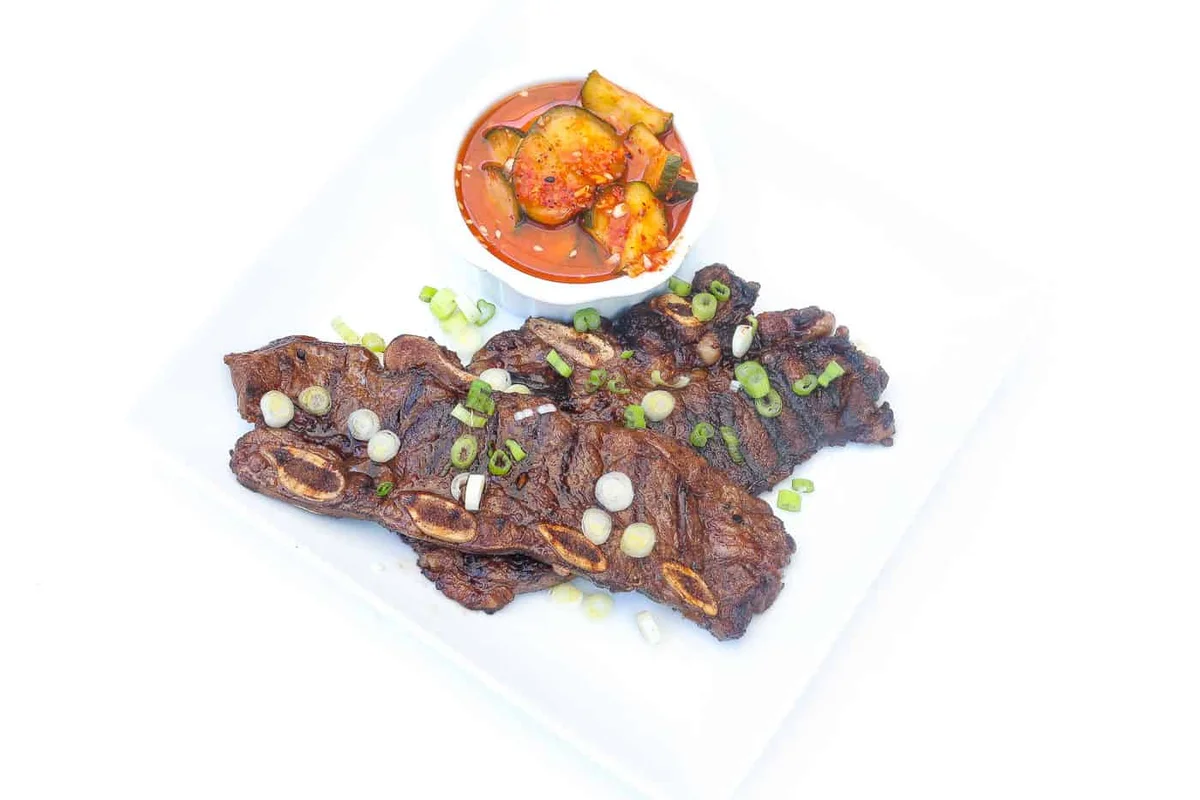
Korean-style flanken short ribs are marinated in a savoury, citrusy mixture, then quickly cooked on a stovetop grill. Their thin cut makes them a handy main course when you want a flavourful dinner without a long cooking time.
Ingredients
- 907 g (2 lb)flanken short ribs
- 1 tsp (about 5 g)kosher salt
- 1 tsp (about 2 g)black pepper
- 3spring onions, diced
- ¼-inch (about 6 mm) piecefresh ginger
- 1 mediumlime, juiced
- 60 ml (¼ cup)soy sauce
- 60 ml (¼ cup)olive oil
- 120 ml (½ cup)coconut water
Instructions
- 1
Mix the marinade
Combine the salt, pepper, spring onions, ginger, lime juice, soy sauce, olive oil and coconut water in a large, deep bowl. Set the marinade aside.
- 2
Marinate the ribs
Put the ribs in a large sealable food bag and pour in the marinade. Seal the bag, pressing out as much air as possible, and refrigerate for at least 1 hour.
- 3
Heat the grill
Preheat a stovetop grill pan over medium-high heat. While it heats, pat the ribs dry with kitchen paper.
- 4
Grill the ribs
Add oil to the grill pan. When it is hot, lay the ribs flat in the pan and cook for 2–3 minutes per side.
What are Korean flanken short ribs?
Flanken short ribs are cut across the bones, leaving thin strips of beef with several small bone sections. This cut is associated with Korean-style grilled beef, where a marinade and brief cooking bring out its savoury character.
Here, soy sauce, lime, ginger and spring onion make a punchy marinade, while coconut water adds a mild sweetness. The stovetop grill pan makes the recipe practical when outdoor grilling is not an option.
Nutrition and macros by portion
The nutrition label shows one serving as written: 859 calories, 67g protein, 9g carbs, 61g fat.
| Portion | Adjustment | kcal | Protein | Carbs | Fat |
|---|---|---|---|---|---|
| Lighter | Smaller rib portion | 601 kcal | 47g | 6g | 43g |
| This serving | As written | 859 kcal | 67g | 9g | 61g |
| Hungry | Add rice and vegetables | 1289 kcal | 101g | 14g | 92g |
Most of the protein and fat come from the short ribs, while the coconut water and small amount of lime juice contribute most of the carbohydrates. Serve the ribs with rice and a generous vegetable side to round out the meal.
Why the marinade works
Soy sauce brings salt and savoury depth, while lime juice adds a bright, tart note. Ginger and spring onion give the mixture a fresh, aromatic edge.
Olive oil helps carry the flavour across the ribs, and coconut water softens the overall profile. Give the meat at least an hour in the fridge so the marinade has time to coat it well.
Dry the ribs before grilling
Pat the ribs dry after taking them from the marinade. Removing surface moisture helps the meat make better contact with the hot pan instead of releasing liquid straight away.
Use kitchen paper and handle the raw meat safely; discard any marinade that has touched it rather than serving it as a sauce.
Watch the heat and timing
Medium-high heat gives the thin ribs a quick cook and helps them brown. Let the pan heat before adding the meat, and avoid crowding it so the ribs can sit flat.
The recipe specifies 2–3 minutes per side. Thickness and pan heat affect the result, so check the meat as it cooks and follow food-safety guidance for beef.
What to serve alongside
Serve the ribs with steamed rice to complement their salty, tangy marinade. Add a simple vegetable side, such as lightly cooked greens, for freshness and contrast.
Because the ribs are rich, a crisp salad or crunchy vegetables can make the plate feel more balanced without competing with the grilled flavour.
Recipe notes & tips
- Use a bowl deep enough to mix the marinade without spilling.
- Press excess air out of the bag so the marinade can surround the ribs.
- Keep the ribs refrigerated throughout their marinating time.
- Pat the meat dry just before it goes into the hot pan.
- Grill in batches if needed so the ribs lie flat without crowding.
Variations
- Add garlic: Grate a small clove into the marinade for extra savoury flavour.
- Use lemon: Swap the lime juice for lemon juice for a similar bright note.
- Finish with sesame: Sprinkle toasted sesame seeds over the cooked ribs.
- Add chilli: Include sliced fresh chilli in the marinade for heat.
- Serve with rice: Pair the ribs with steamed rice to make a more substantial plate.
Common mistakes to avoid
- Skipping the drying step: Wet meat can steam rather than brown, so pat the ribs dry before grilling.
- Using a cool pan: The ribs may not brown well; let the grill pan heat before adding them.
- Crowding the pan: Overlapping ribs cook unevenly, so grill them in batches.
- Marinating at room temperature: Keep the bag in the fridge for the full marinating time.
- Reusing raw marinade: Discard marinade that has contacted uncooked beef rather than using it as a dressing.
How to store
Refrigerate cooked ribs in a sealed container and eat within 3–4 days. Reheat until piping hot in a pan over medium heat, taking care not to cook them for longer than necessary.
Frequently asked questions
What does flanken cut mean?
It means the short ribs are sliced across the bones, creating thin strips with several small bone sections. This cut suits quick grilling.
How long should I marinate the ribs?
Refrigerate them for at least 1 hour, as specified in the method. Keep them chilled while they marinate.
Can I use a frying pan instead of a grill pan?
Yes, use a heavy frying pan and heat it over medium-high. Cook the ribs in batches so they have room to lie flat.
How long do the ribs take to grill?
The method gives 2–3 minutes per side. The precise time depends on the thickness of the ribs and how hot the pan is.
Can I prepare the marinade ahead?
You can mix the marinade ahead and keep it covered in the fridge. Add the ribs when you are ready to begin their marinating time.
Cook it from the original
This recipe comes from foodfidelity.com. Their page has the author’s own photos, notes and tips — the best place to cook it from.
Open the recipe on foodfidelity.com