
Teriyaki Chicken Recipe
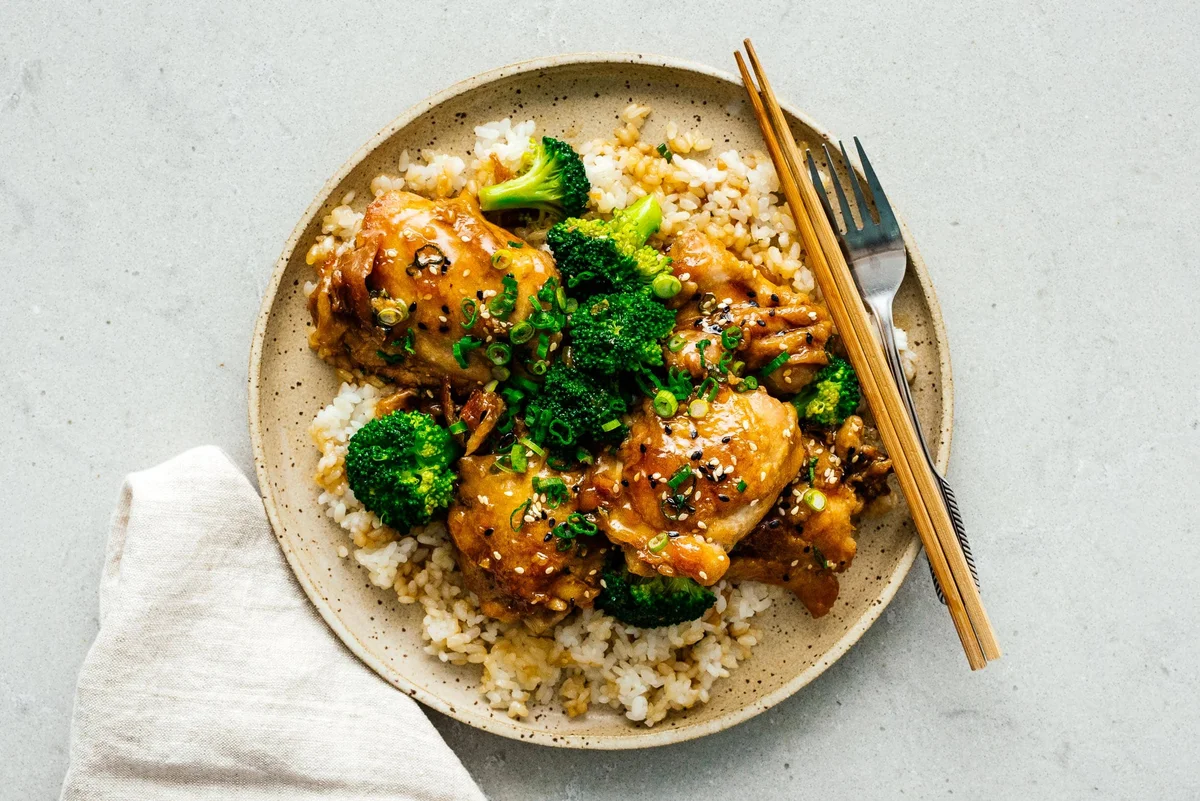
This quick teriyaki chicken pairs crisp, pan-rendered chicken skin with a glossy sauce of soy, mirin, sake and sugar. It makes a satisfying weeknight meal, especially served with rice and fresh accompaniments.
Ingredients
- 4boneless, skin-on chicken thighs (see notes)
- 30 ml (2 tbsp)soy sauce (Japanese preferred)
- 30 ml (2 tbsp)mirin
- 30 ml (2 tbsp)sake
- 15 ml (1 tbsp)sugar
- 5 ml (1 tsp)cornflour (optional, see notes)
- 15 ml (1 tbsp)water
Instructions
- 1
Cook the chicken
Place the chicken thighs skin-side down in a dry, non-stick frying pan. Set over a medium heat and cook until the skin is brown and crisp, about 15–20 minutes, then turn the thighs over.
- 2
Make the sauce
Meanwhile, put the soy sauce, mirin, sake and sugar in a small saucepan and bring to a gentle simmer. Whisk the cornflour with 15 ml (1 tbsp) water, then whisk this mixture into the sauce. Bring it back to a simmer and cook until slightly thickened; set aside.
- 3
Finish and serve
Once the skin is crisp and brown, cook the other side of the chicken for 5 minutes and check that it is cooked through. Rest it on a chopping board for 5 minutes, then slice into strips and serve with the teriyaki sauce, rice, cucumbers, green onions and toasted sesame seeds.
What is teriyaki chicken?
Teriyaki is a Japanese cooking style in which food is glazed with a sweet, savoury sauce. This American-style recipe uses the familiar combination of soy sauce, mirin, sake and sugar, with chicken thighs cooked separately from the sauce.
Cooking the thighs skin-side down in a dry pan renders their own fat and gives the skin time to crisp. The sauce is simmered separately, so it can be spooned over the chicken at serving.
Nutrition and macros by portion
The nutrition label shows one serving as written: 382 calories, 32g protein, 15g carbs, 19g fat.
| Portion | Adjustment | kcal | Protein | Carbs | Fat |
|---|---|---|---|---|---|
| Lighter | Less rice, more cucumber | 267 kcal | 22g | 11g | 13g |
| This serving | As written | 382 kcal | 32g | 15g | 19g |
| Hungry | Add extra rice | 573 kcal | 48g | 23g | 29g |
The chicken supplies most of the protein and fat, while the sugar and sauce contribute carbohydrates; rice served alongside adds more carbohydrates. For a balanced plate, serve a measured portion of rice with cucumber or another generous serving of vegetables.
Why use skin-on thighs?
Skin-on thighs are central to the method: their fat renders into the pan as the skin browns, so the recipe does not call for added cooking fat. Boneless thighs are also easy to slice once rested.
Keep the skin in contact with the pan while it cooks, and avoid moving the pieces around unnecessarily. The recipe gives a 15–20 minute estimate for crisping, but the colour and texture are useful cues too.
Building the teriyaki sauce
Soy sauce brings saltiness, while mirin and sake add the other characteristic flavours of this simple glaze. Sugar sweetens the mixture and helps it become glossy as it simmers.
Cornflour is optional. If using it, whisk it with the measured water before adding it to the simmering sauce to help it blend in smoothly.
Getting crisp skin
Start the chicken skin-side down in a cold, dry, non-stick pan, then turn the heat to medium as directed. The gradual heating gives the fat time to render while the skin browns.
The skin should look browned and crisp before you flip the thighs. If it needs longer, use the appearance and texture as your guide rather than relying only on the stated cooking time.
Checking doneness and resting
After turning the chicken, cook the second side for 5 minutes and check that the meat is cooked through. Thighs vary in size, so make the doneness check rather than assuming every piece will finish at exactly the same moment.
Rest the cooked chicken on a chopping board for 5 minutes before slicing. This pause is already included in the method and makes the strips easier to serve.
Serving the chicken
Serve the sliced chicken with the teriyaki sauce and rice, as suggested in the recipe. The rice makes a straightforward base for the sauce.
Cucumbers, green onions and toasted sesame seeds add fresh, crisp and savoury contrasts. Add them at the table so they retain their texture.
Recipe notes & tips
- Use a non-stick pan and begin with no added oil, as the thighs render their own fat.
- Keep the chicken skin-side down until it is properly browned and crisp.
- Mix the cornflour with water before adding it to the sauce to help prevent lumps.
- Simmer the sauce gently and stop when it has thickened slightly.
- Rest the chicken for the full 5 minutes before slicing.
- Serve the sauce with the chicken and rice so none of the glaze is wasted.
Variations
- Skip the cornflour: Leave it out for a thinner sauce.
- Add ginger: Stir a little grated ginger into the sauce as it simmers.
- Add garlic: Include finely chopped garlic in the sauce for a more savoury flavour.
- Use chicken breast: Cook until just cooked through, taking care not to dry out the leaner meat.
- Add vegetables: Serve with steamed greens alongside the rice.
- Finish with sesame: Scatter toasted sesame seeds over the sliced chicken just before serving.
Common mistakes to avoid
- Adding oil to start: The thighs release fat as they cook, so use the dry pan specified.
- Flipping too soon: Give the skin time to brown and crisp before turning the chicken.
- Adding dry cornflour: Whisk it with the measured water first for a smoother sauce.
- Boiling the sauce hard: Keep it at a gentle simmer so it thickens without reducing too quickly.
- Skipping the doneness check: Check the chicken after the 5-minute second-side cook and continue cooking if needed.
- Slicing straight away: Rest the chicken for 5 minutes before cutting it into strips.
How to store
Refrigerate leftover chicken and sauce in an airtight container for up to 3 days. Reheat thoroughly in a pan or microwave; the skin may soften after storage. Store rice separately if possible.
Frequently asked questions
Can I make the sauce without cornflour?
Yes. The recipe marks it as optional, so you can leave it out; the sauce will be thinner.
Can I use chicken thighs without skin?
You can, but they will not render fat or develop crisp skin in the same way. Watch them as they cook, since skinless thighs may brown and cook differently.
How do I know when the chicken is cooked through?
After cooking the second side for 5 minutes, check the thickest part of a thigh. If it is not cooked through, continue cooking before resting.
Can I make the sauce ahead?
Yes. Make it in advance and refrigerate it, then reheat it gently while the chicken cooks. Stir it as it warms.
What should I serve with teriyaki chicken?
The recipe suggests rice, cucumbers, green onions and toasted sesame seeds. Add the accompaniments to taste.
Cook it from the original
This recipe comes from iamafoodblog.com. Their page has the author’s own photos, notes and tips — the best place to cook it from.
Open the recipe on iamafoodblog.com