
Italian Eggs Benedict
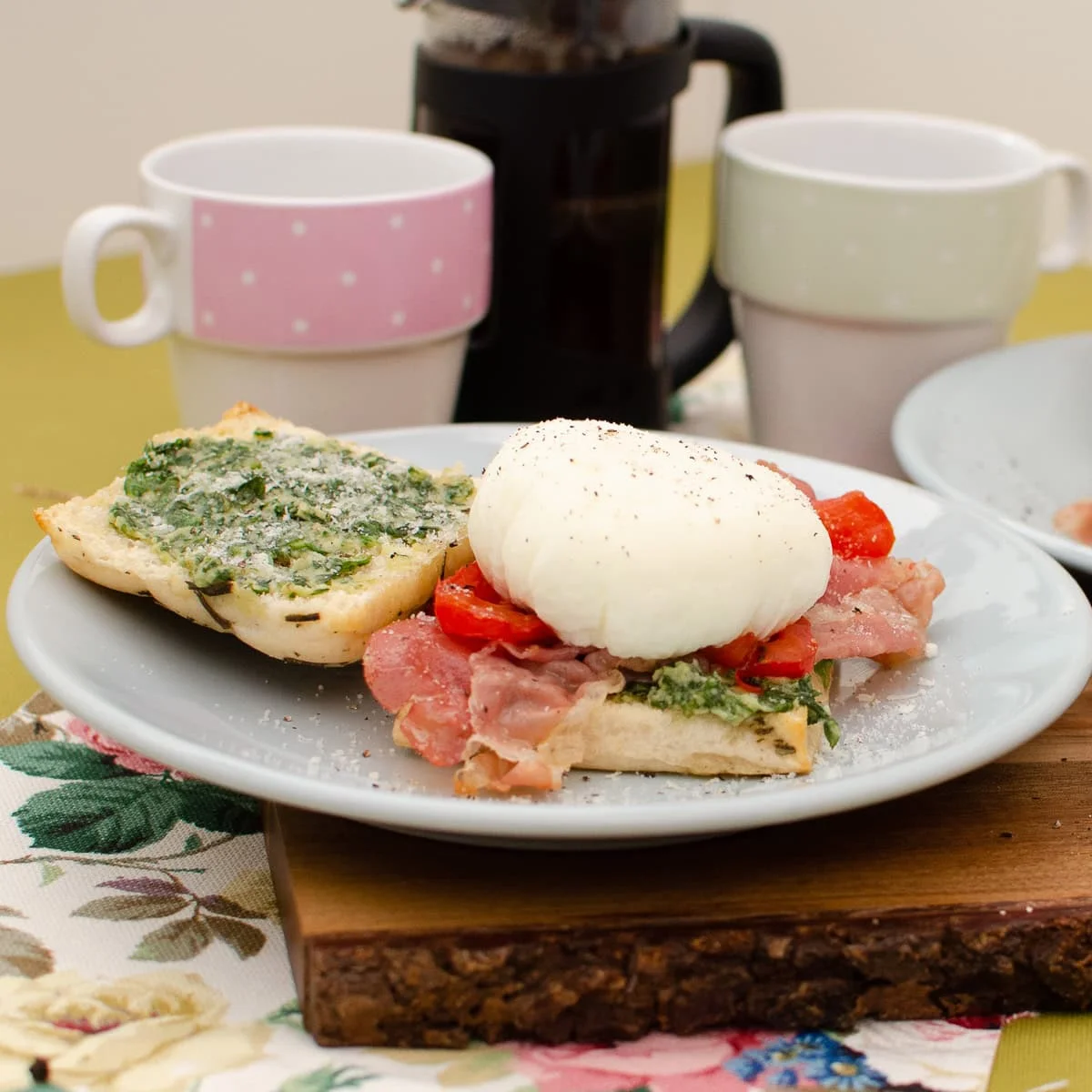
This Italian-inspired take on eggs Benedict layers pesto, prosciutto, tomatoes and poached eggs on toasted focaccia, finished with Parmesan. It makes a savoury brunch for two, with the familiar poached-egg centre and a distinctly Mediterranean set of toppings.
Ingredients
- 4eggs
- 2 rollsfocaccia
- 2 tbspolive oil
- as neededspray oil
- 4 slicesprosciutto
- 6San Marzano tomatoes
- 2 tbsphomemade or shop-bought pesto
- 3 tspParmesan cheese
- to tastepepper
Instructions
- 1
Prepare the eggs
Heat the oven to 150°C fan, 170°C conventional or 325°F (Gas Mark 3). Bring a saucepan of water to the boil. Line a small bowl with a large piece of cling film and spray it with oil. Crack 2 eggs into the bowl, gather the cling film around them, press out any air and tie it closed so water cannot get in. Repeat with the remaining 2 eggs.
- 2
Prepare the focaccia
Cut the 2 focaccia rolls in half and drizzle them with 2 tbsp olive oil.
- 3
Poach and toast
Put the focaccia rolls in the preheated oven. Lower the egg parcels into the saucepan and cook for 5–8 minutes, depending on how runny or firm you like the yolks.
- 4
Cook the tomatoes
While the eggs cook, heat some spray oil in a small pan. Slice the 6 San Marzano tomatoes and cook them for 5 minutes.
- 5
Crisp the prosciutto
Cook the 4 slices of prosciutto for 2–4 minutes until crisp.
- 6
Layer and serve
Spread the cut sides of the focaccia with 2 tbsp pesto. Add the prosciutto, sliced tomatoes and eggs, then finish with 3 tsp Parmesan and pepper to taste.
What is Italian eggs Benedict?
Eggs Benedict is a brunch dish built around poached eggs on bread, often with ham and a rich sauce. This version swaps in focaccia, pesto, prosciutto, tomatoes and Parmesan for an Italian-inspired combination.
The recipe keeps the poached eggs as the centrepiece but skips the usual hollandaise. Pesto brings a herby, savoury layer, while tomatoes add freshness against the salty crisp prosciutto.
Nutrition and macros by portion
The nutrition label shows one serving as written: 485 calories, 17g protein, 10g carbs, 42g fat.
| Portion | Adjustment | kcal | Protein | Carbs | Fat |
|---|---|---|---|---|---|
| Lighter | Use less olive oil | 340 kcal | 12g | 7g | 29g |
| This serving | As written | 485 kcal | 17g | 10g | 42g |
| Hungry | Add another focaccia roll | 728 kcal | 26g | 15g | 63g |
The focaccia provides most of the carbohydrates, while olive oil, pesto, egg yolks and Parmesan contribute much of the fat. Eggs and prosciutto provide protein, with additional amounts from the cheese. Pair a serving with salad or fresh vegetables for a more balanced plate.
Choosing the ingredients
Focaccia: Rolls give the toppings a soft, substantial base. Cut them in half and coat the cut sides with olive oil as directed.
Pesto: Homemade or shop-bought pesto works here. Its concentrated flavour means a thin spread can season the bread and toppings.
Tomatoes: San Marzano tomatoes are specified in the recipe. Slice them before cooking so they warm through during their five minutes in the pan.
Poaching eggs in cling film
The method cooks each pair of eggs in a tied parcel of oiled cling film rather than cracking them directly into the water. Press out trapped air and tie each parcel securely to help keep water out.
Cook for 5–8 minutes, using the shorter end of the range for runnier yolks and the longer end for firmer ones. Lift the parcels carefully from the hot water before opening them.
Getting the focaccia ready
The oven is set to 150°C fan or 170°C conventional, and the recipe places the oiled focaccia in it while the eggs cook. No oven time is specified, so check the bread as you work and take it out once warmed and lightly toasted to your liking.
Keep the pesto for the assembly stage, as instructed, rather than putting it in the oven with the bread.
Balancing the toppings
Prosciutto: Cook the slices for 2–4 minutes to crisp them, keeping an eye on them as they can turn quickly from crisp to overly browned.
Tomatoes: Give the sliced tomatoes their stated five minutes in the pan. They should be warmed and softened, ready to sit beneath the eggs.
Parmesan: Sprinkle it over the assembled focaccia at the end so its savoury flavour remains distinct.
Timing the components
The eggs, tomatoes and prosciutto can cook while the focaccia warms in the oven, which helps bring the components together within the stated 30 minutes. Start with the oven and water, then prepare the bread and toppings.
The method does not give an exact oven time for the focaccia, so use its colour and warmth as your cue rather than leaving it unattended.
What to serve alongside
Serve the focaccia while the eggs are warm and the prosciutto is still crisp. A simple green salad or lightly dressed leaves make a fresh contrast to the pesto, cheese and cured ham.
For a larger brunch spread, add fresh fruit on the side rather than piling extra toppings onto the focaccia.
Recipe notes & tips
- Use a fresh piece of cling film for each egg parcel and make sure it is large enough to tie securely.
- Press air out of the egg parcels before tying them closed so they sit neatly in the water.
- Choose the egg cooking time within the stated 5–8-minute range to suit your preferred yolk texture.
- Watch the prosciutto closely during its 2–4 minutes in the pan.
- Check the focaccia while it warms, as the recipe does not specify an oven time.
- Assemble just before serving to keep the prosciutto crisp.
Variations
- Add basil: Scatter fresh basil over the assembled focaccia for another herbal note.
- Use another tomato: Substitute ripe tomatoes if San Marzano tomatoes are unavailable.
- Try a different pesto: Use a favourite shop-bought pesto in place of the homemade version.
- Make it cheesier: Add a little extra Parmesan at the table.
- Add greens: Serve with rocket or salad leaves alongside the focaccia.
Common mistakes to avoid
- Loose egg parcels: Tie the cling film securely so water cannot get inside.
- Air left in the parcels: Press it out before tying to help the eggs cook neatly.
- Overcooked eggs: Start checking at 5 minutes if you prefer runny yolks.
- Burnt prosciutto: Keep it under close watch during its short cooking time.
- Overheated focaccia: Check it as it warms because no exact baking time is given.
- Soggy assembly: Add the toppings just before serving so the bread does not sit under them for long.
How to store
This dish is best assembled and eaten straight away. If needed, refrigerate leftover cooked components separately in covered containers and use within 1–2 days; reheat the bread and toppings until hot, and cook fresh eggs for serving.
Frequently asked questions
Does this recipe use hollandaise sauce?
No. This version uses pesto instead of the hollandaise usually associated with eggs Benedict.
How do I make the yolks runny?
Cook the egg parcels for the shorter end of the recipe’s 5–8-minute range. The precise result can depend on the eggs and how steadily the water is simmering.
Can I use shop-bought pesto?
Yes. The ingredient list allows either homemade or shop-bought pesto.
How long should the focaccia go in the oven?
The recipe gives the oven temperature but not a baking time. Keep an eye on the rolls and remove them once warmed and lightly toasted to your liking.
Can I prepare any parts ahead?
You can slice the tomatoes and measure out the toppings ahead. For the best texture, cook the eggs and prosciutto and assemble the focaccia close to serving.
Cook it from the original
This recipe comes from flawlessfood.co.uk. Their page has the author’s own photos, notes and tips — the best place to cook it from.
Open the recipe on flawlessfood.co.uk