
Greek gyro
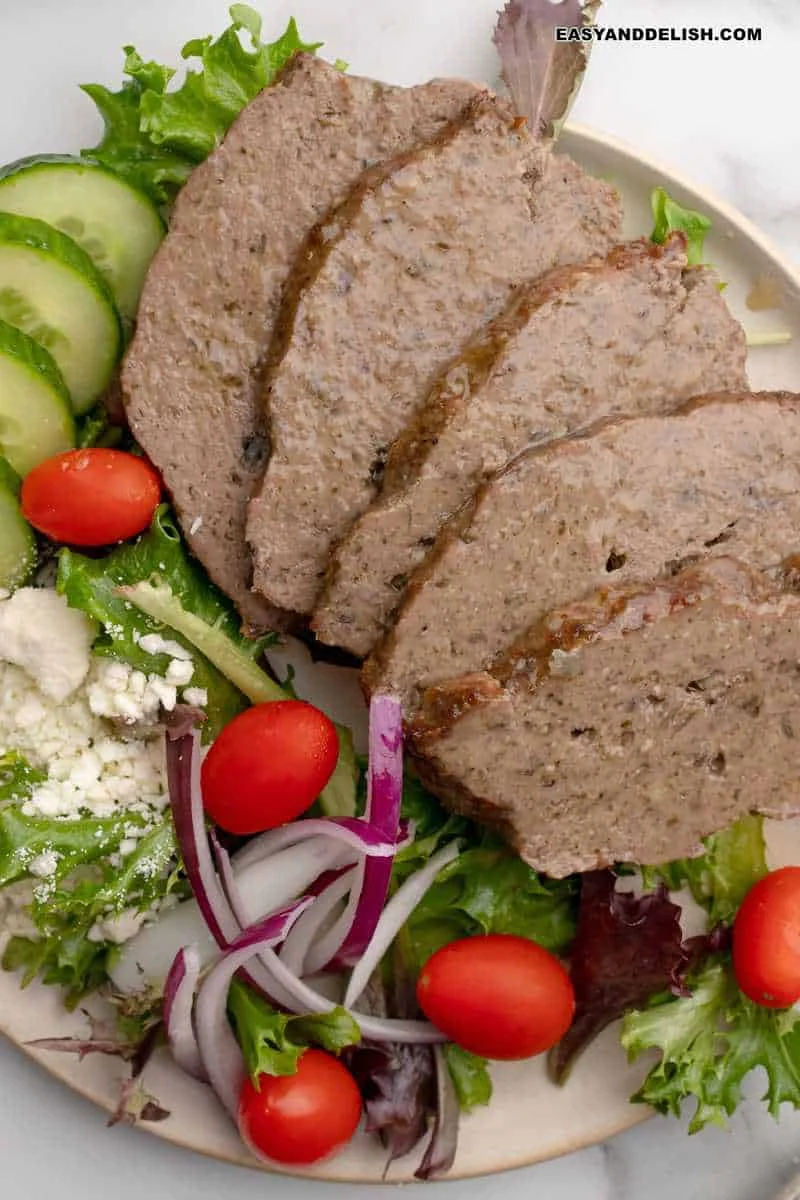
This homemade Greek-style gyro loaf combines minced lamb and beef with garlic and dried herbs, then bakes in the oven before being sliced thinly. Serve it in warm pita with tzatziki and Greek salad, or plate it with salad for a lower-carbohydrate meal.
Ingredients
- 1 mediumred onion, cut into 4 pieces
- 454 gminced lamb
- 454 gminced beef (80% lean)
- 6 clovesgarlic, chopped
- 2 teaspoonsdried oregano
- 2 teaspoonsdried marjoram
- 2 teaspoonsdried thyme
- 2 teaspoonsground black pepper
- 2 teaspoonssalt
- 2 tablespoonsolive oil
Instructions
- 1
Preheat the oven
Heat the oven to 180°C.
- 2
Drain the onion
Pulse the red onion in a food processor until very finely chopped. Tip it into the centre of a thin tea towel set over a sieve, gather the cloth and squeeze the onion firmly to remove as much liquid as possible.
- 3
Mix the meat
Put the drained onion in a large bowl with the minced lamb and beef, garlic, oregano, marjoram, thyme, salt, pepper and olive oil. Mix thoroughly by hand until evenly combined.
- 4
Process the mixture
Transfer the meat mixture to the food processor and pulse until very finely chopped, for about 2 minutes. It will have a thick, paste-like consistency.
- 5
Fill the tin
Put the mixture into a 23 x 13 cm loaf tin and press it down firmly to remove air pockets.
- 6
Bake until cooked
Bake for about 50–60 minutes, until the centre reaches 74°C on an instant-read meat thermometer. The meat will shrink as it cooks; keep the juices left in the tin.
- 7
Rest and slice
Leave the gyro to cool for 20–30 minutes, then cut it into thin slices with a sharp knife.
- 8
Brown the slices
Optional: before serving, fry the sliced meat over a medium heat in a little of the cooking juices. Avoid cooking it for too long, or it may dry out.
- 9
Serve the gyro
Serve on warm pita with Greek salad and tzatziki as a sandwich, or serve the meat with the salad and tzatziki on the side for a lower-carbohydrate meal.
What is Greek gyro?
Gyro is a Greek dish of seasoned meat, commonly served sliced in pita with accompaniments such as salad and tzatziki. Traditionally, the meat is cooked on a rotating spit; this home version bakes a seasoned minced-meat mixture in a loaf tin instead.
The combination of lamb, beef, garlic and dried herbs gives the loaf a savoury, aromatic flavour. Processing the mixture finely helps it hold together for thin slicing.
Nutrition and macros by portion
The nutrition label shows one serving as written: 344 calories, 19g protein, 2g carbs, 28g fat.
| Portion | Adjustment | kcal | Protein | Carbs | Fat |
|---|---|---|---|---|---|
| Lighter | Serve without pita | 241 kcal | 13g | 1g | 20g |
| This serving | As written | 344 kcal | 19g | 2g | 28g |
| Hungry | Add warm pita | 516 kcal | 29g | 3g | 42g |
The beef and lamb provide most of the protein and fat, while the olive oil adds further fat. The listed carbohydrates are very low and come mainly from the onion and seasonings. Pair a serving with Greek salad, and add pita if you want a more filling meal.
The meat and seasoning
Lamb and beef: the two meats make a rich, substantial mixture. The recipe specifies 80% lean minced beef, so expect some fat and cooking juices in the tin.
Herbs and garlic: oregano, marjoram and thyme season the meat, with black pepper and salt for balance. Chop the garlic before mixing so it distributes evenly.
Why drain the onion
Drained onion: pulse it finely, then squeeze it very thoroughly in a cloth over a sieve or sink. Removing excess liquid helps keep the meat mixture from becoming watery.
Even mixing: combine the onion and seasonings with the meat before processing it. This gives the flavours a chance to spread through the loaf.
Getting the texture right
Fine processing: pulse the mixture for about 2 minutes, until it is finely chopped and paste-like. Stop to check the texture rather than leaving large pieces of meat throughout.
Firm packing: press the mixture into the loaf tin to reduce air pockets. This helps the baked loaf hold together when you slice it.
Baking and resting
Doneness: bake at 180°C for about 50–60 minutes and check the centre with an instant-read thermometer; it should reach 74°C. The time is a guide, so use the temperature cue as well.
Resting: let the loaf cool for 20–30 minutes before slicing. This makes it easier to cut thinly and gives the meat time to settle.
Serving the gyro
Pita filling: tuck thin slices into warm pita with Greek salad and tzatziki for a complete sandwich. Keep the salad and sauce ready while the loaf rests.
Plated meal: serve the meat alongside Greek salad and tzatziki without the pita for the lower-carbohydrate option described in the recipe. The recipe does not specify quantities for these accompaniments.
Recipe notes & tips
- Squeeze the chopped onion thoroughly to remove as much liquid as possible.
- Use an instant-read thermometer to check the centre reaches 74°C.
- Press the mixture firmly into the loaf tin to reduce air pockets.
- Allow the loaf to rest for 20–30 minutes before slicing.
- Keep the cooking juices and use a little to fry the slices just before serving.
Variations
- Extra garlic: add more chopped garlic if you prefer a stronger garlic flavour.
- Herb balance: adjust the proportions of oregano, marjoram and thyme to suit your taste.
- Pita sandwich: serve the slices in warm pita with Greek salad and tzatziki.
- Lower-carbohydrate plate: skip the pita and serve the meat with salad and tzatziki.
- Pan-browned slices: briefly fry the slices in a little cooking juice before serving.
Common mistakes to avoid
- Wet onion: squeeze it very thoroughly so excess liquid does not loosen the meat mixture.
- Coarse mixture: pulse until finely chopped and paste-like for a loaf that slices neatly.
- Loose packing: press the mixture firmly into the tin to avoid air pockets.
- Guessing doneness: check the centre with an instant-read thermometer and cook to 74°C.
- Slicing too soon: rest the loaf for 20–30 minutes before cutting it thinly.
- Over-frying: warm or brown the slices briefly so they do not dry out.
How to store
Refrigerate leftover cooked gyro in a covered container once cooled, and use within 3–4 days. Reheat slices gently in a pan with a little of the reserved cooking juices, or warm them in the oven until hot.
Frequently asked questions
Can I make gyro without a food processor?
The method relies on a food processor to chop the onion finely and turn the meat mixture paste-like. Without one, chop the onion as finely as possible and work the meat mixture thoroughly by hand, though its texture may differ.
How do I know when the gyro is cooked?
Check the centre with an instant-read meat thermometer. It should reach 74°C after about 50–60 minutes in a 180°C oven.
Why does the meat shrink in the oven?
The recipe notes that the meat will shrink as it cooks. Keep the juices in the tin, as a little can be used when frying the sliced meat.
How thin should I slice the gyro?
Slice it as thinly as you can with a sharp knife after the 20–30 minute rest. Thin slices work well in pita and are easier to warm briefly in a pan.
Can I skip frying the slices?
Yes. Frying the slices is optional; the baked gyro can be served straight from the loaf after resting and slicing.
What should I serve with Greek gyro?
The recipe suggests warm pita, Greek salad and tzatziki. For a lower-carbohydrate serving, leave out the pita and serve the salad and tzatziki alongside the meat.
Cook it from the original
This recipe comes from easyanddelish.com. Their page has the author’s own photos, notes and tips — the best place to cook it from.
Open the recipe on easyanddelish.com