
Veg Thukpa Recipe
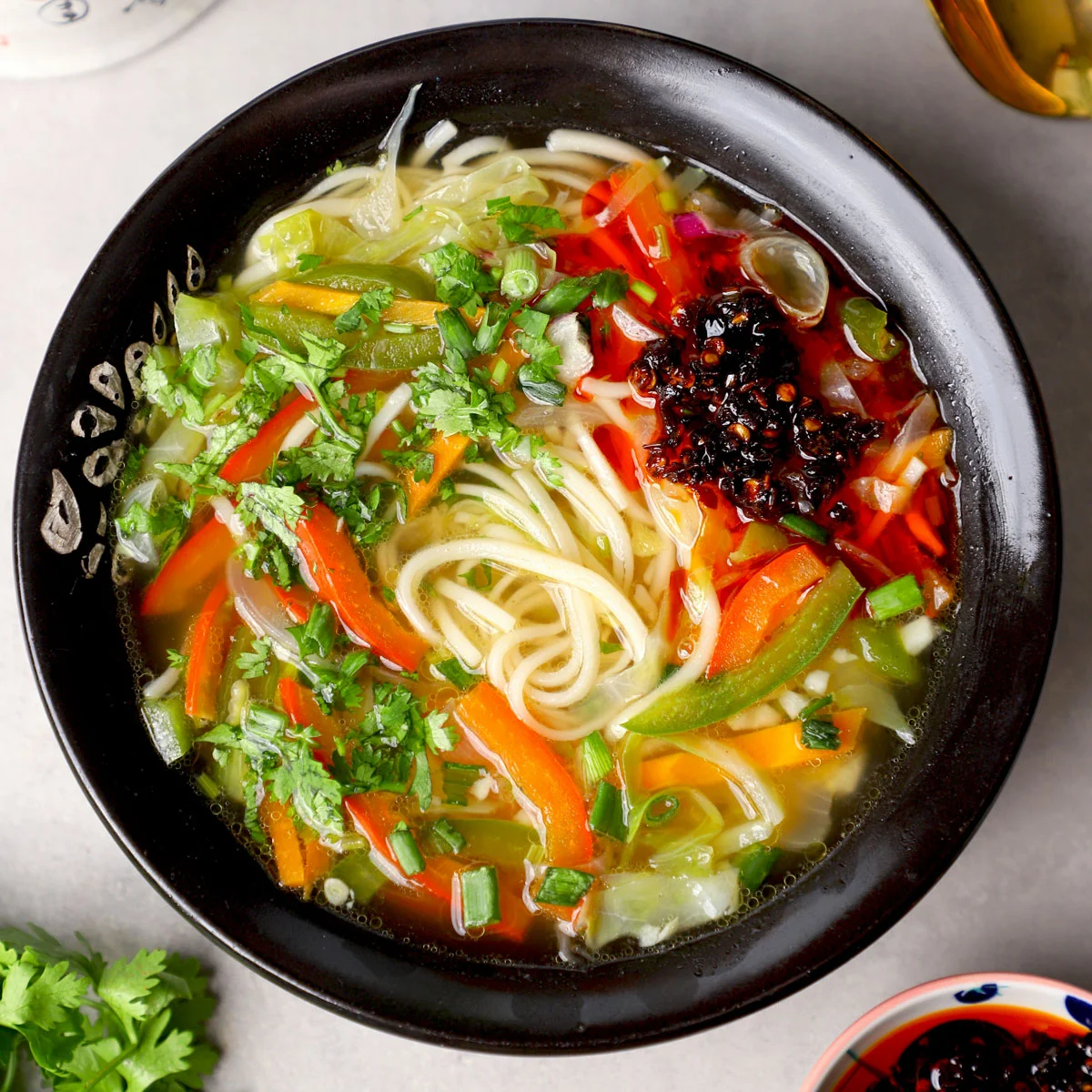
Veg thukpa is a warming Tibetan-style noodle soup with vegetables, ginger, garlic and a savoury soy broth. This one-pot version is a comforting choice for a chilly day and comes together in about 35 minutes.
Ingredients
- 150 gHakka noodles, uncooked
- 30 ml (2 tablespoons)refined vegetable oil
- 1 tablespoonminced garlic
- 1 tablespoonminced ginger
- 1 tablespoonfinely chopped coriander stalks
- 1 mediumred onion, sliced
- 2green chillies, sliced
- 120 ml (½ cup)shredded cabbage
- 120 ml (½ cup)thinly sliced red bell pepper
- 120 ml (½ cup)thinly sliced capsicum
- 120 ml (½ cup)thinly sliced carrot
- 1 tablespoondark soy sauce
- 1 teaspoonblack pepper powder
- ½ teaspoon or to tastesalt
- 960 ml (4 cups)vegetable stock
- 2spring onions, finely chopped
- 1 handfulfresh coriander leaves, chopped
Instructions
- 1
Heat the oil
Warm the vegetable oil in a large saucepan or stockpot over medium heat.
- 2
Soften the aromatics
Add the garlic, ginger, green chillies, coriander stalks and onion. Sauté for 1 minute, until aromatic; there is no need to brown them.
- 3
Add the stock
Pour in the vegetable stock and bring the soup to a gentle boil.
- 4
Add noodles and vegetables
Stir in the noodles, julienned vegetables, shredded cabbage, salt, pepper and soy sauce.
- 5
Simmer until tender
Simmer over high heat until the noodles are cooked and the vegetables have softened.
- 6
Finish and season
When the noodles are cooked, add the spring onion and coriander leaves. Taste the soup and add more salt or soy sauce if needed.
- 7
Serve the soup
The veg thukpa is ready to serve.
What is thukpa?
Thukpa is a noodle soup associated with Tibetan cuisine, with many versions enjoyed across the Himalayan region. It is built around a warm broth, noodles and vegetables, making it a flexible, satisfying meal.
This version uses a vegetable stock and seasons the broth with dark soy, pepper, ginger and garlic. Cooking the noodles and vegetables in the same pot keeps the method straightforward.
Nutrition and macros by portion
The nutrition label shows one serving as written: 560 calories, 11g protein, 74g carbs, 26g fat.
| Portion | Adjustment | kcal | Protein | Carbs | Fat |
|---|---|---|---|---|---|
| Lighter | Use less oil | 392 kcal | 8g | 52g | 18g |
| This serving | As written | 560 kcal | 11g | 74g | 26g |
| Hungry | Add extra noodles | 840 kcal | 17g | 111g | 39g |
The noodles provide most of the carbohydrates, while the vegetable oil contributes much of the fat. The vegetables and stock add some nutrients, but this version is relatively modest in protein; serve it with a protein-rich side such as tofu if you want a more balanced plate.
Build the flavour in the pot
Aromatics: briefly sauté the garlic, ginger, chillies, coriander stalks and onion until fragrant. Keep them from browning, as the method calls for a gentle start rather than a browned base.
Broth: vegetable stock provides the soup's liquid, while dark soy sauce adds savoury depth. Taste at the end before adding extra salt, since the stock and soy sauce may already season the broth.
Cut the vegetables evenly
Thin slices: cut the pepper, capsicum and carrot into slim pieces so they soften readily in the simmering soup. Shredded cabbage also cooks quickly and is easy to eat alongside the noodles.
Noodles: use uncooked Hakka noodles and add them directly to the stock as directed. Their cooking time can vary by brand, so check their texture as they simmer.
Watch the simmer
Gentle start: bring the stock to a gentle boil before adding the noodles and vegetables. This keeps the cooking sequence clear and helps the ingredients heat through evenly.
Doneness: simmer until the noodles are cooked and the vegetables have softened. Check both before adding the spring onion and coriander leaves at the end.
Finish with fresh toppings
Spring onion: add it once the noodles are cooked, so it brings a fresh note to the finished soup.
Coriander: stir in the chopped leaves at the same stage. A final taste lets you adjust the salt or soy sauce to suit the stock you used.
Serve it as a meal
Thukpa is designed to be served hot, with noodles, vegetables and broth together in each bowl. It can be a complete meal on its own.
For a more substantial spread, serve it with a simple side of steamed vegetables or another dish of your choice. Keep any side lightly seasoned so it does not compete with the savoury broth.
Recipe notes & tips
- Prepare and slice the vegetables before heating the oil, as the first sauté is brief.
- Use a large saucepan or stockpot so the noodles and vegetables can cook in the broth.
- Keep the aromatics moving and stop sautéing once they smell fragrant.
- Check the noodles as they cook, since brands can differ in cooking time.
- Taste the broth before adding extra salt or soy sauce.
Variations
- Adjust the heat: use fewer green chillies for a milder soup.
- Change the vegetables: swap in other quick-cooking vegetables while keeping the pieces thin.
- Add tofu: include tofu for a more substantial bowl.
- Use another noodle: choose a similar noodle and cook it until tender in the broth.
- Finish with lime: add a squeeze at the table for a bright contrast.
Common mistakes to avoid
- Browning the aromatics: sauté only until fragrant, as the method does not call for browning.
- Cutting vegetables too thickly: slice them thinly so they can soften in the soup.
- Overcooking the noodles: check them during the simmer and finish once they are cooked.
- Adding extra salt too soon: taste the broth after the soy sauce and stock have been combined.
- Skipping the final taste: adjust salt or soy sauce before serving.
How to store
Refrigerate leftovers in a covered container and use within 2 days. The noodles will continue to absorb broth, so reheat gently in a saucepan with a splash of water or stock until hot.
Frequently asked questions
Can I make the soup less spicy?
Yes. Use fewer green chillies, or leave them out for a milder broth.
How do I know when the noodles are done?
Taste one during the simmer. They should be cooked through while still holding their shape.
Can I use a different type of noodle?
Yes, but cooking times vary by noodle. Check the noodles as they simmer and cook until tender.
Can I prepare the vegetables ahead?
Yes. Slice them ahead and keep them covered in the fridge until you are ready to cook.
Why has the soup become less brothy after storing?
The noodles absorb liquid as they sit. Add a splash of water or vegetable stock when reheating.
Cook it from the original
This recipe comes from funfoodfrolic.com. Their page has the author’s own photos, notes and tips — the best place to cook it from.
Open the recipe on funfoodfrolic.com