
French Bread with Garlic Herb Spread ( Boursen Cheese Spread )
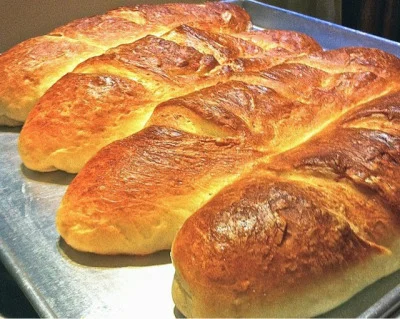
These homemade loaves have a crisp crust and a slightly chewy centre, served warm with a creamy garlic and herb spread. Make them when you have time for several short kneading rests and a final rise.
Ingredients
- 13.5 g (1 1/2 tablespoons; 4 1/2 teaspoons)instant yeast
- 120 ml (1/2 cup)warm water
- 19 g (1 1/2 tablespoons)sugar
- 360 ml (1 1/2 cups)water
- 22 ml (1 1/2 tablespoons)oil
- 11 g (2 1/4 teaspoons)salt
- 625 g (5 cups)all-purpose flour
- 113 gbutter
- 226 gcream cheese
- 1 clovegarlic
- 1/2 teaspoondried oregano leaves
- 1/2 teaspoondried basil leaves
- 1/2 teaspoonchicken seasoning
- 1egg white, for brushing
- A dashwater, for brushing
- Optional: 1 egg yolk and 15 ml (1 tablespoon) milkegg yolk and milk, for the alternative glaze
Instructions
- 1
Proof the yeast
In a mixing bowl, stir together the yeast, warm water and sugar. Leave for 10 minutes to proof.
- 2
Mix the dough
Add 2 cups of water, the oil, salt and 3 cups of flour, then mix until the flour is incorporated.
- 3
Add remaining flour
Gradually mix in the remaining 3 cups of flour. Knead for about 5 minutes.
- 4
Turn out dough
Move the dough to a generously floured surface, using a plastic scraper to help remove it from the mixing bowl.
- 5
Knead and rest
Knead the dough and form it into a ball, then leave it to rest for 10 minutes. Repeat the kneading and resting process 3 more times, punching the dough down, folding it over a few times and gathering it into a ball each time.
- 6
Shape the loaves
Divide the dough into 4 equal portions. Shape each into a rough rectangle, roll it up and pinch the seam to seal. Set each loaf seam-side down on a greased or lined baking tray.
- 7
Brush the loaves
Beat 1 egg white with a dash of water and brush it over each loaf, covering the whole surface. Alternatively, mix 1 egg yolk with 1 tablespoon of milk and brush that over the loaves for a softer, deep golden crust.
- 8
Slash the tops
Cut 3 diagonal lines across the top of each loaf.
- 9
Let the dough rise
Leave the shaped loaves to rise until doubled in size, about 30 minutes.
- 10
Bake the loaves
Bake in an oven preheated to 190°C for 30 minutes.
- 11
Make the spread
Bring the butter and cream cheese to room temperature, then stir all the spread ingredients together until combined.
- 12
Serve warm
Serve the bread warm with the garlic herb spread.
What is French bread with garlic herb spread?
This recipe makes four shaped yeast loaves with a brushed crust and a soft, slightly chewy middle. The name suggests French-style bread, though the method here is a home-baked loaf rather than a specific regional French bread.
The recipe pairs the bread with a Boursin-style spread of butter, cream cheese, garlic and dried herbs. The contrast between warm crusty bread and a cool, rich spread is what makes the combination work.
Nutrition and macros by portion
The nutrition label shows one serving as written: 970 calories, 23g protein, 131g carbs, 42g fat.
| Portion | Adjustment | kcal | Protein | Carbs | Fat |
|---|---|---|---|---|---|
| Lighter | Less spread per slice | 679 kcal | 16g | 92g | 29g |
| This serving | As written | 970 kcal | 23g | 131g | 42g |
| Hungry | Larger bread portion | 1455 kcal | 35g | 197g | 63g |
Most of the carbohydrates come from the flour, while the butter and cream cheese supply much of the fat. The flour also contributes protein, with a smaller amount from the cream cheese; the salt and chicken seasoning contribute sodium. Balance a portion with a generous salad or vegetables, and serve the spread on the side so you can choose how much to use.
The yeast and dough
Proofing: The yeast sits with warm water and sugar for 10 minutes before the other dough ingredients go in. This gives it time to become active; the water should feel warm rather than hot.
Flour: The ingredient list gives 5 cups, while the method calls for 3 cups followed by 3 more. Check the dough as you add the flour, since these quantities do not match; the aim is a kneadable dough, not to force in flour that the dough cannot take.
Why the repeated rests matter
Short rests: After the initial knead, the method calls for three more rounds of kneading and 10-minute rests. Keep the dough covered between rounds so the surface does not dry out.
Shaping: Each portion is rolled from a rough rectangle and pinched closed. Put the seam underneath on the tray so the loaf holds its shape as it rises.
Getting the crust right
Egg wash: Brush the whole loaf with the egg-white mixture, as the recipe notes that unbrushed areas can bake pale. The yolk-and-milk option is offered for a softer, deep golden crust.
Slashes: Make three diagonal cuts across each loaf before the final rise. The dough should be visibly doubled before baking, which the recipe estimates will take about 30 minutes.
The garlic herb spread
Soft dairy: Let the butter and cream cheese come to room temperature before stirring them together. This makes the spread easier to combine than if the ingredients are cold.
Seasoning: Garlic, dried oregano, dried basil and chicken seasoning flavour the creamy base. Stir until evenly mixed so each portion has a consistent balance of herbs and garlic.
Timing and serving
Plan for the repeated kneading and rests as well as the final 30-minute rise and 30-minute bake. The recipe does not give a total time, and the rising time may vary with the room and dough conditions.
Serve the loaves warm with the spread alongside. They also make a useful centrepiece for a meal with soup or a salad, which adds freshness beside the buttery bread.
Recipe notes & tips
- Measure the flour carefully because the ingredient list and method give different totals.
- Use a scraper to help lift the sticky dough from the mixing bowl.
- Keep the dough covered during its repeated rests to prevent a dry skin forming.
- Pinch each rolled loaf closed and place it seam-side down on the tray.
- Brush the entire surface of each loaf for even colouring.
- Let the loaves visibly double before baking rather than relying on the clock alone.
Variations
- Softer glaze: Use the listed egg-yolk-and-milk alternative instead of the egg-white wash.
- Herb balance: Adjust the proportions of dried oregano and basil to suit your preference.
- More garlic: Add extra finely crushed garlic to the spread for a stronger flavour.
- Spread texture: Leave the spread slightly less mixed for more distinct flecks of herbs.
- Serve as a side: Pair slices with soup or salad for a more rounded meal.
Common mistakes to avoid
- Adding all the flour at once: Add it gradually as directed and check the dough, since the quantities in the list and method conflict.
- Using hot water: Very hot water can hinder the yeast; use warm water for proofing.
- Skipping the rests: Keep the 10-minute rests between kneading rounds so the method has time to work.
- Leaving seams exposed: Pinch the rolled dough closed and set it seam-side down on the tray.
- Brushing unevenly: Cover the whole loaf with the egg wash to avoid pale patches.
- Baking before the rise: Wait until the loaves have doubled in size, about 30 minutes according to the recipe.
How to store
Once cool, store the bread in an airtight container or bag at room temperature and use within 2 days for the best texture. Refrigerate the spread in a covered container and use within 3–4 days. Warm bread briefly in a low oven; let refrigerated spread soften before serving.
Frequently asked questions
Why do the flour quantities not match?
The ingredient list states 5 cups, but the method says to use 3 cups and then add 3 more. The source does not resolve this difference, so add flour gradually and assess the dough rather than assuming both figures are correct.
How do I know the yeast has proofed?
After 10 minutes, the mixture should look active, often with some bubbles or foam. If it looks unchanged, check that the yeast is in date and the water was warm rather than hot or cold.
Can I use the alternative glaze?
Yes. The method offers a mixture of 1 egg yolk and 1 tablespoon of milk for a softer, deep golden crust instead of the egg-white-and-water wash.
How long should the final rise take?
The recipe estimates about 30 minutes, but use the visual cue: the loaves should be doubled in size before baking.
Can I make the spread ahead?
Yes. Mix it once the butter and cream cheese have softened, then keep it covered in the refrigerator. Let it soften a little before serving with warm bread.
Cook it from the original
This recipe comes from huangkitchen.com. Their page has the author’s own photos, notes and tips — the best place to cook it from.
Open the recipe on huangkitchen.com