
Chaofan (Chinese Fried Rice)
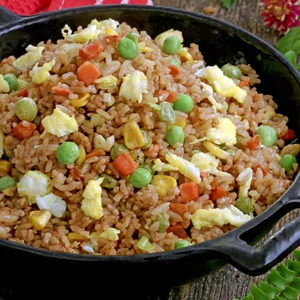
Chaofan is a quick Chinese-style fried rice with vegetables, egg and savoury sauces. It’s a practical way to use chilled leftover rice for a filling meal ready in about 15 minutes.
Ingredients
- 632 g (4 cups)cooked rice, chilled overnight
- 42 g (3 tablespoons)butter or margarine
- 3 clovesgarlic, minced
- 300 g (2 cups)mixed vegetables, diced, frozen or fresh
- 30 ml (2 tablespoons)soy sauce
- 30 ml (2 tablespoons)oyster sauce
- 15 ml (1 tablespoon)oil or butter
- 2 largeeggs, beaten
- 50 g (½ cup), optionalgreen onions
- 2.5 ml (½ teaspoon), optionalsesame oil
- to tastesalt and pepper
Instructions
- 1
Loosen the rice
Gently break up the rice with your hands, separating any clumps so the grains are loose. Set it aside.
- 2
Heat the butter
Melt the butter or margarine in a large pan or wok over high heat.
- 3
Cook the vegetables
Add the garlic and sauté until golden. Add the mixed vegetables and cook for 2 minutes, or until they are no longer frozen and any liquid has evaporated.
- 4
Add rice and sauces
Add the rice, soy sauce and oyster sauce, then toss to combine. Cook for another minute, stirring occasionally.
- 5
Scramble the eggs
Push the rice mixture towards the sides of the pan to make space in the centre. Add 1 tablespoon of oil or butter, then pour in the beaten eggs and stir until scrambled, breaking up any large pieces.
- 6
Season and finish
Toss everything together several times. Season with salt and pepper, stir, then cook for another 1–2 minutes without stirring.
- 7
Add final flavour
Stir in the green onions and sesame oil, if using, then remove the pan from the heat.
- 8
Serve the rice
Transfer the fried rice to a serving plate.
What is chaofan?
Chaofan is the Chinese term for fried rice, a dish built around cooked rice tossed in a hot pan with seasonings and other ingredients. This version combines vegetables, egg, garlic, soy sauce and oyster sauce for a simple, savoury meal.
Chilled day-old rice is the key to its texture: the grains are drier and easier to separate than freshly cooked rice. That helps the mixture fry rather than turn soft and clumpy.
Nutrition and macros by portion
The nutrition label shows one serving as written: 296 calories, 8g protein, 42g carbs, 11g fat.
| Portion | Adjustment | kcal | Protein | Carbs | Fat |
|---|---|---|---|---|---|
| Lighter | Use less butter | 207 kcal | 6g | 29g | 8g |
| This serving | As written | 296 kcal | 8g | 42g | 11g |
| Hungry | Serve a larger portion | 444 kcal | 12g | 63g | 17g |
The rice supplies most of the carbohydrates, while the butter and added oil account for much of the fat. The egg, rice and vegetables contribute protein, with soy sauce and oyster sauce adding sodium. Balance the plate with a serving of fresh vegetables, such as a crisp salad or steamed greens.
Choose the right rice
Day-old rice: Use rice that has been chilled in the fridge, as the recipe specifies. Gently loosen the grains before they go into the pan so you can mix them through without crushing them.
Fresh rice: If you do not have leftovers, spread freshly cooked rice out to cool before frying. It may be softer, so handle it gently and avoid adding extra liquid.
Build the savoury base
Garlic: Cook it in the melted butter until golden, keeping an eye on it over the high heat so it does not burn. Its flavour forms the aromatic base for the vegetables.
Sauces: Soy sauce brings saltiness, while oyster sauce adds a deeper savoury note. Toss them through the rice so the grains are coated evenly.
Get the pan sequence right
Vegetables first: Cook them with the garlic until any frozen chill is gone and excess liquid has evaporated. This prevents water from collecting in the finished rice.
Eggs in the centre: Move the rice mixture aside before adding the oil or butter and beaten eggs. Scramble them in the open space, then toss everything together once they have set.
Look for the right texture
The vegetables should be hot and no longer watery, and the egg should be fully scrambled into small pieces. The rice should remain in separate grains rather than forming a wet mass.
After seasoning, leave the mixture undisturbed for the final 1–2 minutes as directed. Finish with green onions and sesame oil off the heat to preserve their fresh aroma.
Serve it as a meal
Serve the chaofan hot as a simple main dish or alongside a Chinese-style meal. A light vegetable side or a bowl of soup can add freshness without competing with the savoury rice.
The recipe makes six servings, so it is also convenient for a shared meal. Put optional green onions and sesame oil in the pan at the end, or leave them out if you prefer.
Recipe notes & tips
- Break up cold rice before heating it so it is easier to toss evenly.
- Have the sauces, beaten eggs and vegetables ready before you start cooking over high heat.
- Use a large pan or wok to give the rice room to move as you toss it.
- Let excess moisture evaporate from the vegetables before adding the rice.
- Add the optional sesame oil at the end for a more pronounced aroma.
Variations
- Use margarine: Swap it for the butter in the first step if preferred.
- Choose fresh vegetables: Dice them to a similar size so they cook evenly.
- Skip the oyster sauce: Leave it out for a simpler seasoning, though the result will taste different.
- Leave out the egg: Omit it for an egg-free version of the rice.
- Finish with spring onions: Use the optional green onions for a fresh, savoury finish.
Common mistakes to avoid
- Using clumped rice: Gently separate the grains before cooking so they mix through the pan.
- Adding wet vegetables: Cook until their liquid evaporates before adding the rice.
- Burning the garlic: Watch it closely over high heat and add the vegetables once it turns golden.
- Scrambling the egg through the rice too soon: Make a space in the centre and cook it there first.
- Over-stirring at the end: Leave the rice undisturbed for the final 1–2 minutes as the method directs.
How to store
Refrigerate leftovers promptly in a covered container and use within 3–4 days. Reheat until steaming hot throughout, adding a small splash of water if the rice seems dry.
Frequently asked questions
Can I use freshly cooked rice?
The recipe is designed for chilled, day-old rice, which is easier to separate. If using fresh rice, cool it first and handle it gently to reduce clumping.
Can I use frozen mixed vegetables?
Yes. The method specifically allows frozen vegetables; cook them until they are no longer frozen and their liquid has evaporated.
Do I need a wok?
No. A large frying pan works, as long as it gives you enough room to toss the rice and vegetables.
Can I leave out the green onions or sesame oil?
Yes, both are optional. Add either or both at the end if you would like their flavour.
How do I stop the rice turning mushy?
Use chilled rice, loosen the grains before cooking and let liquid from the vegetables evaporate before adding the rice.
Cook it from the original
This recipe comes from foxyfolksy.com. Their page has the author’s own photos, notes and tips — the best place to cook it from.
Open the recipe on foxyfolksy.com