
Fried Black Promfet with Taucho
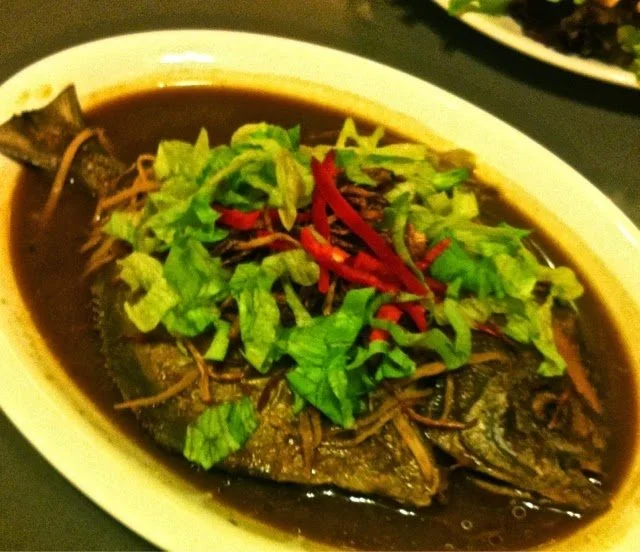
Whole black pomfret is fried until crisp, then briefly simmered in a savoury taucho sauce with ginger and garlic. It makes a flavourful Chinese-style fish dish with a short ingredient list and a striking combination of crisp fish and fragrant sauce.
Ingredients
- 1 mediumblack pomfret
- 1 knobfresh ginger, cut into thin strips
- 1 clovegarlic, minced
- 1 tablespoongood-quality taucho
- to tastered chillies and spring onion, for garnish
- to tastesalt
- as neededoil, for deep-frying
- 240 ml (1 cup)water
- to tastesugar
Instructions
- 1
Fry the fish
Clean the black pomfret and make two cuts across its middle. Season it with salt, then deep-fry in a pan or wok until golden and crisp. Lift it out and set aside.
- 2
Fry the ginger
In the same pan or wok, fry the ginger strips until golden and crisp. Remove half of the ginger from the oil and set it aside.
- 3
Cook the aromatics
Add the garlic and sauté until fragrant. Stir in the taucho and fry for about 1 minute, taking care not to overcook it or it may turn bitter.
- 4
Add the water
Quickly pour about 240 ml (1 cup) of water into the taucho mixture and bring it to the boil.
- 5
Simmer the fish
Add sugar and mix well. Put the fried pomfret into the sauce and simmer briefly.
- 6
Plate the fish
Transfer the fish to a serving plate and pour the sauce over it.
- 7
Add the garnish
Garnish with the reserved fried ginger, red chillies and spring onion.
- 8
Serve warm
Serve the fish while warm.
What is fried black pomfret with taucho?
This is a whole-fish dish in a Chinese-style savoury sauce, made with taucho, a fermented soybean paste. The recipe describes black pomfret as mild and suited to taking on the sauce’s flavour.
Frying the fish first gives it a crisp exterior, while ginger, garlic and taucho bring fragrance and salty depth. A brief simmer lets the sauce coat the fish without keeping it in the pan for long.
Nutrition and macros by portion
The nutrition label shows one serving as written: 360 calories, 36g protein, 5g carbs, 21g fat.
| Portion | Adjustment | kcal | Protein | Carbs | Fat |
|---|---|---|---|---|---|
| Lighter | Use less frying oil | 252 kcal | 25g | 4g | 15g |
| This serving | As written | 360 kcal | 36g | 5g | 21g |
| Hungry | Serve with extra rice | 540 kcal | 54g | 8g | 32g |
The fish provides most of the protein, while the frying oil contributes much of the fat; the small amount of sugar and any rice served alongside contribute carbohydrates. Pair a portion with rice and a generous serving of vegetables for a more balanced plate.
Choosing the fish and taucho
Whole fish: Choose a medium black pomfret that has been cleaned thoroughly. The recipe uses two cuts across its middle to help it fry evenly.
Taucho: Use a good-quality paste, as it is the main source of savoury flavour in the sauce. It can be salty, so taste the sauce before adding much extra salt.
Getting the fish crisp
Dry surface: Pat the cleaned fish dry before frying so excess moisture does not interfere with browning.
Hot oil: Fry until the fish is golden and crisp, turning it carefully if needed for even colour. Avoid crowding the pan, which can lower the oil temperature.
Frying the ginger and garlic
Ginger strips: Fry them until golden and crisp, then reserve half for the garnish. Keep a close eye on the thin strips, as they can darken quickly.
Garlic and paste: Sauté the garlic until fragrant, then stir-fry the taucho for about 1 minute. The recipe warns against frying the paste for too long, as it may turn bitter.
Simmering the sauce
Boiling water: Add about 240 ml of water promptly to the fried mixture and bring it to the boil.
Short finish: Add sugar to taste, then simmer the fish in the sauce briefly. The fish is already fried, so the sauce stage is for coating and warming it rather than prolonged cooking.
Serving the fish
Garnish: Scatter over the reserved ginger, red chillies and spring onion just before serving to retain their colour and texture.
On the plate: Serve warm with rice or plain noodles to complement the salty, savoury sauce. Spoon some sauce over the rice as well.
Recipe notes & tips
- Pat the cleaned fish dry before lowering it into the hot oil.
- Use a pan wide enough to hold the fish without bending it.
- Fry the ginger until golden, but remove it before it becomes dark.
- Keep the taucho frying to about 1 minute to avoid a bitter taste.
- Taste the sauce before adding salt, as taucho can already be salty.
- Add the garnish just before serving so the ginger stays crisp.
Variations
- Adjust the heat: Add more or fewer red chillies to suit your preference.
- Use another whole fish: The recipe notes that other whole fish can be used in place of black pomfret.
- Add spring onion: Use extra spring onion as a fresh, savoury garnish.
- Make the sauce sweeter: Add sugar gradually and taste as you go.
- Serve with vegetables: Add a side of steamed greens alongside the fish.
Common mistakes to avoid
- Wet fish: It can splatter and brown less effectively; pat it dry before frying.
- Crowded pan: The fish may not crisp evenly; fry it in a pan with enough room.
- Burnt ginger: It can taste bitter; remove the strips once they are golden and crisp.
- Over-fried taucho: The paste may turn bitter; stir-fry it for about 1 minute only.
- Long simmer: The fish can lose its crisp coating; simmer it in the sauce only briefly.
How to store
Refrigerate leftovers in a covered container within 2 hours and eat within 2 days. Reheat gently in a covered pan until hot throughout; the fried fish will soften after storage.
Frequently asked questions
Can I use a different fish?
Yes. The recipe says it works with any whole fish, though black pomfret is chosen for its mild flavour and ability to take up the sauce.
What is taucho?
Taucho is a fermented soybean paste used here to make the sauce savoury. Choose a good-quality paste and taste before adding extra salt.
How much water should I use?
The method calls for about 240 ml (1 cup). Add it quickly to the fried mixture and bring the sauce to the boil.
How long should the fish simmer in the sauce?
The recipe calls for a short simmer but does not specify a time. Stop once the sauce has coated and warmed the fish.
Can I prepare the fish ahead?
It is best served warm soon after frying and simmering, when the fish and ginger are at their crispest. You can clean and score the fish in advance, then refrigerate it until cooking.
What should I serve with it?
Rice or plain noodles work well with the savoury sauce. Add vegetables such as steamed greens to round out the meal.
Cook it from the original
This recipe comes from huangkitchen.com. Their page has the author’s own photos, notes and tips — the best place to cook it from.
Open the recipe on huangkitchen.com