
Jasmine Rice
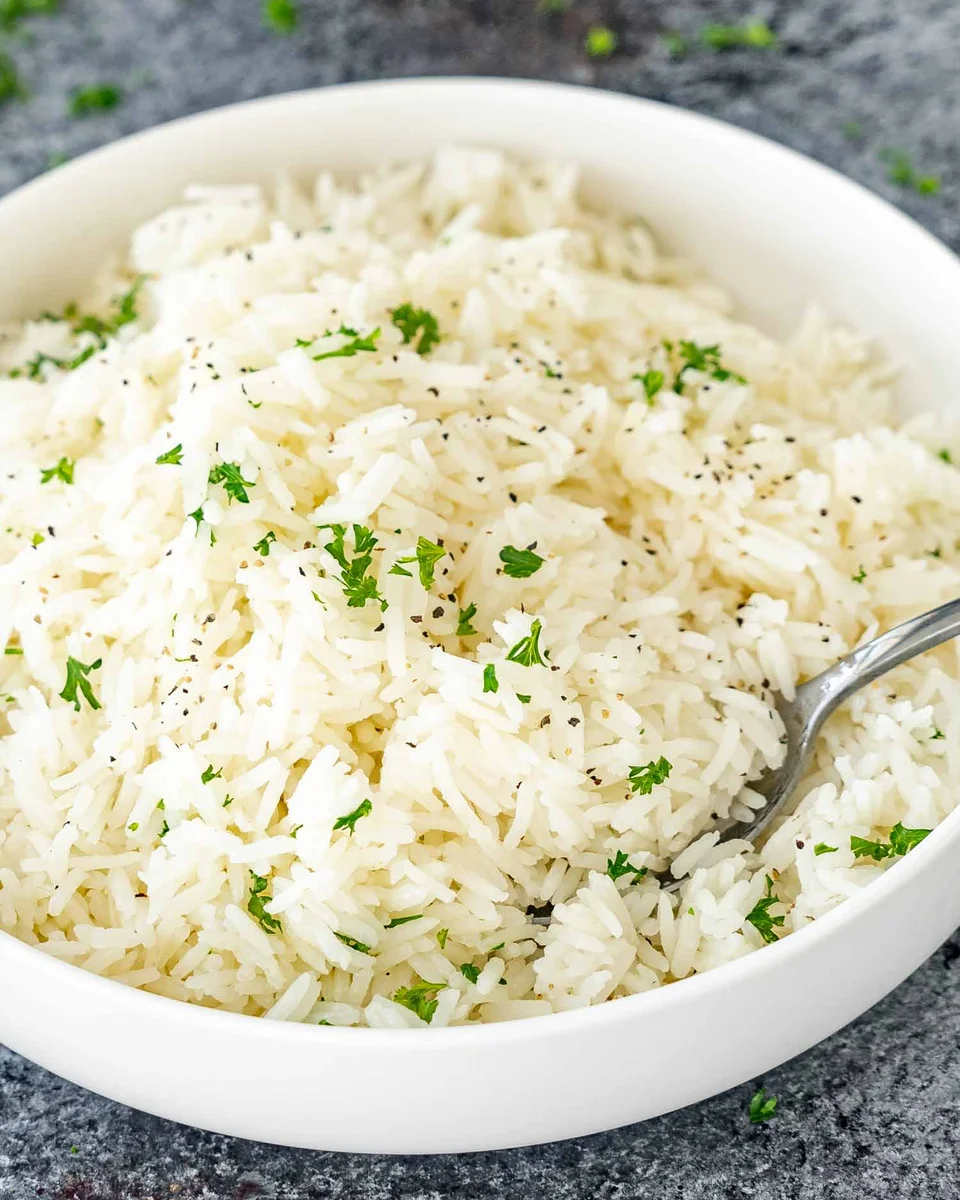
Jasmine rice is a fragrant, tender side dish with soft, separate grains and a gentle buttery finish. This simple stovetop method needs little hands-on work and pairs well with curries, stir-fries and other mains.
Ingredients
- 185 g (1 cup)Jasmine rice, unrinsed
- 414 ml (1¾ cups)water
- 2.5 g (½ teaspoon)salt
- 14 g (1 tablespoon)unsalted butter
Instructions
- 1
Add the ingredients
Put the unrinsed Jasmine rice in a medium-sized pot. Add 414 ml (1¾ cups) of water, then stir in the salt and add the butter.
- 2
Cook the rice
Set the pot over high heat and bring the water to a boil, watching to make sure it does not boil over. Reduce the heat to low, cover with a tight-fitting lid and simmer for about 15 minutes without lifting the lid.
- 3
Rest and fluff
Turn off the heat and leave the pot covered for about 5 minutes. Fluff the rice gently with a fork to separate the grains, then serve.
What is Jasmine rice?
Jasmine rice is a fragrant long-grain rice associated especially with Thailand and other parts of Southeast Asia. Its floral aroma and tender, slightly clingy texture make it a natural match for saucy dishes.
This version cooks the rice unrinsed, with water, salt and butter all added to the pot. The covered simmer and resting time help the grains finish cooking gently.
Nutrition and macros by portion
The nutrition label shows one serving as written: 194 calories, 3g protein, 37g carbs, 3g fat.
| Portion | Adjustment | kcal | Protein | Carbs | Fat |
|---|---|---|---|---|---|
| Lighter | Use less butter | 136 kcal | 2g | 26g | 2g |
| This serving | As written | 194 kcal | 3g | 37g | 3g |
| Hungry | Serve a larger portion | 291 kcal | 5g | 56g | 5g |
Most of the carbohydrates come from the rice, while the butter supplies most of the fat; the rice contributes a modest amount of protein. Pair a serving with vegetables and a protein-rich main to make a more complete plate.
Why this water amount works
Unrinsed rice: the recipe uses 414 ml of water for 185 g of rice, a little more than it might use for rinsed rice. Keeping the rice unrinsed also means there is no draining step.
Tight-fitting lid: a well-covered pot holds in the steam that cooks the grains. Keep the lid on during the simmer so the moisture stays in the pot.
The stovetop method
Bring to a boil: start over high heat and keep an eye on the pot as the water heats. Once it boils, lower the heat straight away to prevent a vigorous boil.
Gentle simmer: use low heat for about 15 minutes. The rice should absorb the water while cooking under the lid.
The resting stage
Covered rest: after turning off the heat, leave the rice covered for about 5 minutes. This gives the grains time to settle and finish absorbing moisture.
Fluff gently: use a fork to lift and separate the grains rather than stirring them vigorously. Serve once the rice is light and evenly loosened.
What to serve with it
Jasmine rice works well alongside Thai curries, stir-fries and grilled vegetables, where it can soak up sauces. It is also a simple base for a meal with tofu, fish, chicken or beans.
For a more balanced plate, add a generous portion of vegetables and a protein-rich main alongside the rice.
Timing and doneness
The rice simmers for about 15 minutes and then rests for about 5 minutes, making the cooking time roughly 20 minutes. The total time may also include the time needed to bring the water to a boil.
Avoid opening the pot to check during the simmer, as this releases steam. After the rest, fluff the rice and check that the grains are tender.
Recipe notes & tips
- Use a pot with enough room for the rice and water to bubble without spilling over.
- Keep the lid fitted snugly throughout the simmer and resting time.
- Lower the heat as soon as the water reaches a boil.
- Let the rice rest covered before fluffing it.
- Fluff with a fork using a light lifting motion to separate the grains.
Variations
- Use oil: replace the butter with a neutral oil for a dairy-free version.
- Add aromatics: simmer with a small piece of ginger for a subtle fragrant note.
- Finish with herbs: fold in chopped coriander just before serving.
- Add citrus: serve with a little lime juice and zest for a brighter side.
- Make it plain: omit the butter for a simpler rice accompaniment.
Common mistakes to avoid
- Lifting the lid: steam escapes and can interrupt cooking; keep the pot covered until the simmer is finished.
- Keeping the heat high: the water may boil over or cook away too quickly; reduce the heat to low once it boils.
- Skipping the rest: the grains may not settle evenly; leave the covered pot off the heat for about 5 minutes.
- Stirring vigorously: the grains can become clumpy; fluff gently with a fork instead.
- Walking away during boiling: the pot can boil over; watch it closely until you lower the heat.
How to store
Cool leftovers promptly and refrigerate in a covered container for up to 2 days. Reheat until steaming hot, adding a small splash of water if the rice seems dry.
Frequently asked questions
Should I rinse the rice first?
This recipe is designed for unrinsed rice and uses the stated amount of water on that basis. If you rinse it, drain it well before cooking.
Can I cook it without butter?
Yes. Omit the butter for a plainer result, or use a little neutral oil instead.
Why should I keep the lid on?
The lid traps steam, which helps cook the rice evenly. Lifting it during the simmer lets heat and moisture escape.
How can I tell when the rice is done?
After the 15-minute simmer and 5-minute rest, the grains should be tender and ready to fluff with a fork.
Can I make Jasmine rice ahead?
Yes. Refrigerate the cooked rice in a covered container and reheat it until steaming hot before serving.
Cook it from the original
This recipe comes from jocooks.com. Their page has the author’s own photos, notes and tips — the best place to cook it from.
Open the recipe on jocooks.com