
Focaccia Bread (Olive and Herb)
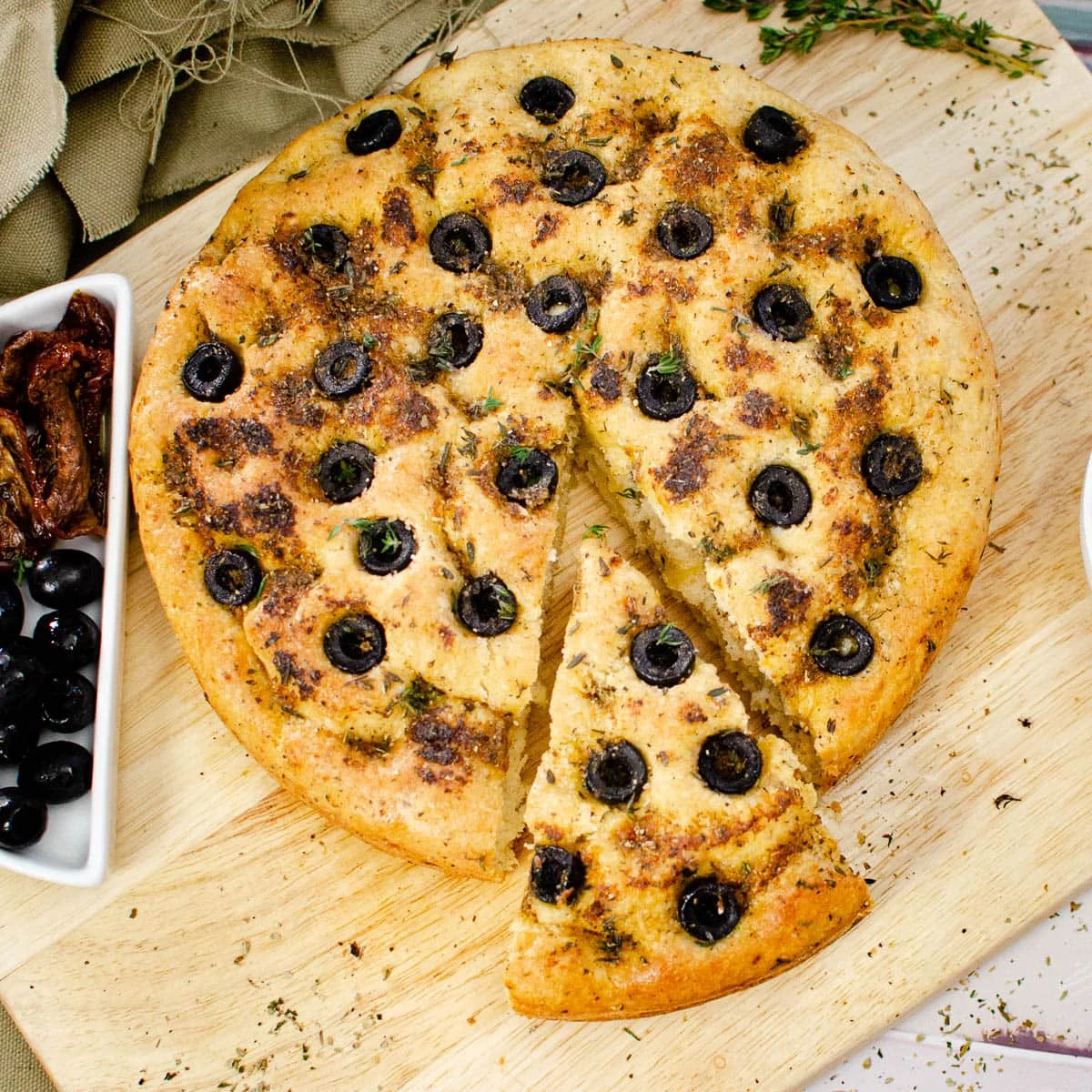
This olive and herb focaccia is a soft, dimpled Italian-style bread topped with black olives and rosemary, with garlic, sun-dried tomato and herbs worked into the olive oil. Bake it to serve as a starter, for dipping, or alongside pasta.
Ingredients
- 120 mlolive oil
- 2 tspgarlic purée (or 4 garlic cloves, blended with the sun-dried tomatoes)
- 1 tbspsun-dried tomato purée (or 6 sun-dried tomatoes, blended with the garlic)
- 1 tbspdried mixed herbs
- 1 pinchblack pepper
- 2 tspdried yeast
- 1/2 tsphoney
- 240 mlwarm water
- 300 gplain flour
- 1 pinchsalt
- 1 sprigfresh rosemary (optional)
- 1 handfulblack olives, halved
Instructions
- 1
Mix the oil
Combine the olive oil, garlic purée, sun-dried tomato purée, mixed herbs and black pepper in a bowl. Set aside.
- 2
Activate the yeast
In a large mixing bowl, stir together the dried yeast, warm water and honey. Leave for 5 minutes.
- 3
Add some flour
Add 120 g of the flour and 4 tbsp of the oil mixture to the yeast mixture. Stir until combined, then leave for another 5 minutes.
- 4
Make the dough
Stir in the remaining flour and a pinch of salt until a dough forms. It should be fairly wet and sticky.
- 5
Knead the dough
Lightly flour a board and knead the dough for 5 minutes, adding flour to the board only if needed. Keep the dough from becoming too dry, as extra flour can affect its rise.
- 6
Oil the tin
Spoon 2 tbsp of the oil mixture into the baking tin and spread it over the base and sides.
- 7
Leave to rise
Place the dough in the centre of the oiled tin and cover with a damp towel. Leave it somewhere warm and draught-free for 1 hour, or longer if needed, until doubled in size.
- 8
Heat and dimple
Once the dough has doubled, preheat the oven to 200°C fan or 220°C conventional. Oil your finger or thumb, then press dimples all the way down through the dough to the base of the tin.
- 9
Add the toppings
Drizzle 2 tbsp of the oil mixture over the dough, letting it run into the dimples. Press the halved black olives gently into the dimples.
- 10
Bake the focaccia
If using rosemary, scatter its leaves over the dough. Bake at 200°C fan or 220°C conventional for 20 minutes.
- 11
Brush with oil
Remove the focaccia from the oven and glaze it with the remaining oil mixture.
- 12
Rest and serve
Leave the bread to rest for 10 minutes before taking it out of the tin. Slice and serve.
What is focaccia?
Focaccia is a traditional Italian flatbread, recognised by its olive-oil-rich dough and characteristic dimples. It is often served alongside a meal or as a snack.
This version builds savoury flavour with garlic, sun-dried tomato purée, dried herbs and black olives. A final coating of the seasoned oil keeps the crust aromatic.
Nutrition and macros by portion
The nutrition label shows one serving as written: 291 calories, 5g protein, 31g carbs, 17g fat.
| Portion | Adjustment | kcal | Protein | Carbs | Fat |
|---|---|---|---|---|---|
| Lighter | Use less finishing oil | 204 kcal | 4g | 22g | 12g |
| This serving | As written | 291 kcal | 5g | 31g | 17g |
| Hungry | Serve a larger slice | 437 kcal | 8g | 47g | 26g |
The flour supplies most of the carbohydrates, while olive oil contributes most of the fat. The flour and yeast provide some protein, with olives and the seasoned oil adding flavour. Serve a slice with vegetables or a salad to round out the plate.
The seasoned oil
Oil mixture: garlic, tomato purée, herbs and black pepper are stirred into olive oil before the dough is made. Some is used in the dough and tin, while the rest flavours the top.
Olive oil: use an oil you enjoy the taste of, since it appears both in the bread and as its finishing glaze.
Working with sticky dough
Flour: the dough is meant to start out wet and sticky. Knead it on a lightly floured board, adding only what is necessary to handle it.
Texture: resist the urge to make the dough dry and firm with extra flour. The recipe relies on a soft dough that can rise and spread in the tin.
The rise and dimples
Rising: leave the covered dough in a warm, draught-free place for 1 hour, checking that it has doubled before moving on. It may need longer if it has not expanded enough.
Dimpling: oil your finger or thumb so it does not stick, then press down to the base of the tin. The holes hold the seasoned oil and make the bread's familiar uneven surface.
Toppings and baking
Olives: halve them and press them lightly into the dimples so they stay in place as the bread bakes. Fresh rosemary is optional and can be added with the olives.
Baking: the focaccia goes into a preheated oven at 200°C fan or 220°C conventional for 20 minutes. Glaze it with the leftover oil mixture as soon as it comes out.
Serving ideas
Serve the focaccia as a starter, or alongside pasta dishes where its olive oil and herbs complement the meal. It can also be torn into pieces for dipping.
For a simple pairing, offer a small dish of olive oil alongside the bread. Let the focaccia rest for 10 minutes before removing it from the tin and slicing.
Recipe notes & tips
- Measure out the 4 tbsp and 2 tbsp of oil mixture needed during the method before using the remaining mixture.
- Keep the dough covered while it rises so the surface does not dry out.
- Use just enough flour on the board to make the dough manageable.
- Oil your finger or thumb before pressing the dimples.
- Press the olives into the dough gently so they sit in the dimples.
- Let the focaccia rest for the full 10 minutes before lifting it from the tin.
Variations
- Fresh herbs: add rosemary leaves before baking for an extra herbal note.
- Garlic cloves: blend 4 cloves with the sun-dried tomatoes as an alternative to garlic purée.
- Sun-dried tomatoes: blend 6 tomatoes with the garlic instead of using tomato purée.
- Olive choice: use your preferred black olives, halved as directed.
- Dipping oil: reserve some of the seasoned oil to serve alongside the focaccia.
Common mistakes to avoid
- Adding too much flour: the dough can become dry and its rise may be affected; flour the board sparingly.
- Rushing the rise: wait until the dough has doubled, giving it longer than 1 hour if necessary.
- Skipping the oil on your finger: the dough may stick as you dimple it; coat your finger or thumb first.
- Making shallow dimples: press down to the base of the tin so the oil can collect in the holes.
- Removing it straight away: the bread may be harder to lift cleanly; leave it in the tin for 10 minutes.
How to store
Once cool, store the focaccia in an airtight container at room temperature and eat within 2 days. Reheat briefly in a warm oven to refresh the crust.
Frequently asked questions
How can I tell when the dough has risen enough?
It should have doubled in size. If it has not after 1 hour, leave it longer in a warm place away from draughts.
Can I use fresh garlic and sun-dried tomatoes?
Yes. The ingredient list gives the alternatives: blend 4 garlic cloves with 6 sun-dried tomatoes.
Is the rosemary essential?
No, it is optional. The focaccia still has flavour from the garlic, tomato, herbs, olives and seasoned oil.
Why is my dough sticky?
The recipe's dough is meant to be fairly wet and sticky before kneading. Add flour to the board only as needed rather than mixing in enough to make the dough dry.
How deep should I make the dimples?
Press all the way down until your finger or thumb reaches the base of the tin. Oil it first to help prevent sticking.
Can I prepare the focaccia ahead?
It is best enjoyed freshly baked. You can make it earlier and store it once cool, then warm it briefly in the oven before serving.
Cook it from the original
This recipe comes from flawlessfood.co.uk. Their page has the author’s own photos, notes and tips — the best place to cook it from.
Open the recipe on flawlessfood.co.uk