
Spicy Peanut Noodles
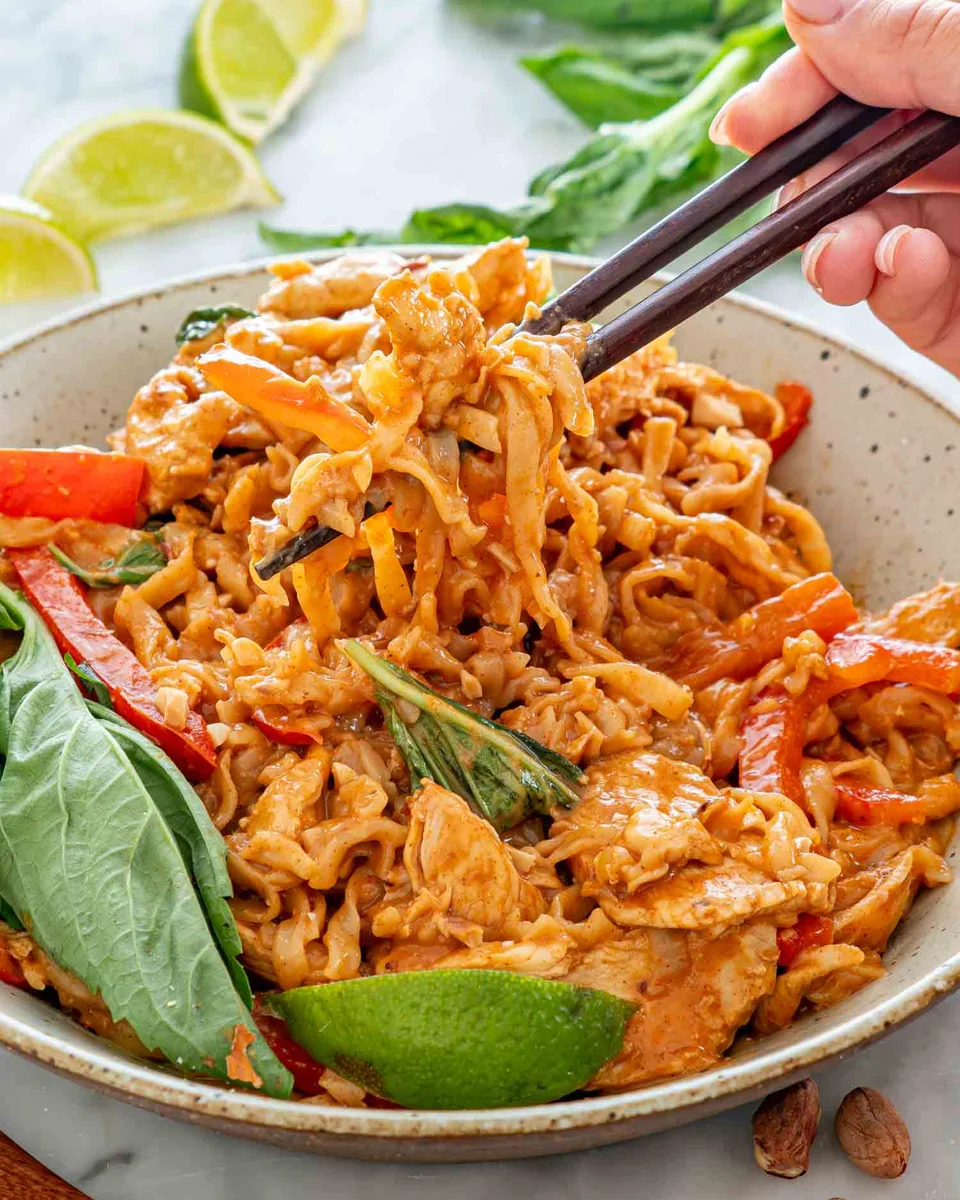
These spicy peanut noodles bring chewy noodles, tender chicken and crisp red pepper together in a creamy, savoury sauce with a chilli kick. They come together in about 20 minutes, making them a practical choice for a quick, filling dinner.
Ingredients
- 340 g (12 oz)Asian noodles, such as udon, soba or rice noodles
- 30 ml (2 tablespoons)toasted sesame oil
- 340 g (¾ lb)chicken breast, boneless and skinless, cut into small thin strips
- 5garlic cloves, minced
- 15 ml (1 tablespoon)fresh ginger, minced
- 1 mediumred pepper, sliced
- 120 ml (½ cup)reduced-sodium soy sauce
- 15 ml (1 tablespoon)honey
- 30 ml (2 tablespoons)rice vinegar
- 30 ml (2 tablespoons)gochujang (hot pepper paste)
- 120 ml (½ cup)smooth peanut butter
- 60–120 ml (¼–½ cup)water
- To tastefresh basil
- To tastelimes, cut into wedges
Instructions
- 1
Cook the noodles
Cook the noodles according to the instructions on their packet.
- 2
Mix the sauce
In a small bowl, whisk the peanut butter, gochujang, rice vinegar, honey, soy sauce and water together. Set the sauce aside.
- 3
Cook the chicken
Heat the sesame oil in a large frying pan or wok, then add the chicken and cook until it is no longer pink. Add the garlic and ginger and cook with the chicken for 30 seconds, until fragrant. Add the sliced red pepper and sauté for a further minute.
- 4
Toss everything
Add the noodles and peanut sauce to the wok. Take it off the heat and toss well so the noodles are coated in sauce.
- 5
Garnish and serve
Scatter over fresh basil and serve with lime wedges and crushed peanuts, if desired.
What are spicy peanut noodles?
This is a quick noodle dish drawing on familiar Asian-inspired flavours rather than a single traditional regional recipe. Peanut butter gives the sauce its creamy body, while soy, rice vinegar and gochujang bring savouriness, tang and heat.
Here, chicken makes the meal substantial and red pepper adds sweetness and a little crunch. Basil and lime at the end brighten the rich sauce.
Nutrition and macros by portion
The nutrition label shows one serving as written: 701 calories, 41g protein, 76g carbs, 28g fat.
| Portion | Adjustment | kcal | Protein | Carbs | Fat |
|---|---|---|---|---|---|
| Lighter | More pepper, less noodles | 491 kcal | 29g | 53g | 20g |
| This serving | As written | 701 kcal | 41g | 76g | 28g |
| Hungry | Larger noodle portion | 1052 kcal | 62g | 114g | 42g |
The noodles provide most of the carbohydrates, while peanut butter and sesame oil account for much of the fat. Chicken contributes protein, with additional protein from the peanuts. For a more balanced plate, serve a portion with extra vegetables such as greens or steamed broccoli.
Choosing the noodles
Noodle type: Udon gives the dish a thick, chewy bite; soba and rice noodles offer different textures and flavours. Any of the listed options works, so follow the packet timing for your choice.
Doneness: Drain the noodles when tender but not falling apart. They will be tossed with the sauce, so avoid cooking them well past the packet's suggested texture.
Building the peanut sauce
Smooth peanut butter: It makes a cohesive sauce that clings to the noodles. Whisk it with the soy sauce, honey, vinegar and gochujang before adding water.
Water: Start with the lower amount and whisk until smooth, adding more as needed for a consistency that will coat the noodles. The sauce should be pourable rather than stiff.
Cooking the chicken and aromatics
Thin strips: Cutting the chicken into small, thin pieces helps it cook quickly in the hot pan. Cook until no longer pink before adding the aromatics.
Garlic and ginger: Give them just 30 seconds with the chicken, until fragrant. Then add the pepper for one minute so it warms through without losing all its bite.
Tossing for an even coating
Off the heat: Once the noodles and sauce go into the wok, remove it from the hob and toss thoroughly. This helps distribute the thick sauce without continuing to cook the noodles in the pan.
Texture check: If the noodles seem clumped or the sauce is too thick to spread, loosen it with a little more of the measured water before serving.
Serving the noodles
Fresh finish: Add basil just before serving, and offer lime wedges at the table so each person can add a squeeze to taste. Crushed peanuts are an optional garnish mentioned in the method.
On the side: Serve the noodles on their own or alongside a simple green salad or lightly cooked vegetables for a fresher contrast.
Recipe notes & tips
- Prepare the sauce while the noodles cook to keep the process within the 20-minute total time.
- Slice the chicken into similarly sized thin strips so the pieces cook at roughly the same pace.
- Taste the sauce before tossing and adjust its thickness with the water provided.
- Keep the garlic and ginger moving in the pan so they become fragrant without browning too much.
- Serve lime wedges at the table so everyone can add citrus to their own portion.
Variations
- Extra heat: Add more gochujang to the sauce a little at a time.
- Vegetarian version: Replace the chicken with firm tofu and cook it until lightly coloured.
- More vegetables: Add sliced greens or carrots along with the red pepper.
- Different protein: Use thinly sliced prawns in place of the chicken and cook them until opaque.
- Crunchy topping: Finish with crushed peanuts for extra texture, as suggested in the method.
Common mistakes to avoid
- Overcooked noodles: Follow the packet timing and drain them while they still hold their shape.
- Thick sauce: Whisk in the water gradually until the peanut mixture is easy to toss through the noodles.
- Uneven chicken pieces: Cut the strips to a similar thickness so they cook more consistently.
- Burnt aromatics: Add the garlic and ginger after the chicken and sauté for only 30 seconds.
- Soft pepper: Keep its pan time to about one minute for a little remaining bite.
How to store
Refrigerate leftovers in a sealed container and use within 3 days. Reheat gently in a pan or microwave, adding a splash of water if the peanut sauce has thickened; stir until piping hot throughout.
Frequently asked questions
Can I use a different type of noodle?
Yes. Udon, soba and rice noodles are all suitable; cook whichever you choose according to its packet instructions.
How can I make the sauce less thick?
Whisk in water a little at a time until it is smooth and easy to pour. The recipe allows 60–120 ml, so adjust within that range to suit the noodles.
Can I make this without chicken?
Yes. You can leave the chicken out or replace it with tofu or another protein. The original method uses chicken breast cut into thin strips.
How spicy is the dish?
Gochujang gives the sauce its heat, and the result depends on the paste you use and your preference. Use less if you want a milder sauce.
Can I prepare the sauce ahead?
Yes. Whisk it together in advance and refrigerate it in a covered container. Stir it well before using, and add a little water if it has thickened.
Cook it from the original
This recipe comes from jocooks.com. Their page has the author’s own photos, notes and tips — the best place to cook it from.
Open the recipe on jocooks.com