
Miso Roasted Butternut Squash
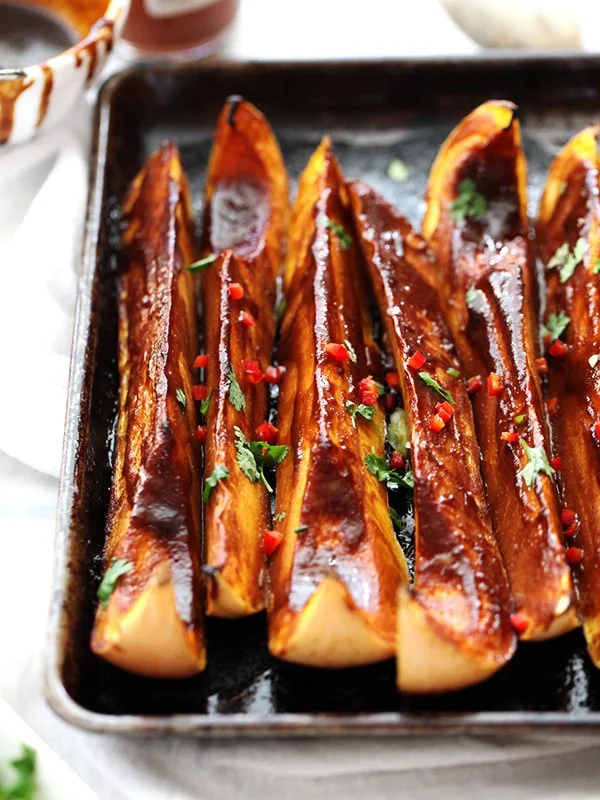
Butternut squash is roasted until tender beneath a savoury-sweet glaze of white miso, mirin and soy, then finished with sesame oil, jalapeño and coriander. It makes a colourful side dish with plenty of flavour from a short ingredient list.
Ingredients
- 1 medium or largebutternut squash, peeled, seeded and cut into wedges or 2.5 cm cubes
- 75 ml (5 tablespoons)white miso
- 60 ml (¼ cup)mirin or sake
- 30 ml (2 tablespoons)vegetable oil
- 30 ml (2 tablespoons)rice vinegar
- 2 tablespoonslight brown sugar
- 15 ml (1 tablespoon)thick soy sauce
- 10 ml (2 teaspoons)sesame oil
- 15 ml (1 tablespoon)red jalapeño, seeded and minced
- 15 ml (1 tablespoon)coriander leaves, minced
Instructions
- 1
Heat the oven
Preheat the oven to 200°C (400°F).
- 2
Mix the glaze
In a small bowl, combine the miso, mirin or sake, vegetable oil, rice vinegar, brown sugar and soy sauce. Stir until the sugar has dissolved. Arrange the squash skin-side down on a roasting pan sprayed with cooking spray, then spread it generously with the miso mixture.
- 3
Roast and serve
Roast for 45–50 minutes, or until a fork passes easily into the squash. Serve whole or cut the wedges in half. Garnish with the minced jalapeño and coriander, drizzle with sesame oil, and serve with extra miso mixture if desired.
What is miso roasted butternut squash?
This is a simple roasted squash dish with a Japanese-inspired glaze built around miso, mirin and soy sauce. Miso is a fermented soybean paste used widely in Japanese cooking; here, its savoury depth balances the squash’s natural sweetness.
White miso keeps the glaze relatively mild, while vinegar and jalapeño add sharpness. Roasting the squash in wedges or cubes gives it time to soften and take on the glaze.
Nutrition and macros by portion
The nutrition label shows one serving as written: 280 calories, 5g protein, 43g carbs, 11g fat.
| Portion | Adjustment | kcal | Protein | Carbs | Fat |
|---|---|---|---|---|---|
| Lighter | Use less glaze | 196 kcal | 4g | 30g | 8g |
| This serving | As written | 280 kcal | 5g | 43g | 11g |
| Hungry | Serve a larger portion | 420 kcal | 8g | 65g | 17g |
Most of the carbohydrates come from the squash and brown sugar, while the oils provide most of the fat; miso and soy contribute some protein and sodium. Pair a serving with a source of protein and a fresh vegetable side for a more rounded plate.
Choosing the ingredients
White miso: its gentle, rounded savouriness complements rather than overwhelms the squash. Thick soy sauce adds further savoury flavour and colour to the mixture.
Mirin or sake: either can be used in the glaze. Mirin brings sweetness, while sake gives a less sweet result; the brown sugar adds sweetness to the mixture either way.
Squash: peel, seed and cut it into wedges or roughly 2.5 cm cubes. Try to keep the pieces a similar size so they become tender at about the same time.
Getting the glaze right
Dissolve the sugar: stir the glaze ingredients together until you can no longer feel sugar crystals at the bottom of the bowl. This helps the mixture coat the squash evenly.
Coat well: spread the mixture over the squash after arranging it skin-side down. A generous coating helps season the flesh as it roasts.
Checking for doneness
Fork test: the squash is ready when a fork slides into the thickest part easily. If it still feels firm, continue roasting and check again after a few minutes.
Cut size matters: wedges and cubes may cook at different rates, so use tenderness rather than the clock alone as your guide within the stated roasting time.
Finishing with fresh flavour
Sesame oil: drizzle it over the squash after roasting so its aroma stays distinct. The recipe uses it as a finishing touch rather than mixing it into the glaze.
Jalapeño and coriander: add these just before serving for fresh, sharp contrast against the sweet, savoury squash. Remove the jalapeño seeds as directed.
Serving ideas
Serve the squash as a side alongside rice, noodles or a simple protein such as tofu, fish or chicken. A crisp salad can bring a fresh counterpoint to the soft, glazed texture.
The extra miso mixture can be served alongside for anyone who wants more glaze. Keep it separate from the cooked squash until serving.
Recipe notes & tips
- Choose pieces of similar size so they roast at a similar pace.
- Taste the glaze before coating the squash and adjust the balance with a little more rice vinegar if needed.
- Spread the squash out in a single layer on the roasting pan.
- Use a fork to check the thickest piece before taking the pan from the oven.
- Add the jalapeño, coriander and sesame oil just before serving.
Variations
- Add ginger: stir a little finely grated ginger into the glaze for a warm, aromatic note.
- Use chilli flakes: replace the fresh jalapeño with a pinch of chilli flakes for a different kind of heat.
- Add sesame seeds: scatter toasted sesame seeds over the finished squash for extra crunch.
- Try another squash: use peeled pumpkin or another firm winter squash, checking for tenderness as it roasts.
- Make it less sweet: reduce the brown sugar slightly for a more savoury glaze.
Common mistakes to avoid
- Uneven pieces: large chunks take longer to soften, so cut the squash to a consistent size.
- Skipping the sugar dissolve: undissolved sugar can leave the glaze uneven, so stir until the mixture is smooth.
- Crowding the pan: tightly packed pieces may roast less evenly, so arrange them in a single layer.
- Relying only on the timer: check the thickest piece with a fork and roast longer if it is still firm.
- Adding the garnish too early: finish with the jalapeño, coriander and sesame oil after roasting to keep their flavours distinct.
How to store
Cool leftovers and refrigerate them in an airtight container for up to 3 days. Reheat in the oven until hot, or warm gently in the microwave; the squash will be softer after reheating.
Frequently asked questions
Can I use mirin instead of sake?
Yes. The recipe allows either. Mirin is sweeter, while sake gives a less sweet glaze.
Do I have to cut the squash into wedges?
No. You can cut it into roughly 2.5 cm cubes instead. Keep the pieces a similar size and check them for tenderness as they roast.
How do I know when the squash is cooked?
A fork should pass easily into the thickest piece. Roast for the stated 45–50 minutes, checking near the end.
Can I prepare the glaze ahead?
You can mix the glaze ahead and refrigerate it in a covered container. Stir it again before spreading it over the squash.
Can I make this without the jalapeño?
Yes. Leave it out if you prefer a milder finish; the roasted squash and glaze will still provide plenty of flavour.
Cook it from the original
This recipe comes from foodiecrush.com. Their page has the author’s own photos, notes and tips — the best place to cook it from.
Open the recipe on foodiecrush.com