
Herb Crusted Pork Tenderloin
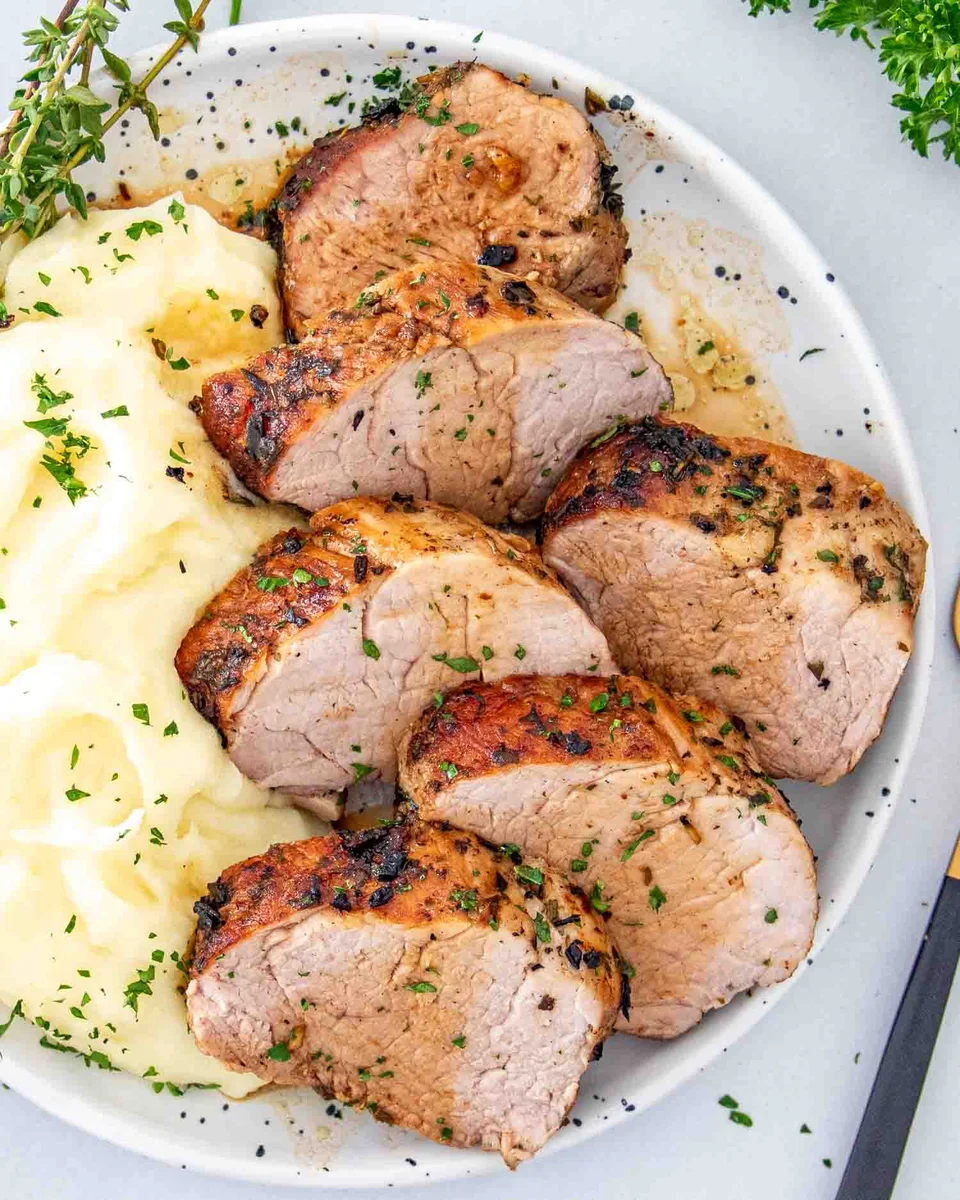
This herb-crusted pork tenderloin is seared until golden, then roasted with garlic, rosemary, thyme and parsley. It makes a straightforward centrepiece for a weeknight dinner or a special meal, and is ready in 45 minutes.
Ingredients
- 454–680 g (1 to 1.5 pounds)pork tenderloin
- 30 ml (2 tablespoons)olive oil
- 2 cloves, mincedgarlic
- 15 ml (1 tablespoon)fresh rosemary, finely chopped
- 15 ml (1 tablespoon)fresh thyme, finely chopped
- 15 ml (1 tablespoon)fresh parsley, finely chopped
- to tastesalt and pepper
Instructions
- 1
Preheat the oven
Heat the oven to 200°C (400°F).
- 2
Prepare the pork
Trim excess fat and silver skin from the tenderloin, then pat it dry with paper towels.
- 3
Mix the herbs
In a small bowl, combine the minced garlic, rosemary, thyme, parsley, salt and pepper with the olive oil to make a paste.
- 4
Coat the tenderloin
Rub the herb paste over the pork, coating it evenly.
- 5
Sear all sides
Heat a skillet over medium-high heat. Add the pork and sear each side for about 2–3 minutes, until golden brown.
- 6
Roast the pork
Put the skillet in the preheated oven, or transfer the pork to a baking dish if the skillet is not oven-safe. Roast for 20–25 minutes, until the internal temperature reaches 63°C (145°F).
- 7
Rest and serve
Leave the pork to rest for 5–10 minutes before slicing so the juices can redistribute through the meat.
What is herb-crusted pork tenderloin?
Pork tenderloin is a lean, tender cut from along the pig’s backbone, and roasting it whole keeps preparation simple. This American-style version uses a fresh herb and garlic coating, with a quick sear before roasting for a browned exterior.
Fresh rosemary, thyme and parsley give the crust its savoury, aromatic character. The short roast helps the tenderloin stay juicy when it is taken out at the stated internal temperature and rested.
Nutrition and macros by portion
The nutrition label shows one serving as written: 611 calories, 94g protein, 1g carbs, 23g fat.
| Portion | Adjustment | kcal | Protein | Carbs | Fat |
|---|---|---|---|---|---|
| Lighter | Use less olive oil | 428 kcal | 66g | 1g | 16g |
| This serving | As written | 611 kcal | 94g | 1g | 23g |
| Hungry | Add potatoes and vegetables | 917 kcal | 141g | 2g | 35g |
The pork provides most of the protein, while the olive oil contributes most of the fat; the recipe contains very little carbohydrate. Add vegetables and a portion of potatoes or another grain to round out the plate.
Choosing the ingredients
Fresh herbs: Chopping the rosemary, thyme and parsley finely helps them combine with the garlic and oil into a paste that is easy to spread.
Pork: The recipe allows for a tenderloin between 454 and 680 g. A larger piece may need more time to reach the specified internal temperature, so use the temperature cue rather than relying only on the clock.
Making the herb coating
Herb paste: Mix the herbs, garlic, salt and pepper with the olive oil until the mixture holds together. Rub it over all sides of the tenderloin so each slice gets some of the seasoning.
Even coating: Patting the pork dry first helps the paste cling to its surface. Trim away silver skin, which can remain chewy after cooking.
Searing before roasting
Golden surface: Sear the tenderloin over medium-high heat for about 2–3 minutes per side. Let each side brown before turning rather than moving the pork repeatedly.
Oven-safe pan: If your skillet cannot go into the oven, transfer the seared pork to a baking dish before roasting. Take care when handling the hot skillet.
Checking when it is done
Temperature: Roast for 20–25 minutes, checking the thickest part of the tenderloin for an internal temperature of 63°C (145°F). The cooking time can vary with the size and shape of the meat.
Resting: Allow 5–10 minutes before slicing. This pause gives the juices time to settle through the meat instead of running straight onto the board.
Serving the tenderloin
Slice the rested pork across the grain for tender portions. Serve it with roasted vegetables, potatoes or a simple salad to make a complete meal.
The herb coating is savoury and lightly fragrant, so choose sides that complement it without overwhelming the pork. Spoon any juices from the resting plate over the slices.
Recipe notes & tips
- Pat the tenderloin dry before adding the herb mixture so the coating adheres well.
- Chop the herbs finely to make the paste easier to spread evenly.
- Brown each side for about 2–3 minutes before moving the pork to the oven.
- Use an oven thermometer to check the thickest part of the meat.
- Rest the tenderloin for 5–10 minutes before slicing.
- Slice across the grain for a tender bite.
Variations
- Add lemon: Mix a little finely grated lemon zest into the herb paste for a brighter flavour.
- Change the herbs: Replace one of the listed herbs with an equal amount of another fresh herb you enjoy.
- Add mustard: Stir a little mustard into the coating for a sharper savoury note.
- Make it spicy: Add a pinch of chilli flakes to the herb mixture.
- Serve with greens: Pair the slices with steamed green beans or a leafy salad.
Common mistakes to avoid
- Skipping the drying step: Wet pork can make the coating slip; pat the surface dry before seasoning.
- Leaving silver skin on: It can stay tough after cooking; trim it away before coating the tenderloin.
- Turning too soon: The pork may not brown well; allow each side 2–3 minutes before rotating.
- Guessing doneness by time: Tenderloin size affects cooking; check for 63°C (145°F) in the thickest part.
- Slicing immediately: Juices can run out onto the board; rest the meat for 5–10 minutes first.
How to store
Refrigerate leftover pork in an airtight container and use within 3–4 days. Reheat gently until hot throughout, taking care not to overcook the lean meat.
Frequently asked questions
Can I use dried herbs instead of fresh?
Fresh herbs are specified for this recipe and give the coating its fresh flavour. Dried herbs are more concentrated, so use less if substituting.
How do I know when the pork is ready?
Check the thickest part with a meat thermometer; the recipe calls for 63°C (145°F). The stated 20–25 minutes is a guide, as tenderloin size can affect the time.
Can I roast it without an oven-safe skillet?
Yes. After searing, transfer the pork to a baking dish and roast it in the preheated oven.
Why should the pork rest before slicing?
Resting for 5–10 minutes allows the juices to redistribute through the meat, helping the slices stay moist.
What sides go well with it?
Roasted vegetables, potatoes or a simple salad all suit the herb and garlic coating. Add a carbohydrate-rich side if you want a more substantial plate.
Cook it from the original
This recipe comes from jocooks.com. Their page has the author’s own photos, notes and tips — the best place to cook it from.
Open the recipe on jocooks.com