
Irish Soda Bread Scones
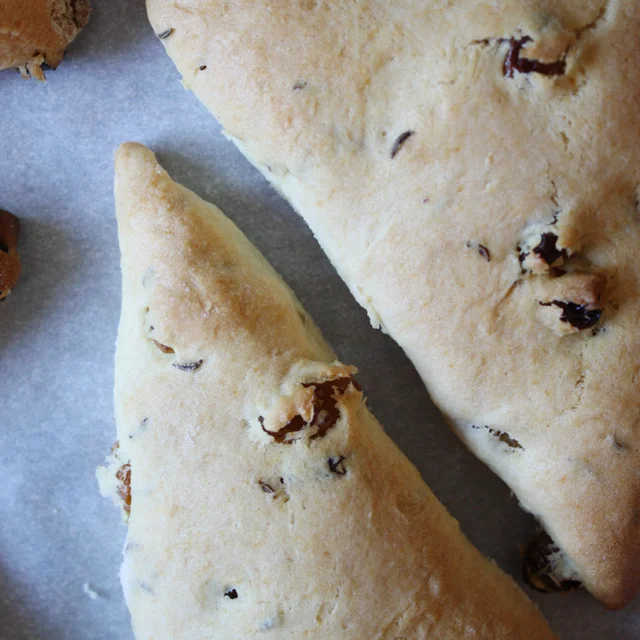
These Irish soda bread scones combine a tender, buttery crumb with golden raisins and caraway seeds. Their crisp edges and gentle sweetness make them a welcome bake for breakfast or an afternoon tea table.
Ingredients
- 345 g (2¾ cups)pastry flour or unbleached plain flour
- 50 g (¼ cup)sugar
- 15 ml (1 tablespoon)baking powder
- 5 ml (1 teaspoon)bicarbonate of soda
- 170 g (6 oz), cut into 1.25 cm (½-inch) cubesunsalted butter
- 150 g (1 cup)golden raisins
- 6 g (1 tablespoon)caraway seeds
- 240 ml (1 cup)buttermilk
Instructions
- 1
Heat and chill
Preheat the oven to 190°C (375°F). Freeze the butter cubes for 15 minutes.
- 2
Mix dry ingredients
Fit a stand mixer with the paddle attachment. Add the flour, sugar, baking powder and bicarbonate of soda, and mix to combine.
- 3
Rub in butter
Add the chilled butter and mix until the mixture looks like coarse cornmeal.
- 4
Form the dough
Add the buttermilk, golden raisins and caraway seeds. Mix on low speed just until a dough forms.
- 5
Knead gently
Turn the dough out onto a lightly floured surface and knead gently for about 2 minutes.
- 6
Shape the dough
Shape the dough into a rectangle about 2.5 cm (1 inch) thick.
- 7
Cut the scones
Cut the rectangle into squares, then cut each square diagonally into triangles.
- 8
Bake until golden
Arrange the scones on a baking sheet lined with baking parchment. Bake for 25–30 minutes, until lightly browned.
What are Irish soda bread scones?
Irish soda bread is traditionally leavened with bicarbonate of soda rather than yeast, and these scones borrow its quick-bread character. They bring that idea into a buttery, lightly sweet bake with raisins and caraway.
Cold butter gives the crumb tenderness, while buttermilk works with the raising agents to help the dough rise. Cutting the dough into triangles makes these easy to portion and serve.
Nutrition and macros by portion
The nutrition label shows one serving as written: 197 calories, 4g protein, 26g carbs, 10g fat.
| Portion | Adjustment | kcal | Protein | Carbs | Fat |
|---|---|---|---|---|---|
| Lighter | Smaller scone portion | 138 kcal | 3g | 18g | 7g |
| This serving | As written | 197 kcal | 4g | 26g | 10g |
| Hungry | Serve two scones | 296 kcal | 6g | 39g | 15g |
The flour, sugar and raisins supply most of the carbohydrates, while butter provides much of the fat. Flour and buttermilk contribute some protein; serve a scone with yoghurt or eggs and fruit for a more balanced plate.
The key ingredients
Flour: pastry flour makes a tender scone, while unbleached plain flour is the stated alternative. Measure it carefully so the dough does not become unnecessarily dry.
Buttermilk: its tang balances the sugar and helps activate the bicarbonate of soda. Add it with the fruit and seeds, mixing only until the dough comes together.
Caraway and raisins: caraway gives the scones their distinctive aromatic note, and golden raisins add pockets of sweetness.
Keep the butter cold
Chill the cubed butter in the freezer for the full 15 minutes before mixing. Cold pieces stay distinct longer as they are worked into the flour, helping create a tender texture.
Stop mixing when the flour and butter resemble coarse cornmeal. If you continue until the mixture turns smooth, the finished scones may be less delicate.
Handle the dough lightly
Mix on low speed after adding the buttermilk, raisins and caraway, and stop as soon as a dough forms. A slightly uneven dough is preferable to one that has been worked until smooth.
Knead gently for about 2 minutes on a lightly floured surface. Use only enough flour to prevent sticking, then shape the dough to an even 2.5 cm thickness for more consistent baking.
Cutting and baking
Cut the rectangle into squares before dividing them diagonally into triangles. A decisive cut helps the pieces keep their shape.
Bake at 190°C (375°F) for 25–30 minutes, looking for light browning as the cue to take them out. The recipe’s stated total time is 43 minutes, with the butter-chilling time included in the method.
Serving ideas
Serve the scones warm or at room temperature, with tea or coffee. Their raisins provide sweetness, while the caraway adds enough savoury fragrance to make them feel at home alongside a simple spread.
For a more substantial plate, pair one with yoghurt or eggs and fresh fruit. These accompaniments complement the scones without changing their flavour.
Recipe notes & tips
- Chill the butter cubes for the full 15 minutes before mixing.
- Use a light hand when kneading so the scones stay tender.
- Keep the work surface only lightly floured to avoid drying the dough.
- Cut the dough cleanly into triangles rather than sawing through it.
- Begin checking for light browning at 25 minutes.
Variations
- Plain flour: use unbleached plain flour instead of pastry flour, as allowed in the recipe.
- Darker raisins: swap the golden raisins for regular raisins for a deeper fruit flavour.
- No caraway: leave out the seeds for a simpler, fruit-forward scone.
- More caraway: increase the seeds slightly for a more pronounced aromatic note.
- Smaller pieces: cut smaller triangles and start checking them earlier, as they may bake faster.
Common mistakes to avoid
- Warm butter: it blends too readily into the flour; freeze the cubes for 15 minutes first.
- Overmixing: it can make the crumb less tender; stop once the mixture resembles coarse cornmeal and the dough just forms.
- Heavy kneading: it can toughen the scones; knead gently for about 2 minutes only.
- Too much bench flour: it can make the dough dry; use just enough to prevent sticking.
- Overbaking: the scones can lose their soft centre; take them out when lightly browned, within the 25–30 minute range.
How to store
Once cool, keep the scones in an airtight container at room temperature for up to 2 days. Warm them briefly in a low oven to refresh before serving.
Frequently asked questions
Can I use plain flour instead of pastry flour?
Yes. The recipe gives unbleached plain flour as an alternative to pastry flour.
Why does the butter need to be frozen?
Chilling the cubes helps them stay firm while mixing, so they do not blend completely into the flour too early.
How do I know when the dough is mixed enough?
It should form a dough after the buttermilk and additions are mixed in on low speed. Stop then; it does not need to look smooth.
Can I leave out the caraway seeds?
Yes. The scones will have a simpler flavour, with the raisins providing the main sweet note.
How long do the scones take to bake?
Bake them for 25–30 minutes at 190°C (375°F), until lightly browned.
Can I freeze the baked scones?
They can be frozen once completely cool in a well-sealed freezer container. Thaw and warm briefly before serving.
Cook it from the original
This recipe comes from girlversusdough.com. Their page has the author’s own photos, notes and tips — the best place to cook it from.
Open the recipe on girlversusdough.com