
Citrus Panettone
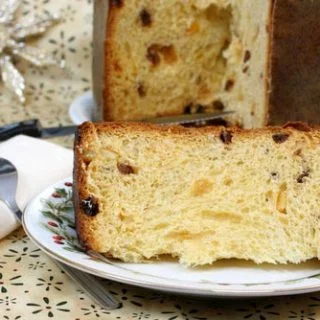
Citrus panettone is a rich, yeast-raised Italian bread studded with raisins and candied citron. Orange and lemon zest bring a bright flavour to its buttery, tender crumb, making it a festive bake to share or toast for breakfast.
Ingredients
- 1 packageactive dry yeast
- 60 ml (¼ cup)warm water
- 60 g (½ cup)unbleached plain flour
- 150 g (1 cup)golden raisins
- Juice of 1 large orangeorange juice
- 70 g (5 tablespoons)soft butter
- 3 largeeggs
- 4 largeegg yolks
- 150 g (¾ cup)sugar
- 1 tablespoonFiori di Sicilia (Sicilian lemon extract), or 1 teaspoon lemon extract and 1 teaspoon vanilla extract
- 625 g (5 cups) or moreplain flour
- Finely chopped zest of 1orange
- Finely chopped zest of 1lemon
- 75 g (½ cup)candied citron
Instructions
- 1
Mix the yeast
In a medium bowl, sprinkle the yeast over the warm water and stir to combine.
- 2
Make the sponge
Add the 60 g of flour and mix to form a loose dough.
- 3
Let it rise
Cover the sponge and leave it to rise for at least 4 hours and no more than 8 hours.
- 4
Warm the raisins
While the sponge rises, put the orange juice and raisins in a small saucepan.
- 5
Plump the raisins
Bring the juice to the boil, then take the pan off the heat, cover it and leave the raisins to plump in the warm juice.
- 6
Prepare the flour
Once the sponge has risen, put 625 g of flour on a bread board or work surface and make a well in the centre.
- 7
Mix the wet ingredients
In a bowl, combine the butter, sugar, eggs, egg yolks, extract, sponge, orange and lemon zest, and 60 ml of warm water.
- 8
Add the juice
Strain the raisins and pour their juice into the egg mixture.
- 9
Start the dough
Pour the liquid mixture gradually into the well in the flour, using a fork to draw flour in from the sides as you mix.
- 10
Combine everything
Continue mixing until all the liquid has been incorporated.
- 11
Knead the dough
Add the raisins and citron, then knead by hand for about 8 minutes, until the dough is smooth and elastic. If it feels too wet, work in a little extra flour.
- 12
Prepare the bowl
Butter a large bowl and place the dough inside.
- 13
First dough rise
Cover the bowl and leave the dough in a warm place for about 6 hours.
- 14
Prepare the mould
Butter your chosen mould, then punch down the dough.
- 15
Shape the dough
Knead the dough again for a few minutes, then shape it into a ball.
- 16
Second dough rise
Put the dough in the prepared pan, cover it and leave it to rise for 45 minutes.
- 17
Heat the oven
While the dough rises, preheat the oven to 175°C (350°F).
- 18
Bake the panettone
Cut an X or slash into the top and bake until golden brown and a skewer inserted in the centre comes out clean.
- 19
Shield if needed
If the top browns too quickly during baking, lay a sheet of foil over it.
- 20
Cool the loaf
Remove the panettone from the oven and leave it to cool.
- 21
Store airtight
When completely cool, keep the panettone in an airtight bag until ready to eat. It can keep well for up to a week; if it starts to become stale, toast slices and serve with a little butter.
What is panettone?
Panettone is a tall, enriched Italian bread traditionally associated with Milan and festive celebrations. It is made with a slowly risen dough and often contains dried and candied fruit.
This version combines golden raisins and candied citron with orange and lemon zest. The long rises help develop a light, tender crumb beneath its golden crust.
Nutrition and macros by portion
The nutrition label shows one serving as written: 4600 calories, 100g protein, 850g carbs, 105g fat.
| Portion | Adjustment | kcal | Protein | Carbs | Fat |
|---|---|---|---|---|---|
| Lighter | Smaller toasted slice | 3220 kcal | 70g | 595g | 74g |
| This serving | As written | 4600 kcal | 100g | 850g | 105g |
| Hungry | Larger slice with butter | 6900 kcal | 150g | 1275g | 158g |
Most of the carbohydrates come from the flour, sugar, raisins and candied citron; butter and egg yolks provide much of the fat, while eggs and flour contribute protein. Pair a slice with fresh fruit for a more balanced plate. The supplied serving count is 1, so the estimate below treats the whole loaf as one serving.
Building the sponge
Yeast and flour: the first loose mixture is a sponge, which gets a head start before being worked into the richer dough. Give it at least 4 hours and no more than 8 hours to rise, as directed.
Warm water: the method uses warm water both to mix the yeast and later in the egg mixture. The ingredient list specifies 60 ml in total, so check your quantities before beginning.
Citrus and fruit
Orange juice: warming the raisins in the juice softens them and adds orange flavour. Strain the fruit and keep the juice to mix into the dough.
Fresh zest: finely chopped orange and lemon zest spreads citrus aroma through the enriched dough. Avoid including the bitter white pith when zesting.
Kneading and texture
Sticky dough: add the liquid gradually, drawing in flour from the sides of the well. Once the raisins and citron are added, knead for about 8 minutes.
Doneness cue: the finished dough should feel smooth and elastic. Add extra flour only a little at a time if it is too wet, so the loaf does not become dense.
Allow time to rise
First rise: after kneading, cover the dough and leave it in a warm place for about 6 hours. The recipe’s listed total time of 120 minutes does not include these long rises.
Final rise: after shaping, let the dough rise in its buttered pan for 45 minutes. The recipe does not give a set baking duration, so use the golden colour and clean-skewer test to judge when it is ready.
Shaping and baking
Butter the mould: coat your chosen pan before adding the shaped dough so it is easier to release after baking. The recipe does not specify a mould size.
Score the top: cut an X or slash into the dough before baking at 175°C. If the crust becomes too dark before the centre is baked, cover the top with foil.
Serving ideas
Serve slices plain, or toast them lightly and add a little butter, as suggested in the recipe. The citrus and fruit also pair well with tea or coffee.
Because this is a rich, sweet bread, a serving of fresh fruit alongside a slice makes a simple, balanced breakfast plate.
Recipe notes & tips
- Finely chop the zest so it mixes evenly through the dough.
- Strain the raisins well, but reserve all of their orange soaking juice for the egg mixture.
- Use a little extra flour only if the dough feels too wet while kneading.
- Butter the mould thoroughly before adding the dough.
- Cover the top with foil if it browns too much before the centre is baked.
- Wait until the loaf is completely cool before sealing it in an airtight bag.
Variations
- Use the extract alternative: combine 1 teaspoon lemon extract with 1 teaspoon vanilla extract in place of Fiori di Sicilia.
- Emphasise the orange: use the full orange zest and juice as written for a pronounced citrus note.
- Toast leftovers: slice and toast any panettone that has begun to stale, then add a little butter.
- Serve with fruit: add fresh fruit alongside a slice for a lighter accompaniment.
Common mistakes to avoid
- Rushing the sponge: allow at least 4 hours and no more than 8 hours for its rise.
- Adding flour too quickly: mix the liquid in gradually so the flour incorporates evenly.
- Over-flouring the dough: add only a little extra flour if the mixture is genuinely too wet.
- Skipping the second rise: leave the shaped dough covered for the full 45 minutes before baking.
- Letting the crust overbrown: cover the top with foil if it darkens too quickly.
- Packing it away warm: cool the loaf completely before storing it in an airtight bag.
How to store
Once completely cool, store the panettone in an airtight bag; the recipe notes that it kept well for up to a week. Toast slices if they become a little stale, and serve with a little butter.
Frequently asked questions
How long does the dough need to rise?
The sponge rises for at least 4 hours and no more than 8. After it is incorporated into the dough, allow about 6 hours for the first rise and 45 minutes for the final rise.
Why does the recipe take longer than 120 minutes?
The listed total time does not account for the long rises described in the method. The sponge and dough need several hours to rise before baking.
How can I tell when the panettone is baked?
Bake until it is golden brown and a skewer inserted into the centre comes out clean. Cover the top with foil if it is browning too quickly.
Can I use a different extract?
Yes. The recipe gives 1 teaspoon lemon extract and 1 teaspoon vanilla extract as an alternative to 1 tablespoon Fiori di Sicilia.
What should I do if the dough is too wet?
Knead in a little additional flour, adding it gradually. Stop once the dough is smooth and elastic rather than continuing to add flour unnecessarily.
How should I use leftover panettone?
Keep it in an airtight bag and toast slices if they become a little stale. The recipe suggests serving toasted slices with a little butter.
Cook it from the original
This recipe comes from italianfoodforever.com. Their page has the author’s own photos, notes and tips — the best place to cook it from.
Open the recipe on italianfoodforever.com