
Brioche Buns
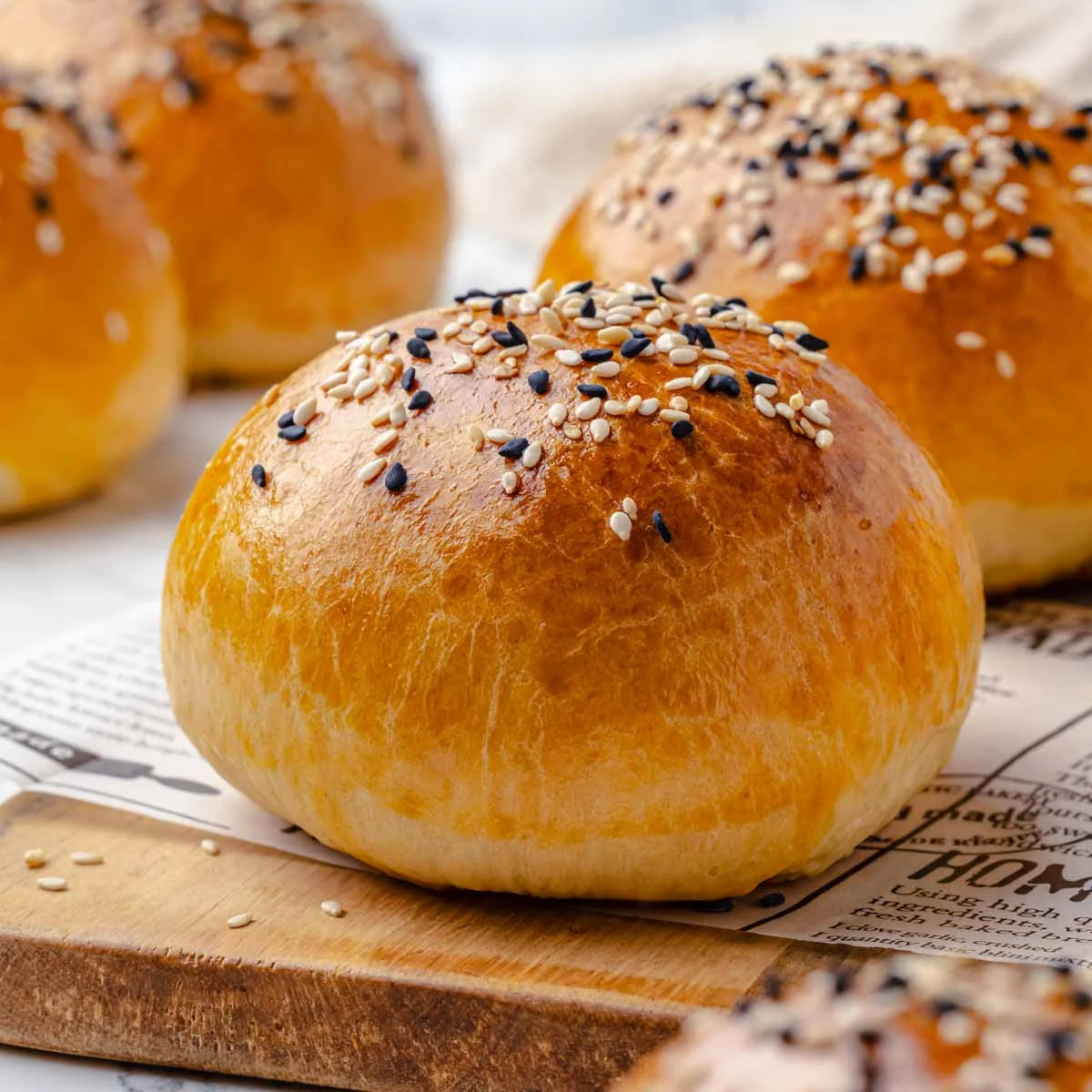
These soft, buttery brioche buns make a generous base for burgers, barbecue chicken sandwiches and other fillings. The same dough can also be shaped into smaller rolls for serving alongside dinner.
Ingredients
- 266 ml (1 1/8 cups)whole milk, warmed
- 12 g (4 teaspoons)active dry yeast
- 31 g (2 1/2 tablespoons)granulated sugar
- 500 g (4 cups)plain flour
- 71 g (5 tablespoons)unsalted butter
- about 10 g (2 teaspoons)kosher salt
- 1egg, beaten for the egg wash
- 36 g (1/4 cup), optionalsesame seeds
Instructions
- 1
Wake the yeast
In the bowl of a stand mixer, combine the yeast, milk warmed to 38–43°C and sugar. Leave undisturbed for about 10 minutes, until bubbly.
- 2
Mix the dough
Add the flour, butter and salt to the mixer bowl. Mix with the paddle attachment to combine, then switch to the dough hook and mix on medium speed to develop the gluten. Continue until a smooth, slightly glossy dough forms and pulls away from the sides of the bowl.
- 3
First proof
Put the dough in a large bowl coated with cooking spray or lightly oiled. Cover with cling film and leave in a warm place until doubled in size, about 1–1½ hours.
- 4
Divide the dough
For burger buns, divide the dough into 110–115 g pieces, or divide it by eye into eight pieces. For slider buns or rolls, use 45–50 g pieces; for hot-dog buns, use 75–85 g pieces. The recipe makes 8 hamburger buns, 36 slider buns or 22 hot-dog buns.
- 5
Shape the buns
Fold the four corners of each piece into the centre. Turn it seam-side down onto an unfloured surface and roll it in your palm, keeping it from travelling across the counter, to tighten it into a ball. Press the dough underneath with your thumb and pull it towards you with your other fingers until the surface is smooth and the ball stands tall. Set the buns about 8 cm apart on a baking tray lined with baking parchment.
- 6
Cover the dough
Spray the surface of a piece of cling film with non-stick cooking spray, then lay it directly over the shaped dough.
- 7
Second proof
Leave the buns in a warm place for about 30–45 minutes, depending on the warmth of your kitchen, until they feel light and airy when gently squeezed. They should have grown to a little more than double their size.
- 8
Heat the oven
While the buns proof, preheat the oven to 177°C with the fan on, or 190°C without the fan.
- 9
Brush and top
Brush the tops with the beaten egg or melted butter. Sprinkle with sesame seeds if using.
- 10
Bake until golden
Bake in the preheated oven for about 12–15 minutes, until golden brown.
What are brioche buns?
Brioche is a rich, yeast-raised bread associated with French baking, made tender with butter and often enriched with eggs. These American-style buns use that soft, buttery character in a shape suited to burgers and sandwiches.
A warm milk-and-yeast start, a long first rise and a second proof help make the crumb light. The egg wash gives the tops a glossy finish, while sesame seeds add a familiar burger-bun touch.
Nutrition and macros by portion
The nutrition label shows one serving as written: 366 calories, 10g protein, 55g carbs, 12g fat.
| Portion | Adjustment | kcal | Protein | Carbs | Fat |
|---|---|---|---|---|---|
| Lighter | Use a smaller bun | 256 kcal | 7g | 39g | 8g |
| This serving | As written | 366 kcal | 10g | 55g | 12g |
| Hungry | Make a larger portion | 549 kcal | 15g | 83g | 18g |
The flour and sugar provide most of the carbohydrates, while the butter contributes much of the fat. Flour and milk supply some protein, with the egg wash adding a smaller amount. Pair a bun with a protein-rich filling and salad or vegetables to make a more balanced plate.
The dough ingredients
Warm milk: Aim for 38–43°C before mixing it with the yeast. Milk that is too hot can interfere with the yeast, while milk that is merely lukewarm may take longer to activate it.
Butter and flour: The butter brings richness and softness, and the flour gives the dough its structure. Mix with the dough hook until the dough looks smooth and slightly glossy and releases from the bowl’s sides.
Watch the yeast
Bubbly surface: After about 10 minutes, the yeast mixture should show bubbles. That visual cue is more useful than relying on the timer alone.
Warm setting: Proof the covered dough somewhere warm, not hot. The first rise takes about 1–1½ hours, but the dough’s doubled size is the cue to move on.
Shape for a smooth top
Tight surface: Folding the corners towards the centre and pulling the dough towards you helps create tension on the outside of each ball. Keep the counter unfloured so the dough can grip as you shape it.
Even spacing: Arrange the portions roughly 8 cm apart on the lined tray. This leaves room for them to expand during the second proof and baking.
Check the second proof
Light feel: Gently squeeze a bun to check that it feels airy. The buns should grow to a little more than double their size, usually in 30–45 minutes, though a cooler kitchen can slow the rise.
Careful covering: Spray the cling film before placing it directly on the dough. This helps prevent the cover from sticking to the soft, risen surfaces.
Choose the bun size
Burger buns: Divide into 110–115 g portions, or make eight roughly equal pieces by eye. The recipe’s stated yield for hamburger buns is eight.
Smaller shapes: Use 45–50 g portions for slider buns or rolls, or 75–85 g for hot-dog buns. The recipe gives yields of 36 sliders or 22 hot-dog buns; the total number depends on how the dough is divided.
Bake and serve
Oven setting: Use 177°C with the fan on or 190°C without it, as directed. The 12–15 minute bake is a guide; look for a golden-brown top.
Serving ideas: Cool the buns before slicing for burgers or barbecue chicken sandwiches. Smaller rolls also work at the table with soup, salad or a main meal.
Recipe notes & tips
- Weigh the dough portions for buns that bake at a more even rate.
- Use an unfloured counter when shaping so the dough can grip and tighten.
- Keep the first and second proofs covered to prevent the dough drying out.
- Start checking the buns at 12 minutes, since ovens can vary.
- Let the buns cool before slicing to help the soft crumb hold its shape.
Variations
- Sesame topping: Sprinkle the buns with sesame seeds after brushing them.
- Plain tops: Skip the sesame seeds for a simple, glossy finish.
- Dinner rolls: Shape the dough into 45–50 g portions as suggested in the method.
- Hot-dog buns: Divide into 75–85 g portions and shape each piece into an oblong.
- Slider buns: Use 45–50 g portions for smaller sandwich rolls.
Common mistakes to avoid
- Milk too hot: Keep it within 38–43°C before adding the yeast.
- Dough not smooth: Continue mixing with the dough hook until it looks glossy and pulls away from the bowl.
- Floured shaping surface: Skip the flour so the dough can grip while you tighten each ball.
- Cling film sticking: Spray the side that touches the dough before covering it.
- Relying only on the clock: Use the doubled size and airy feel as proofing cues.
- Overbaking: Check at 12 minutes and remove the buns when they are golden brown.
How to store
Once completely cool, store the buns in an airtight container at room temperature and use within 2 days. Rewarm briefly in a low oven, or split and toast them before serving.
Frequently asked questions
Can I make these without a stand mixer?
The method is written for a stand mixer with a paddle and dough-hook attachment. If mixing by hand, combine the ingredients in a bowl and knead until the dough is smooth and slightly glossy.
How do I know when the dough has proofed enough?
For the first proof, wait until it has doubled in size. For the second, look for buns that feel light and airy when gently squeezed and have grown to a little more than double.
Can I make smaller buns from this dough?
Yes. The method suggests 45–50 g pieces for slider buns or rolls and 75–85 g pieces for hot-dog buns. The number you make depends on the size of each portion.
Do I have to use sesame seeds?
No, they are optional. The buns can be brushed with egg or melted butter and baked without seeds.
Can I use a fan oven?
Yes. Bake at 177°C with the fan on, or use 190°C without the fan. Begin checking for a golden-brown finish at around 12 minutes.
Cook it from the original
This recipe comes from girlversusdough.com. Their page has the author’s own photos, notes and tips — the best place to cook it from.
Open the recipe on girlversusdough.com