
Homemade Egg Roll Wrappers
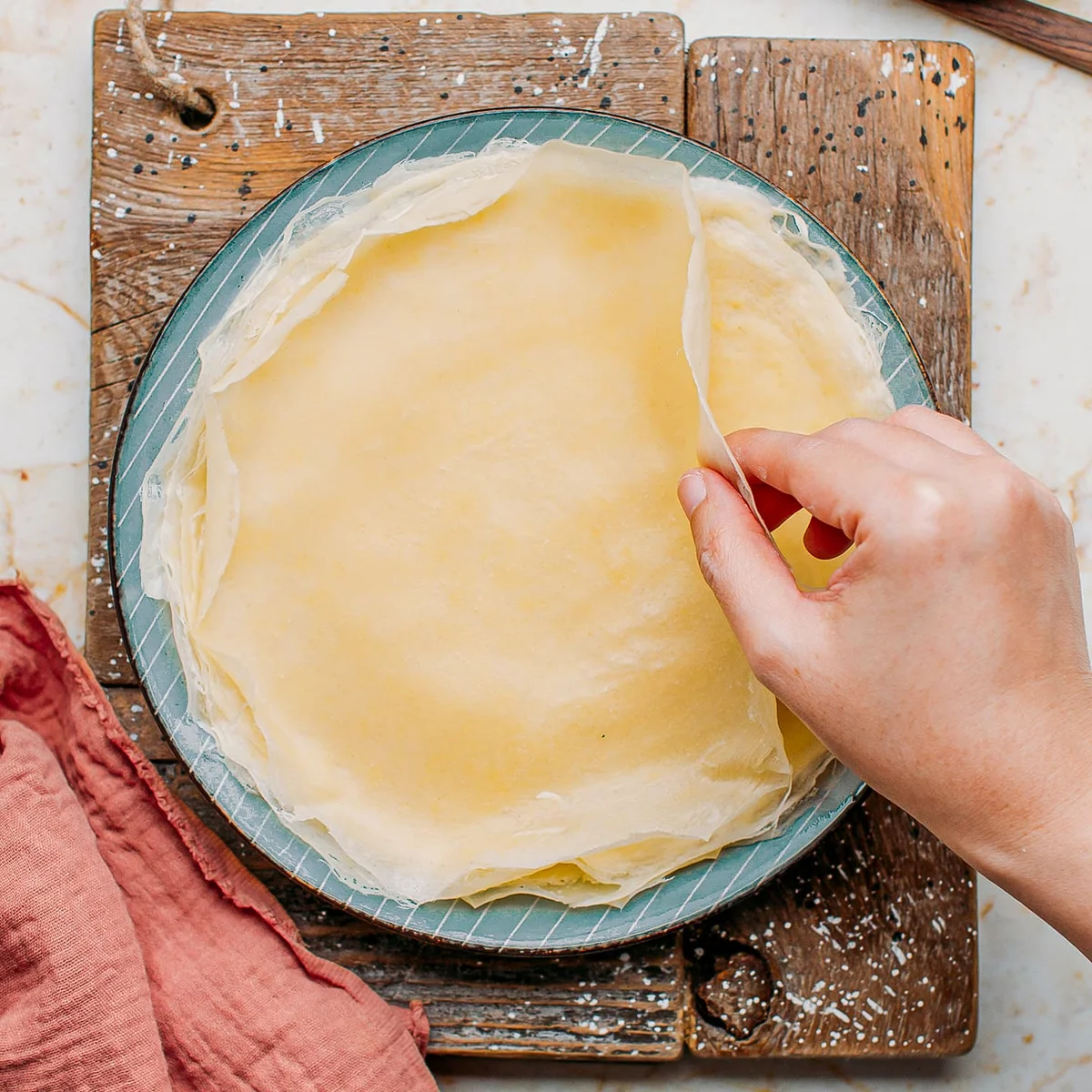
These thin, homemade wrappers are made from a simple flour batter and cooked in a pan. Make a batch for egg rolls or samosas when you want wrappers that are ready to use the same day.
Ingredients
- 125 g (1 cup)plain flour
- 1/8 tspbaking powder
- 1/8 tspsalt
- 195 ml (3/4 cup and 1 tbsp)water
Instructions
- 1
Whisk dry ingredients
Put the flour, baking powder and salt in a mixing bowl and whisk them together.
- 2
Add the water
Pour in the water and whisk until smooth. The batter will be very thin; this is expected. If it has lumps, pass it through a fine-mesh sieve for a smoother batter.
- 3
Heat the pan
Warm a non-stick crêpe pan over low-medium heat. Keep it from getting too hot.
- 4
Brush the wrapper
Dip a pastry brush into the batter and quickly brush a circle about 20 cm (8 inches) across onto the pan. Dip the brush again as needed, making around 12–15 passes to create an even layer.
- 5
Cook briefly
The batter will set within a few seconds as you brush. Once the wrapper is fully brushed, cook it for 15–20 seconds, no longer, so it does not dry out and crack when rolled.
- 6
Lift the wrapper
Carefully loosen one edge with a spatula, then use your hands to lift the wrapper from the pan. Transfer it to a plate.
- 7
Clean and repeat
Wipe the pan with a clean piece of kitchen paper to remove any remaining batter. Repeat with the rest of the batter, cleaning the pan between wrappers.
- 8
Store for serving
Use the wrappers the same day, as they dry out quickly and can stick together. They can be kept for up to 12 hours at room temperature on a plate covered with plastic wrap.
What are egg roll wrappers?
Egg roll wrappers are thin sheets used to enclose fillings before cooking. This homemade version uses a very loose flour batter brushed onto a hot pan, rather than a dough rolled out with a pin.
The recipe draws on the pan-made wrapper style used across Asian cooking, while keeping the ingredients and method straightforward. A thin, evenly brushed layer gives you a flexible sheet for egg rolls or samosas.
Nutrition and macros by portion
The nutrition label shows one serving as written: 33 calories, 1g protein, 7g carbs, 0g fat.
| Portion | Adjustment | kcal | Protein | Carbs | Fat |
|---|---|---|---|---|---|
| Lighter | Add more vegetable filling | 23 kcal | 1g | 5g | 0g |
| This serving | As written | 33 kcal | 1g | 7g | 0g |
| Hungry | Make a larger batch | 50 kcal | 1g | 10g | 0g |
The flour provides most of the carbohydrates, while the small amounts of baking powder and salt contribute little energy. The recipe contains no added fat or substantial protein source; pair a serving with a protein-rich filling and vegetables to balance the plate.
A simple batter
Flour: plain flour forms the wrapper. Whisk it with the baking powder and salt before adding liquid so the small dry ingredients are spread through the mixture.
Water: the generous amount makes a runny batter that can be brushed into a fine layer. Whisk until smooth, and sieve out any lumps if needed.
Brush on a thin layer
The wrapper is shaped directly in the pan with a pastry brush, rather than poured and tilted like a crêpe. Work quickly in a circle about 20 cm across, going over gaps until the batter forms an even sheet.
Around 12–15 dips of the brush are usually enough. The exact number can vary with the brush and how much batter it picks up, so use the evenness of the layer as your guide.
Keep the heat gentle
A non-stick crêpe pan over low-medium heat gives you time to brush the wrapper before the batter sets. If the pan is too hot, the batter may cook before you can cover the circle evenly.
Cook the finished wrapper for only 15–20 seconds. It should be set enough to lift, but not dried out; overcooking can make it crack when you try to roll it.
Lift and stack carefully
Loosen one side with a spatula, then lift the wrapper by hand and move it to a plate. Handle it gently, as the thin sheet can tear if pulled before the edge is free.
Wipe away leftover batter between wrappers. This helps prevent cooked bits from catching on the next sheet and keeps the pan surface even.
Use them the same day
These wrappers dry out quickly and may stick together, so the recipe is best made on the day you plan to fill them. For a short hold, cover the plate with plastic wrap and keep it at room temperature for up to 12 hours.
They are intended to be filled and cooked as part of another dish. Choose fillings that are ready to use in your planned egg roll or samosa recipe.
Filling and serving ideas
Use the wrappers for egg rolls or samosas, adding a filling suited to the shape and cooking method you plan to use. Keep the filling manageable so the thin sheet can be folded around it.
Serve the filled parcels with a suitable dipping sauce and a side of vegetables for a more complete plate. The wrappers themselves are mild, so they work with a range of savoury fillings.
Recipe notes & tips
- Whisk the dry ingredients thoroughly before adding the water.
- Sieve the batter if you spot lumps.
- Keep the pan at low-medium heat so you have time to brush the circle evenly.
- Aim for a thin, continuous layer rather than a thick wrapper.
- Limit cooking to 15–20 seconds after brushing to help keep the wrapper flexible.
- Wipe the pan clean between each wrapper.
Variations
- For egg rolls: Use the wrappers to enclose your chosen savoury filling.
- For samosas: Fold the wrappers around a suitable filling in your preferred samosa shape.
- Change the size: Brush a smaller circle if your filling or folding method calls for smaller wrappers.
- Prepare ahead: Make the wrappers earlier on the same day and cover the plate with plastic wrap.
Common mistakes to avoid
- Pan too hot: The batter sets before you can spread it evenly; lower the heat.
- Thick patches: The wrapper may cook unevenly; brush over gaps until the layer is consistent.
- Overcooking: The wrapper can dry out and crack; stop after 15–20 seconds.
- Lumpy batter: The surface may be uneven; whisk well or pass the batter through a fine-mesh sieve.
- Skipping the pan wipe: Leftover batter can catch on the next wrapper; clean the pan between each one.
- Leaving wrappers uncovered: They dry and stick together; cover the plate with plastic wrap.
How to store
Use the wrappers on the day they are made, as they dry out quickly and can stick together. If needed, keep them on a plate covered with plastic wrap at room temperature for up to 12 hours.
Frequently asked questions
Why is the batter so thin?
The batter is meant to be very liquid so it can be brushed into a thin wrapper on the pan. Whisk it smooth, and sieve it if lumps remain.
How hot should the pan be?
Use low-medium heat. The pan should be warm enough to cook the batter, but not so hot that it sets before you have finished brushing.
How long should I cook each wrapper?
Once you have finished brushing it onto the pan, cook it for 15–20 seconds. Longer cooking can dry it out and make it crack when rolled.
How do I stop wrappers sticking together?
Use them the same day and keep the plate covered with plastic wrap. The recipe notes that they dry out quickly and may stick together.
Can I use these for samosas?
Yes. The recipe describes them as suitable for both egg rolls and samosas; fold them around a filling using the shape and method of your chosen samosa recipe.
Cook it from the original
This recipe comes from fullofplants.com. Their page has the author’s own photos, notes and tips — the best place to cook it from.
Open the recipe on fullofplants.com