
Whole Wheat Pita Bread
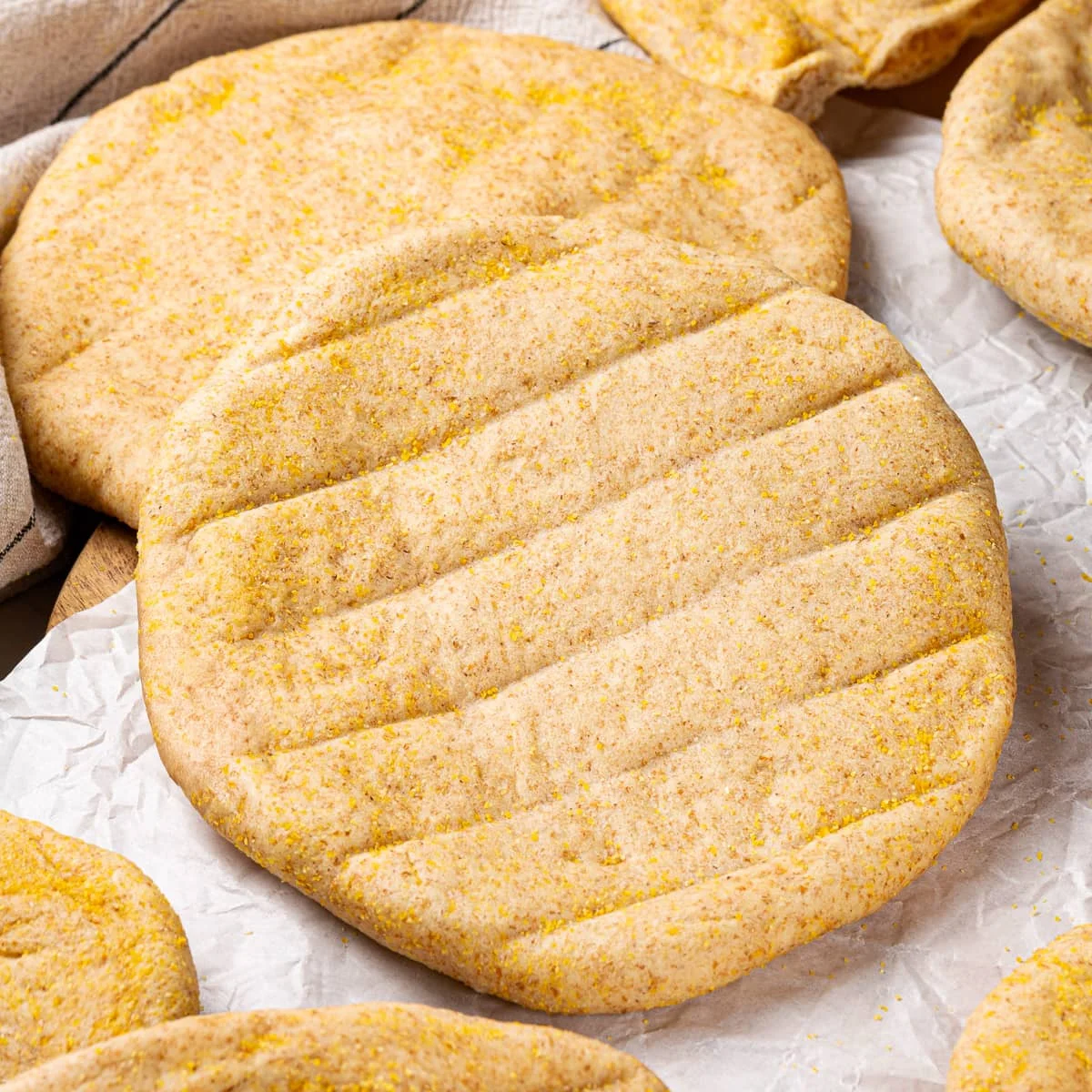
These soft whole wheat pitas have a hearty, nutty flavour and puff into pockets when baked at high heat. Make a batch for wraps, sandwiches or scooping up hummus.
Ingredients
- 7 g (2¼ teaspoons; 1 packet)active dry yeast
- 7.5 ml (1½ teaspoons)honey
- 300 ml (1¼ cups), dividedwarm water
- 180 g (1½ cups), dividedbread flour
- 180 g (1½ cups)whole wheat flour
- 60 ml (¼ cup)olive oil
- 5 g (1 teaspoon)salt
Instructions
- 1
Activate the yeast
In a large bowl or stand mixer, whisk the yeast and honey with 120 ml (½ cup) of the warm water. Leave for 5 minutes, until foamy.
- 2
Make the starter
Stir in 60 g (½ cup) of the bread flour and 60 g (½ cup) of the whole wheat flour until smooth. Cover the bowl with cling film and leave somewhere warm until doubled in size, about 45 minutes.
- 3
Knead the dough
Once the yeast mixture has doubled, add the remaining warm water and flours, the olive oil and salt. Fit the stand mixer with a dough hook and knead on low, adding more flour as needed, until the dough is smooth, elastic and only slightly sticky; this should take about 8 minutes.
- 4
Let it rise
Shape the dough into a ball and put it in a lightly greased bowl, turning it once to coat. Cover with cling film or a damp tea towel and leave in a warm place until doubled, about 1–1½ hours.
- 5
Heat the oven
Preheat the oven to 260°C (500°F), with a pizza stone on a rack in the lower third.
- 6
Shape the pitas
Divide the dough into 8 equal pieces and shape each into a ball. Leave the balls to rest for 10 minutes, then roll each on a lightly floured surface into a 18–20 cm (7–8 inch) circle about 6 mm (¼ inch) thick. Avoid rolling them too thin, or they may not puff.
- 7
Bake the pitas
Carefully place 2–3 rolled pitas on the pizza stone or directly on the oven rack. Bake for 2–3 minutes, until puffed and lightly golden. Turn them with tongs and bake for 1 minute more.
- 8
Keep them covered
Transfer the pitas to a plate and cover with a clean tea towel to trap steam. Repeat with the remaining dough.
What is whole wheat pita bread?
Pita is a leavened flatbread associated with Mediterranean and Middle Eastern cuisines. At high heat, moisture in the dough creates a pocket as the bread puffs, making it easy to split and fill.
Whole wheat flour gives this version a nutty flavour and heartier texture, while bread flour helps the dough stretch. A short starter rise and a very hot oven help the rounds puff.
Nutrition and macros by portion
The nutrition label shows one serving as written: 228 calories, 6g protein, 35g carbs, 8g fat.
| Portion | Adjustment | kcal | Protein | Carbs | Fat |
|---|---|---|---|---|---|
| Lighter | Smaller pita, lighter filling | 160 kcal | 4g | 25g | 6g |
| This serving | As written | 228 kcal | 6g | 35g | 8g |
| Hungry | Two pitas, fuller filling | 342 kcal | 9g | 53g | 12g |
The carbohydrates mainly come from the bread and whole wheat flours; olive oil supplies most of the fat, while the flours provide some protein. Pair a pita with vegetables and a protein-rich filling or dip for a more balanced plate.
Choosing the flour
Bread flour: its stronger gluten helps the dough hold together and expand in the oven. Keep some available for kneading if the dough is too sticky to handle.
Whole wheat flour: it brings the characteristic hearty flavour and absorbs water readily. The recipe balances it with bread flour for a dough that can still be rolled thinly.
Why the recipe has two rises
Starter: the yeast first sits with honey, warm water and a little flour. Wait for visible foam and for the mixture to double before adding the rest.
Dough: after kneading, the full batch rises until doubled. Give it the stated 1–1½ hours in a warm spot, using the dough’s size rather than the clock alone as your cue.
Kneading and dough texture
Elastic dough: kneading for about 8 minutes develops the structure that helps each pita inflate. The finished dough should feel smooth and stretchy, with only a slight stickiness.
Added flour: dust in more only as needed during kneading. Too much can make the dough stiff and harder to roll without tearing.
Rolling for a pocket
Even rounds: divide the dough into 8 equal pieces and give the balls a 10-minute rest before rolling. This rest makes the dough easier to shape.
Thickness: aim for circles 18–20 cm across and about 6 mm thick. Keep the thickness even and don’t roll the rounds too thin, as the recipe relies on them puffing in the oven.
High-heat baking
Hot surface: preheat the oven to 260°C (500°F) with the pizza stone in place in the lower third. Let the stone heat along with the oven.
Small batches: bake 2–3 pitas at a time for 2–3 minutes, then turn and bake for 1 minute more. Look for puffing and light golden colour, and handle the hot stone or rack carefully.
Serving ideas
For dipping: serve the pitas warm with hummus or other dips. Covering them with a clean tea towel after baking helps keep them soft.
For meals: split the pocket and fill it with salad, vegetables, beans or a protein of your choice. They also work as a soft wrap when left whole.
Recipe notes & tips
- Check that the yeast mixture becomes foamy before continuing.
- Use warm rather than hot water so the yeast can activate properly.
- Let the pizza stone heat fully while the oven preheats.
- Roll the dough rounds to an even thickness so they bake consistently.
- Cover the baked pitas with a clean tea towel to help retain their softness.
- Use tongs to turn the pitas and take care around the hot stone or oven rack.
Variations
- Herb dough: knead finely chopped dried herbs into the dough with the flour and salt.
- Garlic flavour: brush the warm pitas lightly with garlic-infused olive oil before serving.
- Seeded finish: scatter seeds over the rounds before baking, pressing them gently into the dough.
- Mini pitas: divide the dough into smaller pieces and roll them evenly, checking for doneness as they bake.
- Sandwich filling: stuff the pockets with salad and a filling of your choice just before serving.
Common mistakes to avoid
- Water too hot: it can stop the yeast working; use warm water in the stated 110–115°F range.
- Skipping the first rise: the starter needs about 45 minutes to double before the remaining ingredients go in.
- Adding too much flour: the dough can become stiff; add extra gradually and stop when it is smooth and slightly sticky.
- Rolling too thin: the rounds may not puff; keep them about ¼ inch thick.
- Stone not fully heated: the pitas may bake unevenly; preheat the stone with the oven.
- Leaving baked pitas uncovered: they can dry out; cover them with a clean tea towel as they come out.
How to store
Once cool, store the pitas in an airtight container or bag at room temperature for up to 2 days. Reheat briefly in a warm oven or in a dry pan until soft and warmed through.
Frequently asked questions
Why didn’t my pitas puff?
Check that the oven and pizza stone were fully hot, and that the rounds were rolled evenly and not too thin. Also make sure the dough completed both rises.
Can I make the dough without a stand mixer?
Yes. Mix the ingredients in a large bowl and knead by hand until the dough is smooth, elastic and only slightly sticky.
How warm should the water be?
Use water at 110–115°F (about 43–46°C), as specified in the recipe. Water that is too hot may affect the yeast.
Do I need a pizza stone?
The method allows you to bake the pitas directly on the oven rack if you don’t have one. The oven should still be preheated to 260°C (500°F).
Can I freeze the pitas?
Yes. Cool them completely, pack them airtight and freeze. Thaw before reheating until soft.
Cook it from the original
This recipe comes from girlversusdough.com. Their page has the author’s own photos, notes and tips — the best place to cook it from.
Open the recipe on girlversusdough.com