
Beef Bulgogi
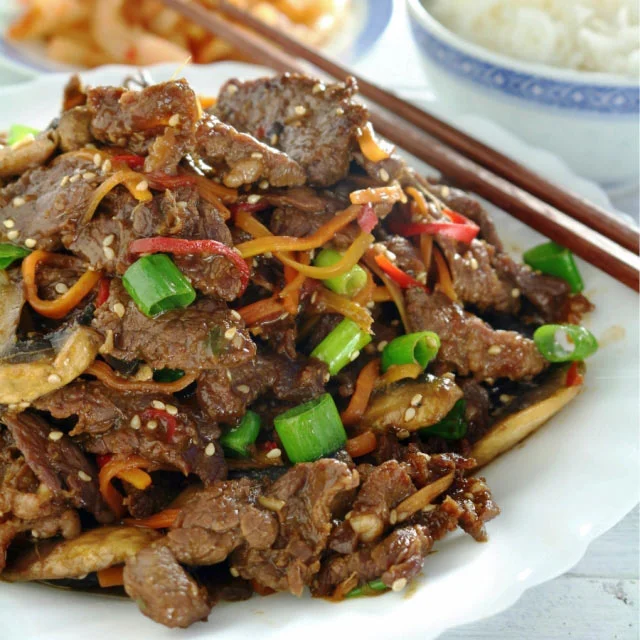
Beef bulgogi is thinly sliced beef marinated with soy, sesame, garlic and ginger, then quickly seared until browned. This version adds crisp-tender vegetables and is served warm with rice and kimchi.
Ingredients
- 454 g (1 pound)beef, thinly sliced
- 2 tablespoons (about 18 g)sesame seeds
- 3 tablespoons (45 ml)sesame oil
- 1 mediumcarrot, cut into matchsticks
- 2spring onions, chopped, with the white parts separated
- 80 ml (⅓ cup)dark soy sauce
- 3 tablespoons (about 38 g)brown sugar
- 2 tablespoons (30 ml)sesame oil
- 3 clovesgarlic
- 1 tablespoonginger
- From the spring onions abovewhite parts of the spring onions
- ½ teaspoonground black pepper
- 1 teaspoon (optional)Korean chilli paste
- 1 smallAsian pear
- 60 ml (¼ cup)water
- 5 largemushrooms, sliced
- ½ large (optional)red pepper, cut into matchsticks
Instructions
- 1
Blend the marinade
Put the marinade ingredients into a mixer or blender and pulse a few times, until the garlic and ginger are finely chopped.
- 2
Add the beef
Place the sliced beef in a bowl and pour over the marinade.
- 3
Marinate the beef
Mix by hand so the marinade coats all the meat. Cover the bowl with cling film and leave to marinate for at least 1 hour.
- 4
Toast the seeds
Heat a wok or frying pan over a medium heat and toast the sesame seeds until golden. Remove the seeds, turn the heat up to high and add sesame oil to the hot pan.
- 5
Sear the beef
Use your hands to squeeze excess liquid from the meat. When the oil is hot, add half the beef with tongs, spreading the slices out in the pan. Let one side sear before stirring, then cook until browned. Avoid overcooking so the beef stays tender. Lift it out with tongs and repeat with the remaining beef. Set it aside.
- 6
Stir-fry vegetables
Add a little more sesame oil to the same pan if needed. Add the carrots and stir-fry for a few seconds, until tender-crisp. Return the beef to the pan with the toasted sesame seeds and spring onions, and stir a few times to combine. Transfer to a serving dish.
- 7
Serve warm
Serve straight away with kimchi and rice.
What is beef bulgogi?
Bulgogi is a Korean dish of marinated beef cooked over high heat. Its name is commonly translated as “fire meat”, referring to the hot cooking method.
This version uses a soy, sesame, garlic and ginger marinade, with Asian pear in the blend. A quick sear browns the thin slices while helping them stay tender.
Nutrition and macros by portion
The nutrition label shows one serving as written: 365 calories, 15g protein, 13g carbs, 28g fat.
| Portion | Adjustment | kcal | Protein | Carbs | Fat |
|---|---|---|---|---|---|
| Lighter | Less sesame oil | 255 kcal | 11g | 9g | 20g |
| This serving | As written | 365 kcal | 15g | 13g | 28g |
| Hungry | Larger beef portion | 548 kcal | 23g | 20g | 42g |
The beef supplies most of the protein, while the sugar, pear and rice served alongside contribute carbohydrates; the sesame oil carries much of the fat. Pair a serving with plenty of vegetables and a measured portion of rice for a more balanced plate.
The marinade ingredients
Soy and sugar: dark soy sauce brings savoury depth, while brown sugar adds sweetness and helps the beef brown. Sesame oil, garlic, ginger and pepper round out the mixture.
Asian pear: blending it with the marinade gives the mixture a fruity note. Pulse only until the garlic and ginger are finely chopped, as the method directs.
Chilli paste: this is optional, so leave it out for a milder result or include it for some heat.
Get the vegetables ready
Carrot: cut it into matchsticks so it cooks quickly. The method adds it after the beef, keeping its brief stir-fry separate from the meat’s sear.
Mushrooms and pepper: the recipe lists sliced mushrooms and optional red pepper, though the supplied method does not specify when to add them. If using them, have them prepared before cooking and follow the recipe’s stated order as closely as possible.
Marinating and searing
Marinating time: the method calls for at least 1 hour, even though the listed total time is 35 minutes. Allow extra time for this step when planning the meal.
Searing: cook the beef in two batches over high heat, spreading each batch across the pan. Crowding the pan can prevent the slices from browning properly.
Look for these doneness cues
Sesame seeds: toast them over a medium heat until golden, then take them out of the pan so they do not keep cooking as the beef sears.
Beef and carrot: let the beef brown before stirring, and stop cooking once it is cooked through and nicely coloured. Stir-fry the carrot only for a few seconds, aiming for tender-crisp rather than soft.
Serving the bulgogi
Rice: serve the beef while warm alongside rice, as suggested in the recipe. It makes a simple base for the savoury sauce and vegetables.
Kimchi: add it at the table for a sharp, tangy contrast. Spring onions and toasted sesame seeds are already stirred through the finished dish.
Recipe notes & tips
- Slice the beef thinly so it cooks quickly and is easy to portion.
- Toast the sesame seeds over medium heat and remove them as soon as they turn golden.
- Squeeze excess marinade from the beef before it goes into the hot pan, as the method instructs.
- Sear the beef in two batches to give the slices room to brown.
- Have the vegetables and serving dishes ready before heating the wok, because the cooking is quick.
Variations
- Skip the chilli: leave out the optional Korean chilli paste for a milder marinade.
- Add red pepper: include the optional pepper cut into matchsticks.
- Use another mushroom: swap in a mushroom variety that is easy to slice.
- Serve in wraps: spoon the cooked beef and vegetables into lettuce leaves instead of serving them only with rice.
- Adjust the sweetness: use less brown sugar for a less-sweet marinade.
Common mistakes to avoid
- Crowding the pan: the beef may steam rather than brown; cook it in the two batches specified.
- Skipping the excess liquid: too much marinade in the pan can interfere with searing; squeeze it from the meat first.
- Overcooking the beef: it can lose its tenderness; remove each batch once browned and cooked through.
- Over-toasting the sesame seeds: they can burn; take them out when golden.
- Softening the carrot: it loses its crisp-tender texture; stir-fry it only for a few seconds.
How to store
Refrigerate leftovers in a covered container and eat within 3 days. Reheat in a frying pan until hot throughout, stirring gently so the beef does not cook for longer than necessary.
Frequently asked questions
How long does the beef need to marinate?
The method says to marinate it for at least 1 hour. This is longer than the listed 35-minute total time, so plan extra time before cooking.
Can I stir-fry the beef instead of grilling it?
Yes. The recipe is cooked in a wok or frying pan, and its description also suggests stir-frying as an option.
Why cook the beef in two batches?
The method divides the beef so the slices can spread out in the pan and sear. If the pan is crowded, the meat is less likely to brown well.
Can I leave out the Korean chilli paste?
Yes, it is marked as optional in the ingredients. The dish will be milder without it.
What should I serve with beef bulgogi?
The recipe suggests serving it warm with kimchi and rice.
When do the mushrooms and red pepper go into the pan?
They are listed in the ingredients, but the supplied method does not say when to add them. The recipe does specify adding the carrot, then returning the beef with sesame seeds and spring onions.
Cook it from the original
This recipe comes from foxyfolksy.com. Their page has the author’s own photos, notes and tips — the best place to cook it from.
Open the recipe on foxyfolksy.com