
Easy Cheese Soda Bread
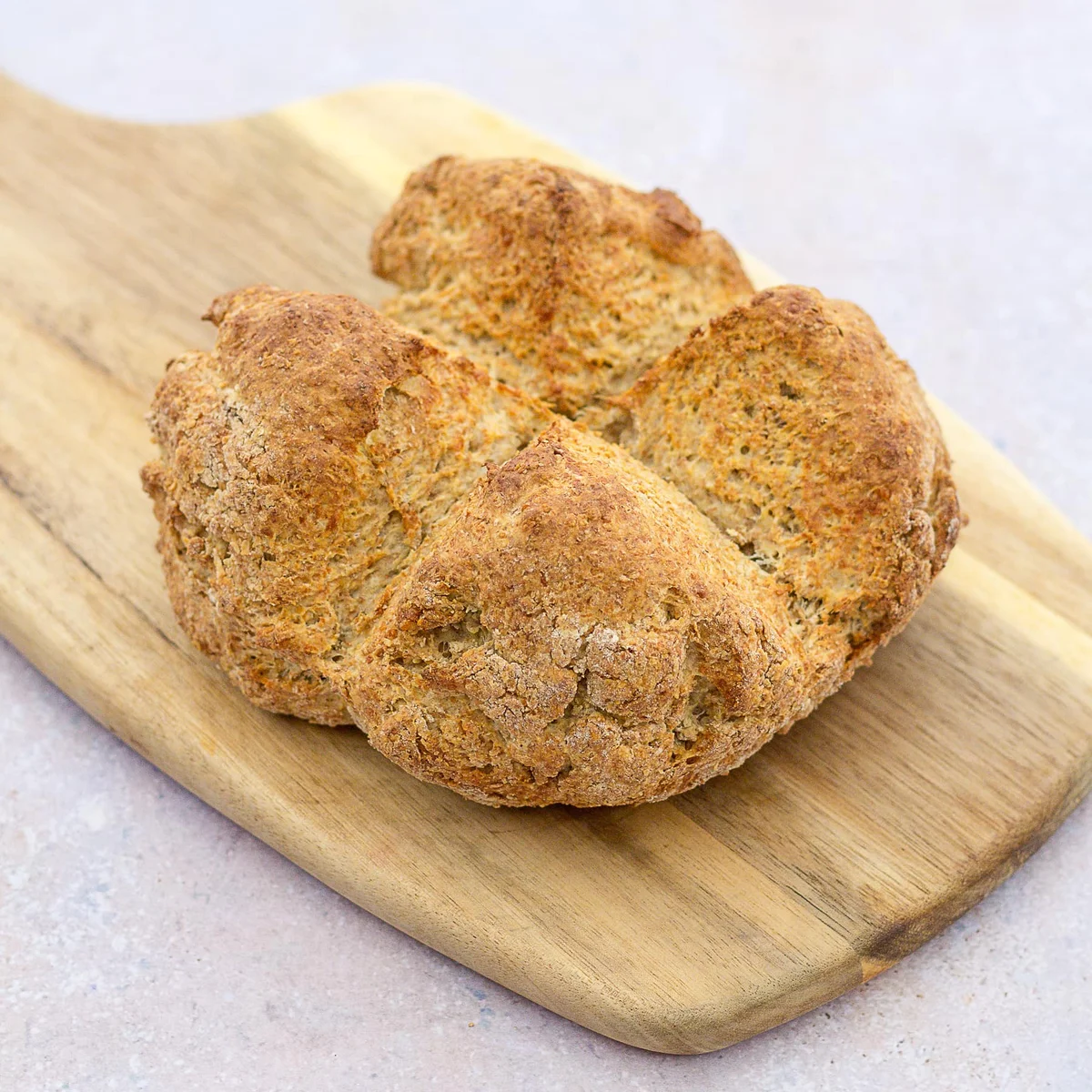
This quick Irish soda bread combines plain and wholemeal flour with mature cheddar for a savoury loaf with a tangy edge. It needs no kneading or proving and is ready in about 40 minutes, making it a handy choice when you want fresh bread without a long wait.
Ingredients
- 150 gplain white flour
- 200 gwholemeal flour
- 1 teaspoon (or to taste)salt
- 1 teaspoonbicarbonate of soda
- 100 gmature cheddar cheese, grated
- 1 tablespoonapple cider vinegar
- 200 mlmilk, regular or plant-based
Instructions
- 1
Heat the oven
Preheat the oven to 220°C (200°C fan). Lightly dust a non-stick baking tray with flour.
- 2
Mix the dry ingredients
In a large bowl, combine both flours, the salt, bicarbonate of soda and grated cheese.
- 3
Combine milk and vinegar
Stir the apple cider vinegar into the milk in a jug.
- 4
Make the dough
Pour the milk mixture into the bowl of dry ingredients and stir until combined.
- 5
Bring it together
Use your hands to gather the dough into a ball. It should hold together without feeling wet and sloppy; add a splash of water if it is too dry to come together, or a little more flour if it is too wet.
- 6
Shape the loaf
Roll the dough into a ball and set it on the prepared baking tray.
- 7
Cut the cross
Flatten the ball slightly, then cut a deep cross into the top, almost down to the base but not all the way through.
- 8
Bake until golden
Bake for 30–35 minutes in the preheated oven, until the loaf is golden on top and cooked through.
- 9
Serve warm
For the best freshly baked texture, serve the loaf warm, straight from the oven.
What is cheese soda bread?
Soda bread is a traditional Irish-style loaf leavened with bicarbonate of soda rather than yeast, so it can be mixed and baked without proving. This version adds mature cheddar to a blend of white and wholemeal flours for a savoury, tangy loaf.
The recipe uses milk and vinegar in place of a cultured sour milk, helping provide the acidity that works with the bicarbonate of soda. The result is a practical, rustic bread to make when time is short.
Nutrition and macros by portion
The nutrition label shows one serving as written: 219 calories, 9g protein, 34g carbs, 6g fat.
| Portion | Adjustment | kcal | Protein | Carbs | Fat |
|---|---|---|---|---|---|
| Lighter | Smaller bread portion | 153 kcal | 6g | 24g | 4g |
| This serving | As written | 219 kcal | 9g | 34g | 6g |
| Hungry | Larger bread portion | 329 kcal | 14g | 51g | 9g |
The flours provide most of the carbohydrates, while the cheddar contributes much of the fat and some of the protein; the milk also adds protein. Pair a slice with vegetable soup or salad for a more balanced plate.
Why these ingredients work
Flour blend: plain white flour helps keep the loaf lighter, while wholemeal flour brings a heartier flavour and texture. Grated mature cheddar distributes its savoury flavour through the dough.
Milk and vinegar: mixing these together gives the dough its liquid and acidic ingredients. Regular or plant-based milk can be used as specified, though the loaf’s flavour and texture may vary a little with the choice.
Get the dough consistency right
Moisture check: bring the mixture together with your hands after stirring. Aim for a ball that holds its shape and is not wet or sloppy.
Small adjustments: if dry patches stop the dough coming together, add a splash of water. If it feels overly wet, add a touch more flour rather than trying to knead it smooth.
Shape and score the loaf
Round shape: roll the dough into a ball and place it on the floured tray, then flatten it slightly. Keeping the shape simple suits this quick, rustic loaf.
Deep cross: cut almost to the base without slicing all the way through. The cross divides the top into sections and gives the loaf its familiar appearance.
Check when it is baked
Timing: bake at 220°C (200°C fan) for 30–35 minutes. The top should be golden and the loaf cooked all the way through.
Oven variation: start checking towards the shorter end of the baking window, as ovens and loaf shapes can differ. If it needs longer, continue baking until the centre is cooked.
How to serve it
Warm slices: the recipe is intended to be served warm, when the cheddar aroma is particularly inviting. Let the loaf rest briefly if needed so it is easier to slice.
On the side: serve with soup, a salad or a simple spread for a light meal. It also works as a savoury snack on its own.
Recipe notes & tips
- Grate the cheddar before mixing so it is ready to distribute through the flour.
- Measure the bicarbonate of soda carefully, as the recipe relies on a small amount for leavening.
- Mix the milk and vinegar together before adding them to the dry ingredients.
- Handle the dough only enough to bring it together into a ball.
- Flour the tray lightly to help prevent the loaf sticking.
- Serve the loaf warm for the freshly baked texture recommended in the method.
Variations
- Sharper cheese: use a mature cheddar with a pronounced flavour.
- Plant-based milk: choose plant-based milk as the recipe allows.
- Salt level: adjust the salt to taste before combining the dry ingredients.
- More wholemeal character: keep the stated wholemeal flour as the larger share of the blend.
- Soup companion: serve slices alongside a bowl of vegetable soup.
Common mistakes to avoid
- Wet dough: add a touch more flour until it holds together without being sloppy.
- Dry, crumbly dough: add a splash of water if the mixture will not come together.
- Shallow cross: cut deeply into the top, stopping just short of the base.
- Skipping the tray preparation: dust the non-stick tray with a little flour before placing the loaf on it.
- Underbaking: allow 30–35 minutes and check that the loaf is golden and cooked through.
How to store
Once cool, store the loaf wrapped or in an airtight container at room temperature and use within 2 days for the best texture. Reheat slices briefly in the oven or toaster; the loaf may become firmer as it sits.
Frequently asked questions
Do I need to knead or prove this soda bread?
No. Bring the dough together into a ball with your hands, then shape and bake it without kneading or proving.
Can I use plant-based milk?
Yes, the recipe allows either regular or plant-based milk. The exact flavour and texture can vary depending on the milk used.
Why is vinegar added to the milk?
The vinegar supplies acidity to the mixture, which works with the bicarbonate of soda in this quick bread.
How do I know the loaf is done?
After 30–35 minutes, it should be golden on top and cooked all the way through. If it is not ready at 30 minutes, continue baking and check again.
Can I make the dough ahead?
This method is designed for mixing and baking straight away, with no proving stage. For the freshest result, prepare the dough just before baking.
What should I serve with cheese soda bread?
Serve it warm with soup or salad, or enjoy a slice on its own as a savoury snack.
Cook it from the original
This recipe comes from easypeasyfoodie.com. Their page has the author’s own photos, notes and tips — the best place to cook it from.
Open the recipe on easypeasyfoodie.com