
Vietnamese Spring Rolls
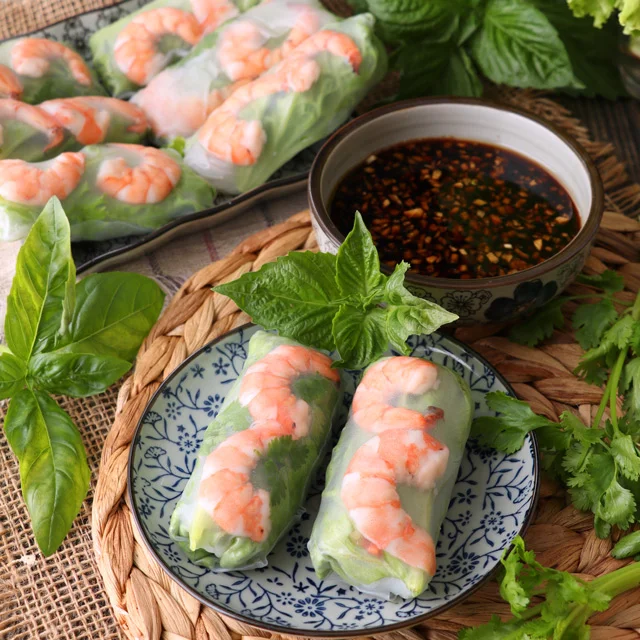
Vietnamese spring rolls are fresh rice-paper rolls filled with prawns, noodles, crisp vegetables and herbs. They make a cool, hands-on meal, served with a simple ginger-soy dip.
Ingredients
- 10 piecesrice paper wrappers
- 10 piecesprawns, shelled and deveined
- ½cucumber, cut into thin julienne strips
- 1carrot, cut into thin julienne strips
- 48 g (1.7 oz)vermicelli noodles or rice noodles
- 1 bunchmint, or coriander, parsley or basil, or a mixture
- 10–12 leaveslettuce or other salad leaves, cut into smaller pieces
- 2 tablespoonsginger, finely chopped
- 60 ml (¼ cup)rice vinegar
- 30 ml (⅛ cup)soy sauce
- 1 clovegarlic, minced
- 2 teaspoonssugar
- 30 ml (⅛ cup)water
- 1 teaspoonsesame oil
- 120 ml (½ cup)water, for cooking the prawns
- 1 teaspoon, optionalsalt
- As neededwarm water, for soaking the rice paper
Instructions
- 1
Cook the noodles
Cook the vermicelli or rice noodles in boiling water according to the packet instructions.
- 2
Cook the prawns
Put the prawns in a pan or skillet with 120 ml (½ cup) water; add 1 teaspoon salt if you like. Cover and simmer until the prawns have all turned pink. Cut each prawn in half lengthways.
- 3
Fill and roll
Pour warm water into a shallow bowl or deep plate. Soak one or two rice paper wrappers at a time until soft and jelly-like, then lay each flat on a plate. Arrange 3–4 prawn halves on the bottom third of a wrapper, followed by cucumber, carrot, noodles and greens. Tuck in the ends and roll as tightly as you can.
- 4
Mix the sauce
Mix the ginger, rice vinegar, soy sauce, garlic, sugar, 30 ml (⅛ cup) water and sesame oil until the sugar dissolves.
What are Vietnamese spring rolls?
These fresh rolls, often known as gỏi cuốn in Vietnam, wrap prawns, noodles, vegetables and herbs in softened rice paper. Unlike fried rolls, they are served cool, so the crisp fillings and fragrant greens stay prominent.
This version pairs mild prawns and rice noodles with cucumber, carrot and herbs. A sharp ginger-soy dip brings the flavours together.
Nutrition and macros by portion
The nutrition label shows one serving as written: 60 calories, 2g protein, 11g carbs, 0g fat.
| Portion | Adjustment | kcal | Protein | Carbs | Fat |
|---|---|---|---|---|---|
| Lighter | Use fewer noodles | 42 kcal | 1g | 8g | 0g |
| This serving | As written | 60 kcal | 2g | 11g | 0g |
| Hungry | Add more noodles | 90 kcal | 3g | 17g | 0g |
The rice paper and noodles provide most of the carbohydrate, while prawns contribute protein; sesame oil and the dipping sauce provide some fat. Add extra salad or vegetables alongside for a more substantial, balanced plate.
Get the fillings ready
Noodles: Cook them according to their packet, then have them ready to hand before you start rolling.
Vegetables and herbs: Cut the cucumber and carrot into thin strips so they fit neatly inside the wrappers. Smaller pieces of lettuce are easier to roll, while the herbs add freshness.
Cook the prawns gently
Prawns: Simmer them covered in 120 ml (½ cup) water until they turn pink. The recipe suggests 1 teaspoon salt as an optional addition to the cooking water.
Halving each prawn lengthways makes the pieces easier to arrange in a single layer and helps the filling sit evenly.
Soften the rice paper
Rice paper: Dip one or two wrappers at a time in warm water until they feel soft and jelly-like. They are delicate once softened, so lift and lay them flat carefully.
The wrapper will continue to relax as you add the filling. Avoid soaking it longer than needed to make it pliable.
Roll without overfilling
Layering: Keep the prawns and fillings in the bottom third of the wrapper, leaving space at the sides for tucking in the ends.
Tucking: Fold the ends towards the centre, then roll the wrapper firmly around the filling. A compact roll is easier to pick up and dip.
Serve with the ginger-soy dip
Dip: Stir the sauce ingredients until the sugar has dissolved. Its vinegar, ginger and garlic give the fresh filling a tangy, savoury contrast.
Serve the rolls soon after assembling. They work well as a light meal or starter, with extra salad leaves alongside if you want a fuller plate.
Recipe notes & tips
- Lay out all the fillings before you start soaking the wrappers.
- Soak only one or two rice paper wrappers at a time so they are manageable.
- Arrange the prawns in a neat line in the bottom third of each wrapper.
- Cut the vegetables into fine strips to make rolling easier.
- Keep the filling compact and tuck in both ends before rolling it up.
Variations
- Change the herbs: Use coriander, parsley or basil instead of mint, or combine them.
- Swap the noodles: Use rice noodles in place of vermicelli.
- Use other salad leaves: Replace the lettuce with another kind of salad leaf.
- Add hoisin-peanut dip: Serve with a hoisin-peanut sauce alongside or instead of the ginger-soy dip.
- Make them vegetarian: Leave out the prawns and fill the rolls with extra vegetables and herbs.
Common mistakes to avoid
- Over-soaking the wrappers: They can become hard to handle; dip them only until soft and jelly-like.
- Adding too much filling: The wrapper may tear; keep the filling in a narrow line.
- Skipping the end tuck: Fold both sides in before rolling to keep the filling enclosed.
- Cutting thick vegetable strips: They make tight rolling difficult; slice the cucumber and carrot thinly.
- Crowding the filling: Too many ingredients make the rolls bulky; use a modest layer of each.
How to store
For the best texture, serve the rolls soon after assembling, as rice paper can dry out or become sticky in storage. If needed, refrigerate them covered and eat within a day; keep the dip separately and bring the rolls out shortly before serving.
Frequently asked questions
Can I make Vietnamese spring rolls ahead of time?
They are best freshly assembled. If you need to prepare them ahead, cover and refrigerate them, then serve within a day.
How do I know when the prawns are cooked?
The method says to simmer them covered until they have all turned pink. Cut them lengthways after cooking.
How long should I soak the rice paper?
Soak it until it is soft and jelly-like, then lift it out and lay it flat. The recipe does not give a fixed soaking time.
Can I use rice noodles instead of vermicelli?
Yes. The recipe gives rice noodles as an alternative; cook them according to the packet instructions.
What herbs can I use instead of mint?
Coriander, parsley or basil are suggested alternatives. You can also use a mixture.
Can I serve these with a different sauce?
Yes. The description suggests hoisin-peanut sauce as an alternative, or you can serve it alongside the ginger-soy dip.
Cook it from the original
This recipe comes from foxyfolksy.com. Their page has the author’s own photos, notes and tips — the best place to cook it from.
Open the recipe on foxyfolksy.com