
Orecchiette With Fresh Tomatoes And Pecorino
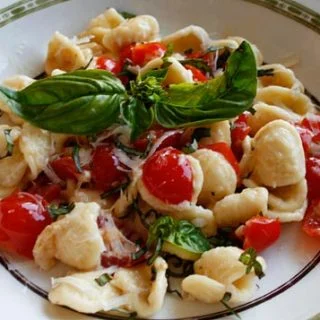
Orecchiette with fresh tomatoes and Pecorino is a simple pasta dish that pairs chewy Puglian pasta with a raw, garlic-and-basil tomato mixture. The tomatoes rest while you prepare the pasta, making this a useful recipe for a bright, flavourful meal with little cooking.
Ingredients
- 454 g (1 pound)orecchiette pasta
- 946 ml (2 pints), or about 450 g (3 cups)ripe cherry tomatoes, or ripe plum tomatoes, chopped
- 2 large clovesgarlic, minced
- 45 ml (3 tablespoons)olive oil
- to tastesea salt
- to tastecracked black pepper
- to tastered pepper flakes
- 15 g (1/4 cup)fresh basil, finely chopped
- 300 g (3 cups)Pecorino cheese, freshly grated
Instructions
- 1
Mix the tomatoes
Quarter the tomatoes and combine them in a bowl with the garlic, olive oil, a pinch of salt, pepper, red pepper flakes and fresh basil.
- 2
Rest the mixture
Leave the tomato mixture to rest for at least two hours before you cook the pasta.
- 3
Cook the pasta
Boil the orecchiette in a large pot of water until al dente.
- 4
Reserve pasta water
Drain the pasta, saving a small cup of the cooking water.
- 5
Combine pasta and sauce
Add the tomatoes and cheese to the pasta and toss everything together.
- 6
Adjust the texture
If the pasta looks dry, add a little of the reserved pasta water and mix well.
- 7
Season to taste
Taste the pasta and add more salt if needed, along with extra cracked black pepper.
- 8
Serve hot
Serve the pasta hot.
What is orecchiette with fresh tomatoes?
Orecchiette, meaning “little ears”, is a pasta shape associated with Puglia in southern Italy. Its small cupped form holds onto bits of sauce and grated cheese.
This version pairs the pasta with uncooked tomatoes, garlic, olive oil and basil, then finishes with Pecorino. Resting the tomatoes gives their juices time to mingle with the seasonings before they meet the hot pasta.
Nutrition and macros by portion
The nutrition label shows one serving as written: 860 calories, 38g protein, 78g carbs, 34g fat.
| Portion | Adjustment | kcal | Protein | Carbs | Fat |
|---|---|---|---|---|---|
| Lighter | Less Pecorino, more tomatoes | 602 kcal | 27g | 55g | 24g |
| This serving | As written | 860 kcal | 38g | 78g | 34g |
| Hungry | Larger pasta portion | 1290 kcal | 57g | 117g | 51g |
Most of the carbohydrates come from the orecchiette, while Pecorino supplies much of the protein and fat; olive oil adds more fat. Serve a moderate helping with a generous side of vegetables or salad to balance the plate.
Why the tomato rest matters
Tomatoes and aromatics: the resting mixture is the sauce here, so use ripe tomatoes and let them sit for at least two hours as directed. The salt draws out juice, which helps coat the pasta.
Basil: chopping it finely distributes its fragrance through the tomatoes. Add it to the mixture at the start, as the recipe directs.
Choosing the cheese
Pecorino: freshly grated cheese mixes more readily than pre-grated pieces and brings a salty, savoury finish. Because it is already salty, taste the finished pasta before adding much extra salt.
Grating: grate the cheese finely so it can cling to the orecchiette and combine with the tomato juices.
Getting the pasta texture right
Al dente: cook the orecchiette until tender but still slightly firm, checking the packet guidance as it cooks. Avoid leaving it soft, since it will be tossed with the other ingredients afterwards.
Pasta water: keep a small cup before draining. Its starch helps loosen the mixture if the pasta seems dry; add just a little at a time.
Seasoning the dish
Chilli: red pepper flakes add a gentle heat, so start with a modest pinch if you prefer a milder plate. Cracked black pepper brings a different, sharper warmth.
Salt: the recipe seasons the tomatoes and then asks you to taste again at the end. The Pecorino contributes saltiness too, so adjust only after everything is combined.
Serving ideas
Serve the pasta hot, soon after tossing, while the cheese and tomato juices coat the pasta. A simple green salad or cooked seasonal vegetables make an easy side.
Since the recipe is rich in pasta and cheese, add a side of vegetables for colour and freshness. Keep any additional cheese at the table so diners can choose their own amount.
Recipe notes & tips
- Use ripe tomatoes so the resting mixture gives off plenty of juice.
- Let the tomato mixture rest for at least two hours, as the recipe specifies.
- Grate the Pecorino shortly before combining it with the pasta.
- Reserve pasta water before draining, not after.
- Add the pasta water gradually so the sauce does not become watery.
- Taste for salt only after adding the Pecorino.
Variations
- Use plum tomatoes: Chop them instead of the cherry tomatoes, using about 450 g.
- Adjust the chilli: Use fewer flakes for gentler heat or more for a spicier dish.
- Add more basil: Increase the chopped basil for a stronger herbal flavour.
- Change the cheese: Try another hard, salty grating cheese if Pecorino is unavailable.
- Add vegetables: Serve with cooked greens or a side salad for a fresher, more substantial plate.
Common mistakes to avoid
- Skipping the rest: The tomatoes need at least two hours to release their juices; prepare them ahead.
- Overcooking the pasta: It can turn soft when tossed; cook it just to al dente.
- Forgetting the pasta water: Save a small cup before draining so you can loosen the mixture.
- Adding all the water at once: The pasta may become loose; add a little at a time.
- Oversalting: Pecorino is salty, so taste the combined dish before adding extra salt.
- Using large tomato pieces: Quarter cherry tomatoes or chop plum tomatoes so they mix easily with the pasta.
How to store
Refrigerate leftovers in a covered container for up to 3 days. Reheat gently in a pan with a splash of water, stirring until warmed through; the pasta may be softer after storage.
Frequently asked questions
Can I make the tomato mixture ahead?
Yes. It needs to rest for at least two hours, so you can prepare it ahead and keep it covered in the refrigerator. Let it lose some of its chill before mixing it with the hot pasta.
Can I use a different pasta shape?
Yes. Choose a short pasta with ridges or a hollow shape that can catch the tomato juices and cheese.
What can I use instead of cherry tomatoes?
The recipe gives chopped ripe plum tomatoes as an alternative, about 450 g (3 cups).
How much pasta water should I add?
Add only enough to help the pasta look moist and coated. Pour it in gradually and toss between additions.
Can I serve this pasta cold?
The method calls for serving it hot. It can be eaten as leftovers, but the cheese may firm up and the pasta texture will change when chilled.
How do I know when the pasta is al dente?
Taste a piece near the end of cooking: it should be tender but retain a slight firmness at the centre.
Cook it from the original
This recipe comes from italianfoodforever.com. Their page has the author’s own photos, notes and tips — the best place to cook it from.
Open the recipe on italianfoodforever.com