
Pineapple Mango Salsa
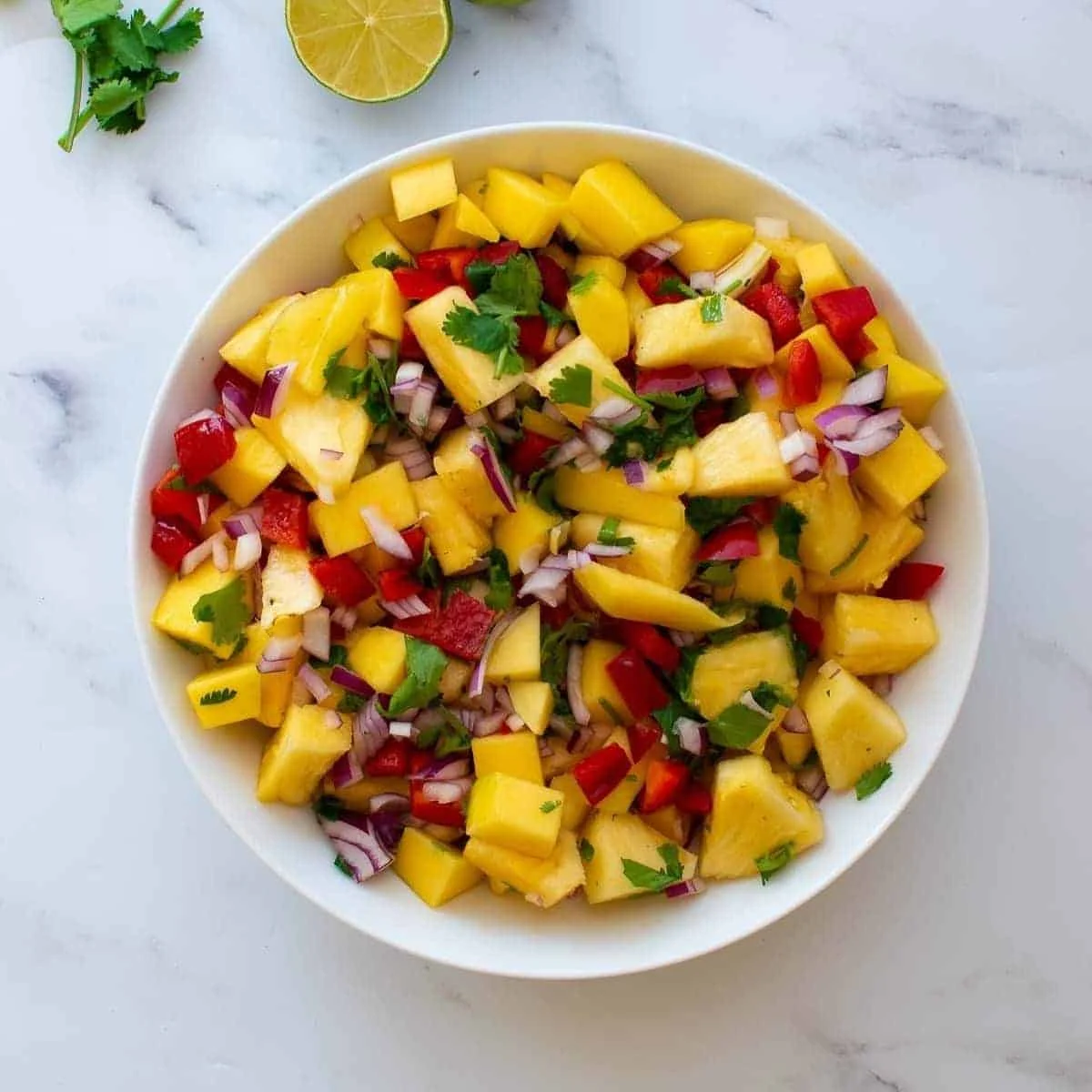
Pineapple mango salsa is a bright, no-cook mix of sweet fruit, crunchy vegetables, citrus and fresh coriander. It takes just five minutes to prepare and works as a side, topping or snack.
Ingredients
- 1mango
- 1pineapple
- 1red pepper
- 1red onion
- 15 g (⅓ cup)coriander
- 1lemon (juice only)
- 1lime (juice only)
Instructions
- 1
Dice the produce
Peel and dice the mango and pineapple. Dice the red pepper and red onion, then put everything in a mixing or salad bowl.
- 2
Add the citrus
Squeeze the lemon and lime juice into the bowl.
- 3
Chop the coriander
Remove the coriander stems and finely chop the leaves. Add them to the bowl.
- 4
Mix and serve
Stir until the ingredients are combined. Serve straight away or keep the salsa in the refrigerator.
What is pineapple mango salsa?
Salsa is a broad family of chopped, seasoned mixtures; this fresh version pairs tropical fruit with pepper, onion and citrus. It fits the American-style fruit salsa tradition, where a juicy, sweet-and-tangy mix can be served alongside savoury food.
The contrast is what makes this version work: ripe fruit brings sweetness, red onion and pepper add bite, and lemon and lime brighten the whole bowl. Coriander gives it a fresh herbal finish.
Nutrition and macros by portion
The nutrition label shows one serving as written: 178 calories, 3g protein, 46g carbs, 1g fat.
| Portion | Adjustment | kcal | Protein | Carbs | Fat |
|---|---|---|---|---|---|
| Lighter | Smaller salsa portion | 125 kcal | 2g | 32g | 1g |
| This serving | As written | 178 kcal | 3g | 46g | 1g |
| Hungry | Larger salsa portion | 267 kcal | 5g | 69g | 2g |
Most of the carbohydrates come from the mango and pineapple, while the red pepper and onion add smaller amounts. The listed fat and protein are low, so serve a portion with a protein-rich main such as beans, fish or chicken to make a more balanced plate.
Choosing the fruit
Ripe mango: choose one that yields slightly to gentle pressure but is not mushy, so the pieces hold their shape when stirred.
Pineapple: use a fragrant, ripe fruit and cut away the tough core. If the pineapple is especially juicy, let excess juice drain briefly before mixing.
Cutting for an even mix
Even pieces: dice the mango, pineapple, pepper and onion to roughly similar sizes. This makes each spoonful balanced and helps the salsa sit neatly on a plate or spoon onto other food.
Fine onion: chop the red onion small enough to distribute through the fruit without overwhelming its sweetness.
Balancing the flavours
Citrus: lemon and lime bring acidity that offsets the fruit’s sweetness. Add both as directed, then taste the salsa before serving if you want to judge the balance.
Coriander: finely chopped leaves spread their flavour through the mixture. Removing the stems keeps the texture leafy and tender.
Texture and serving time
This salsa is meant to be juicy and crisp, not cooked down. Stir gently so the diced fruit remains intact rather than turning into a mash.
Serve it immediately for the freshest texture. A short chill is fine, but the fruit will release more juice as it sits.
What to serve it with
As a side: serve alongside grilled fish, chicken or vegetables, where the fruity acidity contrasts with savoury flavours.
As a snack or topping: spoon it over tacos, or serve with tortilla crisps for scooping. Drain a little of the excess juice if you want it to stay put on top of food.
Recipe notes & tips
- Use ripe but still firm fruit so the diced pieces keep their shape.
- Cut the onion finely to spread its sharp flavour through the salsa.
- Finely chop the coriander leaves for an even distribution.
- Stir gently once the citrus and herbs are added.
- Serve soon after mixing for the crispest texture.
Variations
- Add chilli: finely chop fresh chilli for a spicy edge.
- Use orange: replace some of the citrus juice with orange juice for a gentler tang.
- Add avocado: fold in diced avocado just before serving for a creamy contrast.
- Try mint: swap some of the coriander for chopped mint for a different fresh note.
- Serve with crisps: offer tortilla crisps alongside for scooping.
Common mistakes to avoid
- Overripe mango: very soft fruit can collapse when mixed, so choose one that is ripe but still firm.
- Large onion pieces: they can dominate a bite; dice the onion finely.
- Rough stirring: vigorous mixing can crush the fruit; fold the ingredients together gently.
- Leaving it out: the fresh fruit should not sit at room temperature for an extended time; refrigerate leftovers promptly.
- Adding herbs too early: coriander can lose its fresh character as the salsa sits, so mix and serve soon after chopping.
How to store
Keep leftovers in a covered container in the refrigerator and use within 2 days for the best texture. The fruit will soften and release juice as it sits; stir before serving and do not reheat.
Frequently asked questions
Can I make pineapple mango salsa ahead?
It is best shortly after mixing, but you can prepare it a few hours ahead and keep it covered in the refrigerator. Expect it to become juicier as it rests.
Can I use tinned pineapple?
Yes. Drain it well before dicing or adding it, since extra liquid can make the salsa watery.
How do I keep the salsa from getting watery?
Use firm, ripe fruit and drain any excess juice before serving. The fruit naturally releases liquid over time, so serve it soon after mixing.
Can I make it spicier?
Yes. Add finely chopped fresh chilli a little at a time, tasting as you go.
What can I serve with this salsa?
It works as a side for grilled fish, chicken or vegetables, and as a topping for tacos. Tortilla crisps also make an easy way to serve it as a snack.
Cook it from the original
This recipe comes from hintofhealthy.com. Their page has the author’s own photos, notes and tips — the best place to cook it from.
Open the recipe on hintofhealthy.com