
Spice Rub Grilled Chicken with Chimichurri
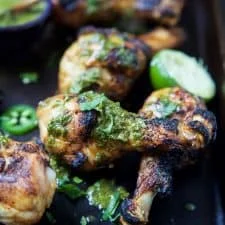
Spice-rubbed grilled chicken legs are served with a bright, herb-filled chimichurri made with coriander, oregano, lime and olive oil. It is a straightforward meal with smoky, savoury seasoning and a fresh, zesty finish.
Ingredients
- 907 g (2 lb)chicken legs
- 10 ml (2 teaspoons)garlic powder
- 10 ml (2 teaspoons)ground cumin
- 5 ml (1 teaspoon)ground coriander
- 5 ml (1 teaspoon)smoked paprika
- 5 ml (1 teaspoon)sea salt
- 2.5 ml (1/2 teaspoon)ground black pepper
- 1garlic clove
- 5 ml (1 teaspoon)red pepper flakes
- 180 ml (3/4 cup)fresh coriander
- 60 ml (1/4 cup)fresh oregano
- juice of 1lime
- 30 ml (2 tablespoons)red wine vinegar
- 45 ml (3 tablespoons)olive oil
- to tastesalt and pepper
Instructions
- 1
Heat the grill
Preheat the grill to medium-high, about 200°C (400°F).
- 2
Mix the spices
Stir the garlic powder, cumin, coriander, smoked paprika, sea salt and black pepper together in a small bowl.
- 3
Season the chicken
Sprinkle the spice mixture over the chicken legs, then rub it over all sides.
- 4
Grill both sides
Place the chicken on the grill and cook each side for 2–3 minutes over medium-high heat.
- 5
Cook through
Reduce the heat to medium-low and cook for a further 20 minutes, or until the juices run clear and the internal temperature reaches 79°C (175°F).
- 6
Blend the sauce
Meanwhile, put the garlic clove, fresh coriander, fresh oregano, lime juice, red wine vinegar, olive oil, salt and pepper in a food processor. Blend until smooth.
- 7
Serve with sauce
Serve the chicken topped with chimichurri.
What is spice-rubbed grilled chicken with chimichurri?
This American-style grilled chicken pairs seasoned legs with chimichurri, a vivid herb sauce associated with Argentina and Uruguay. The sauce’s coriander, oregano, lime and vinegar bring a sharp, fresh contrast to the smoky spice rub.
Here, the same meal balances two kinds of flavour: warm cumin and paprika on the chicken, then a smooth, tangy sauce added at serving. Grilling keeps the method direct and gives the chicken a charred surface.
Nutrition and macros by portion
The nutrition label shows one serving as written: 202 calories, 22g protein, 1g carbs, 11g fat.
| Portion | Adjustment | kcal | Protein | Carbs | Fat |
|---|---|---|---|---|---|
| Lighter | Use less chimichurri | 141 kcal | 15g | 1g | 8g |
| This serving | As written | 202 kcal | 22g | 1g | 11g |
| Hungry | Add another chicken leg | 303 kcal | 33g | 2g | 17g |
The chicken provides most of the protein, while the olive oil contributes much of the fat. The listed carbohydrate amount is very low, with small contributions from the herbs and seasonings. For a more balanced plate, serve a portion with vegetables and a source of fibre-rich carbohydrate such as potatoes or whole grains.
Build the spice rub
Dry spices: mix them thoroughly before seasoning so the cumin, coriander, paprika, garlic powder, salt and pepper are spread evenly across the legs.
Even coating: rub the seasoning over all sides of the chicken. This helps each piece pick up flavour rather than leaving most of the spice in one spot.
Manage the grill heat
Initial sear: begin over medium-high heat, around 200°C, and grill each side for 2–3 minutes as directed. Stay nearby while the chicken is over the hotter part of the cook.
Gentler finish: reduce the heat to medium-low for the remaining 20 minutes. This gives the legs time to cook through without keeping them over high heat throughout.
Check when the chicken is done
Temperature: check the thickest part of a leg with a thermometer, avoiding the bone, and follow the recipe’s target of 79°C (175°F).
Visual cue: the method also calls for clear juices, but a thermometer gives you a more reliable check. If the chicken has not reached the target, continue cooking and check again.
Make the chimichurri
Fresh herbs: use the coriander and oregano as listed, and blend them with the garlic, lime juice, vinegar and olive oil. The food processor creates the smooth consistency specified in the recipe.
Seasoning: add salt and pepper to taste, then blend until smooth. Serve the sauce over the chicken so its bright acidity cuts through the savoury rub.
Plan the timing
While the chicken cooks: prepare the chimichurri during the 20-minute lower-heat grilling stage, as the method suggests. That keeps the sauce ready without adding a separate preparation window after grilling.
At the table: serve the chicken with the sauce freshly blended. A simple salad or grilled vegetables make easy accompaniments without competing with the herbs.
Recipe notes & tips
- Pat the chicken dry before applying the spice rub so the seasoning is easier to spread.
- Keep the grill lid closed during the lower-heat cooking stage if your grill is designed for covered cooking.
- Arrange the legs with space between them to make turning easier.
- Check the temperature in the thickest part of the meat without touching the bone.
- Blend the sauce just before serving for its freshest herb flavour.
Variations
- More heat: increase the red pepper flakes in the chimichurri to taste.
- Citrus swap: use lemon juice in place of lime for a slightly different tang.
- Herb balance: adjust the proportions of coriander and oregano while keeping the total amount of fresh herbs similar.
- Milder sauce: reduce the red pepper flakes or leave them out.
- Oven finish: if grilling is not practical, cook the seasoned chicken in an oven-safe method and check that it reaches the stated internal temperature.
Common mistakes to avoid
- Uneven seasoning: mix the rub well and work it over every side of the chicken.
- High heat for the whole cook: lower the grill to medium-low after the first 2–3 minutes per side.
- Guessing doneness: use a thermometer and check the thickest part away from the bone.
- Over-blending the herbs: stop once the chimichurri is smooth, as specified.
- Saucing too early: add the chimichurri when serving so the grilled surface stays distinct.
How to store
Refrigerate leftover chicken and chimichurri separately in covered containers for up to 3–4 days. Reheat the chicken until steaming hot throughout, and serve the sauce cold or bring it briefly to room temperature.
Frequently asked questions
Can I use chicken thighs instead of legs?
Yes, but cooking time may differ depending on their size and whether they are bone-in. Use the recipe’s temperature and doneness cues rather than relying only on the clock.
Can I make the chimichurri without a food processor?
Yes. Finely chop the garlic and herbs, then stir them together with the lime juice, vinegar, olive oil, salt and pepper. The texture will be more rustic than the blended version.
How can I tell when the chicken is cooked?
Check the thickest part with a thermometer, keeping the probe away from the bone. This recipe specifies 79°C (175°F), as well as juices running clear.
Can I prepare the sauce ahead?
You can blend it ahead and keep it covered in the fridge. Let it lose some of its chill before serving so its herb and citrus flavours come through.
What goes well with this chicken?
Try it with grilled vegetables, a green salad, potatoes or rice. These sides complement the fresh, sharp chimichurri.
Cook it from the original
This recipe comes from joyfulhealthyeats.com. Their page has the author’s own photos, notes and tips — the best place to cook it from.
Open the recipe on joyfulhealthyeats.com