
Vegan Samosas
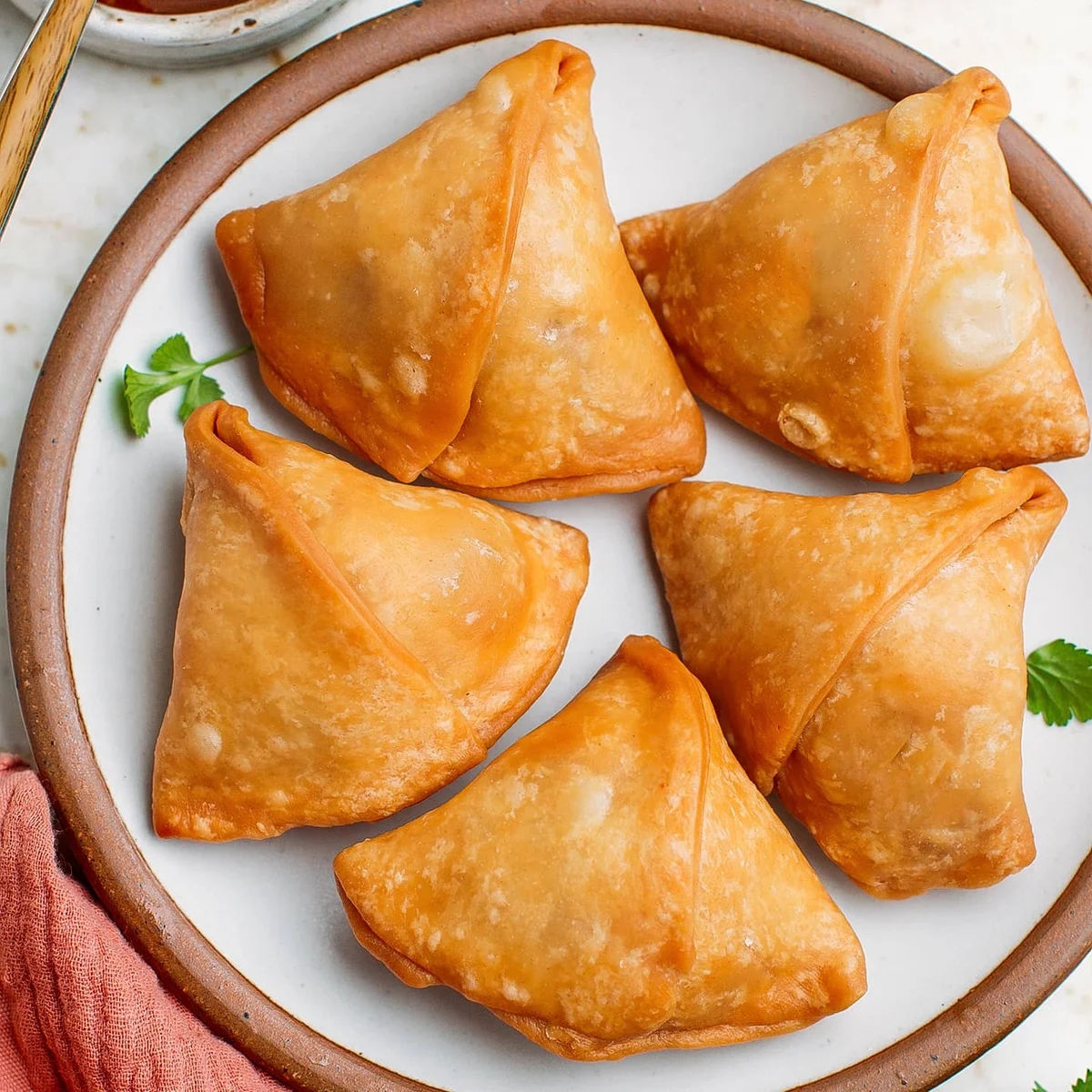
These vegan samosas have a warmly spiced potato and pea filling wrapped in homemade pastry and fried until crisp. Make them for a plant-based appetiser, and serve with tamarind chutney or mint sauce for dipping.
Ingredients
- 156 g (1¼ cups)plain flour
- 75–90 ml (5–6 tbsp)water
- 15 ml (1 tbsp)oil
- 0.75 g (⅛ tsp)salt
- ¼ tspcumin seeds
- 2 medium (about 369 g / 13 oz)white potatoes
- 30 ml (2 tbsp)oil
- 2 cloves, mincedgarlic
- 2, mincedshallots
- 2 tsp, mincedfresh ginger
- 45 ml (3 tbsp)green peas
- ½ tspground cumin
- ½ tspground coriander
- ¼ tspchilli powder
- ¼ tspgaram masala
- ½ tspsalt
- 3 tbsp, choppedfresh coriander
- 710 ml (3 cups)neutral oil, for frying
- 8 g (1 tbsp)cornflour
- 15 ml (1 tbsp)water
Instructions
- 1
Cook the potatoes
Put the potatoes in a saucepan and cover them with water. Bring to the boil, then simmer for 25–35 minutes, until a fork slips in easily; the exact time depends on their size and variety. Leave them to cool for 30–45 minutes while you prepare the dough.
- 2
Mix the dough
Combine the flour, water, oil, salt and cumin seeds in a mixing bowl. Knead by hand for about 3 minutes, until the dough is smooth and even, neither sticky nor dry. If it feels too dry, add an extra teaspoon of water and knead again.
- 3
Rest the dough
Wrap the dough in cling film and leave it to rest for about 2 hours.
- 4
Prepare the filling
Once the potatoes are cool enough to handle, peel them and cut them into 1.3 cm cubes. Heat the oil in a non-stick frying pan over medium heat. When hot, add the shallots, garlic and ginger and sauté for about 3 minutes.
- 5
Season the potatoes
Add the diced potatoes, peas, spices and salt to the pan. Sauté for another 3–5 minutes, stirring so the potatoes are coated with the aromatics and spices. Remove from the heat and set aside.
- 6
Shape the wrappers
Divide the rested dough into 6 equal balls. Roll one into a disc about 3 mm thick, then cut the disc in half to make two half-moons.
- 7
Make the slurry
In a small bowl, stir together the cornflour and water until dissolved. Dip a finger into the mixture and brush it along the edges of the dough.
- 8
Form and fill
Bring the straight edges of a half-moon together to form a cone and press the seam firmly to seal. Add about 1 tablespoon of filling, packing it in without overfilling and leaving about 1 cm at the top for sealing. Pinch the edges together to enclose the filling. Set the samosa on a parchment-lined plate or baking sheet and repeat with the remaining dough and filling.
- 9
Heat the oil
For a crust with fewer bubbles, begin frying at a low temperature and raise the heat gradually. Heat the oil to about 90°C (194°F), then add the samosas in batches of 4–5.
- 10
Fry until golden
Fry at 90°C (194°F) for 3–4 minutes. Raise the oil temperature to 180°C (356°F) and fry for a further 7–10 minutes, until golden brown. The temperatures do not need to be exact. Transfer the samosas to a plate lined with kitchen paper to drain.
- 11
Fry remaining batches
For each remaining batch, turn off the heat and wait for the oil to fall to 90°C (194°F), then repeat the frying process.
What are samosas?
Samosas are filled pastries associated with South Asian cooking, often made with a savoury potato filling and fried pastry shell. This version takes an Indian-inspired approach, seasoning potatoes and peas with cumin, coriander, chilli and garam masala.
Homemade dough gives the wrappers their own flavour and lets you shape each one around the filling. A little cornflour slurry helps the seams hold while they fry.
Nutrition and macros by portion
The nutrition label shows one serving as written: 150 calories, 2g protein, 15g carbs, 9g fat.
| Portion | Adjustment | kcal | Protein | Carbs | Fat |
|---|---|---|---|---|---|
| Lighter | Smaller samosa portion | 105 kcal | 1g | 11g | 6g |
| This serving | As written | 150 kcal | 2g | 15g | 9g |
| Hungry | Add another samosa | 225 kcal | 3g | 23g | 14g |
The potatoes and flour provide most of the carbohydrates, while the pastry oil and frying oil contribute much of the fat. The potato, peas and flour supply some protein, but the stated amount per serving is modest; add a fresh salad or a protein-rich plant-based side to round out the plate.
The homemade pastry
Dough texture: Knead until smooth and uniform, stopping before it becomes sticky. Add extra water only a teaspoon at a time if it seems dry.
Resting time: The dough rests for about 2 hours, so plan for this before assembling. This is the main hands-off stretch of the recipe.
Building the potato filling
Potatoes: Cook them until fork-tender, then let them cool before peeling and dicing. Cooling makes them easier to handle and helps the cubes keep some shape when stirred.
Aromatics: Give the shallots, garlic and ginger about 3 minutes in the hot oil before adding the other filling ingredients. This starts their flavour developing without scorching them.
Sealing each samosa
Cone shape: Cut each rolled disc in half and bring the straight edges together, pressing the seam closed. Keep the pointed end intact so the filling stays contained.
Filling: Use about 1 tablespoon in each cone and leave roughly 1 cm clear at the top. Moisten the edges with the slurry and pinch them firmly shut.
Getting the frying right
Low then high: Start at about 90°C for 3–4 minutes, then raise the oil to 180°C for another 7–10 minutes. The gradual increase is intended to help limit bubbles on the pastry.
Doneness: Look for an evenly golden-brown shell and allow excess oil to drain on kitchen paper. Fry in batches of 4–5 rather than crowding the pan.
Serving ideas
Dips: Tamarind chutney brings a sweet-sour contrast, while mint sauce offers a fresh-tasting accompaniment. Put either on the side so the pastry stays crisp until serving.
On the plate: Serve the samosas as an appetiser or alongside a salad and another dish. Their potato filling is satisfying, so a fresh, crunchy side makes a useful contrast.
Recipe notes & tips
- Weigh the dough balls if you want the wrappers to be similar in size.
- Keep unused dough covered while shaping so it does not dry out.
- Mash only a little of the potato filling if you want it to pack more easily into the cones.
- Use a thermometer to help control the two frying temperatures.
- Leave room between samosas on the lined tray so their edges do not stick together before frying.
Variations
- Extra peas: Add more peas to the filling for a sweeter, greener variation.
- More heat: Increase the chilli powder slightly for a hotter filling.
- Fresh herbs: Add extra chopped coriander to the filling for a brighter herbal note.
- Mint dip: Serve with a mint dipping sauce instead of tamarind chutney.
- Baked option: Bake the shaped samosas rather than deep-frying, noting that the pastry texture will differ from the fried version.
Common mistakes to avoid
- Dry dough: Add water a teaspoon at a time and knead again until the dough is smooth.
- Warm potatoes: Let them cool for 30–45 minutes before peeling and dicing so they are easier to handle.
- Overfilling cones: Stick to about 1 tablespoon and leave roughly 1 cm clear at the top for sealing.
- Loose seams: Brush the edges with slurry and press them firmly together to enclose the filling.
- Oil too hot at the start: Begin at about 90°C, then raise the temperature to 180°C after 3–4 minutes.
- Crowded batches: Fry 4–5 samosas at a time so they have space in the oil.
How to store
Store fried samosas in a covered container in the refrigerator for up to 4 days. Reheat them in an oven until hot and crisp again; a microwave will warm them but can soften the pastry.
Frequently asked questions
Can I make the dough ahead?
The recipe calls for a 2-hour rest after wrapping the dough. Keep it covered during the rest so it does not dry out.
How do I know the potatoes are cooked?
They are ready when a fork slides into them easily. Cooking takes about 25–35 minutes, depending on their size and variety.
Why do the samosas need two frying temperatures?
The method starts at about 90°C for 3–4 minutes, then raises the oil to 180°C for 7–10 minutes. This gradual increase is used to help limit bubbles on the crust.
Can I prepare the samosas before frying?
Yes. Shape them and set them on a parchment-lined plate or baking sheet while you finish the batch. Keep them covered if they will be waiting so the wrappers do not dry out.
What should I serve with vegan samosas?
Try tamarind chutney or mint dipping sauce, as suggested for this recipe. A fresh salad also makes a useful contrast to the crisp pastry and spiced potato filling.
How long do cooked samosas keep?
They can be stored in the refrigerator for up to 4 days. Reheat until hot, using an oven if you want to bring back some crispness.
Cook it from the original
This recipe comes from fullofplants.com. Their page has the author’s own photos, notes and tips — the best place to cook it from.
Open the recipe on fullofplants.com