
Brioche French Toast
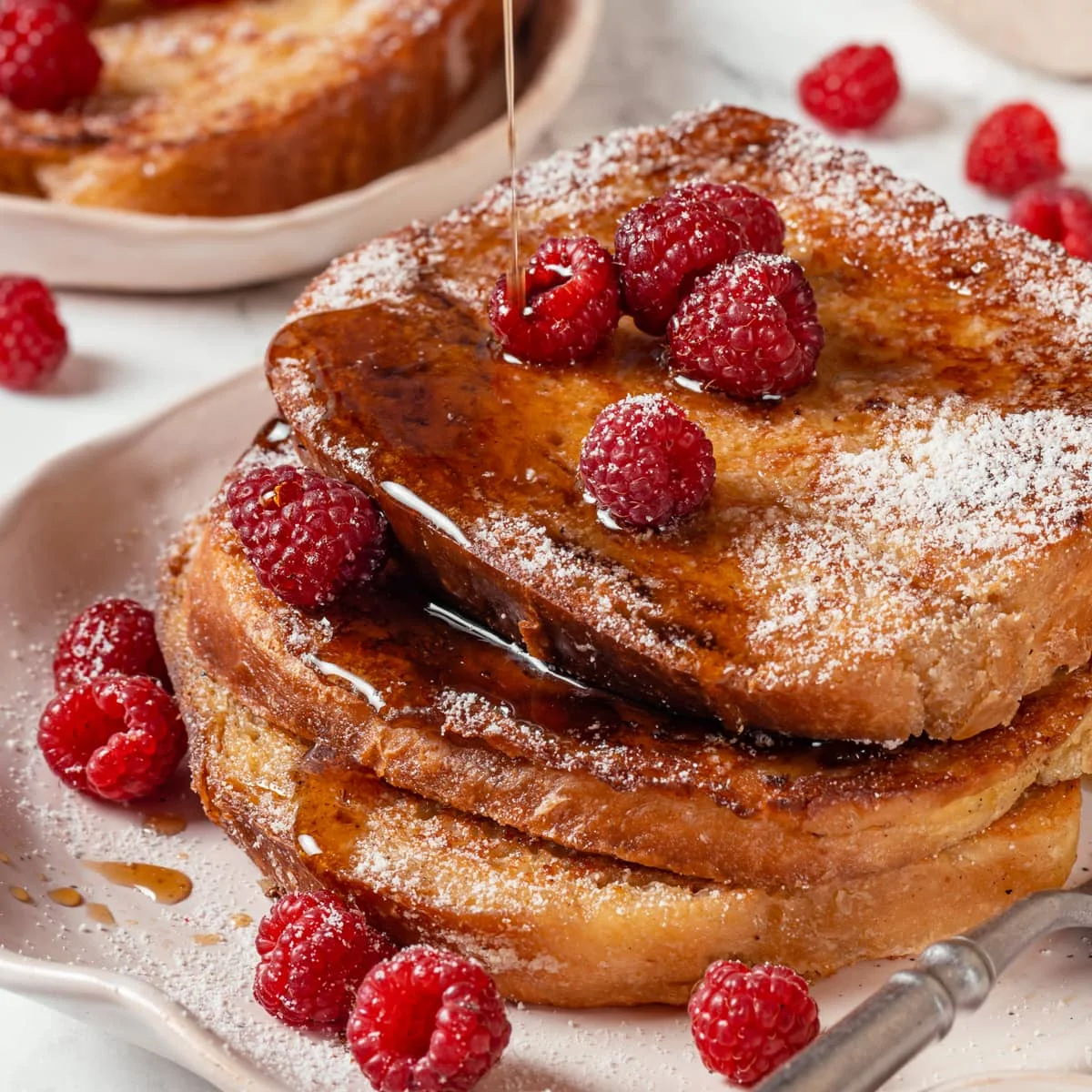
Brioche French toast is made by soaking slices of rich, soft bread in a lightly sweetened egg-and-milk mixture, then cooking them in butter until golden. It comes together quickly for a weekday breakfast or an easy brunch to share.
Ingredients
- 2whole eggs
- 1 teaspoon (5 ml)vanilla extract
- 2 tablespoons (30 ml)maple syrup
- 240 ml (1 cup)milk
- 8 slicesbrioche bread
- 56 g (1/4 cup)unsalted butter, for cooking
Instructions
- 1
Slice the brioche
Cut the brioche into slices 1.3–1.9 cm (½–¾ inch) thick.
- 2
Whisk the mixture
In a shallow bowl or baking dish, whisk the eggs, vanilla extract and maple syrup until smooth and evenly combined. Whisk in the milk.
- 3
Soak the slices
Depending on the size of your bowl and pan, place 1–3 pieces of bread in the mixture. Leave them to soak for 5 minutes, then turn them over.
- 4
Warm the pan
Heat a skillet, griddle or cast-iron pan over medium-low heat. Add about 2 teaspoons of butter and swirl it around to coat the pan.
- 5
Add the bread
When the pan is warm but not smoking, lift the soaked bread from the bowl and let excess mixture drip off before putting it in the pan.
- 6
Cook the first side
As the first batch cooks, start soaking the next batch. Cook for 5 minutes, or until golden brown, then turn each slice over.
- 7
Finish cooking
Cook the second side until the centres feel set when lightly touched and both sides are golden brown. Add more butter to the pan if needed.
- 8
Keep warm or serve
Transfer the French toast to a wire rack set over a baking sheet. Keep it warm in a warm oven until ready to serve, or serve straight away. Repeat with the remaining bread.
What is brioche French toast?
French toast is bread dipped in an egg-and-milk mixture and cooked in a pan. It is a familiar American breakfast and brunch dish, with variations found in many places.
Brioche: This version uses brioche, an enriched, tender bread that makes the cooked slices soft in the middle and buttery around the edges. A brief soak and a moderate pan heat help the centres cook through without scorching the outside.
Nutrition and macros by portion
The nutrition label shows one serving as written: 250 calories, 6g protein, 21g carbs, 16g fat.
| Portion | Adjustment | kcal | Protein | Carbs | Fat |
|---|---|---|---|---|---|
| Lighter | Use less butter | 175 kcal | 4g | 15g | 11g |
| This serving | As written | 250 kcal | 6g | 21g | 16g |
| Hungry | Add another slice | 375 kcal | 9g | 32g | 24g |
The brioche and maple syrup provide most of the carbohydrates, while the butter and enriched bread contribute much of the fat; the eggs and milk provide protein. Pair a serving with fruit or yoghurt for a more varied breakfast plate.
Why brioche works here
Brioche slices are soft and absorbent, so they take up the egg mixture readily. Cutting them 1.3–1.9 cm (½–¾ inch) thick gives each slice enough substance to soak while remaining easy to turn.
Getting an even soak
Batch size: Soak 1–3 slices at a time, depending on how much room your dish has. Turn the bread after 5 minutes so both sides absorb the mixture.
Draining: Let excess mixture drip back into the dish before the bread goes into the pan. This helps avoid carrying a puddle of egg mixture into the skillet.
Managing the pan heat
Butter: Swirl about 2 teaspoons around the pan to coat it, adding more between batches if needed. The butter supports browning and gives the brioche a rich, toasted finish.
Temperature: Keep the pan over medium-low heat. It should be warm but not smoking, giving the centre time to set as the outside turns golden.
Checking when it is done
Colour: Cook the first side for about 5 minutes, or until golden brown, before turning. Use the colour as a cue rather than letting the surface get too dark.
Centre: The second side is ready when the centres feel set under a light touch and both sides are golden. If they brown before the middle sets, lower the heat.
Cooking in batches
Next batch: While one batch cooks, start soaking the next. This keeps the process moving without leaving bread sitting in the mixture longer than the method calls for.
Holding: Set finished slices on a wire rack over a baking sheet and keep them warm in a warm oven, or serve them as they come out of the pan.
Serving the French toast
Serve the slices warm, with maple syrup at the table if you like. Fresh fruit makes a bright accompaniment, while yoghurt or eggs can round out a brunch spread.
Recipe notes & tips
- Use a shallow dish wide enough to lay the brioche slices flat.
- Keep the slices to 1.3–1.9 cm (½–¾ inch) thick so they are manageable to soak and turn.
- Let excess egg mixture drip off before transferring each slice to the pan.
- Swirl the butter around the pan so the cooking surface is coated.
- Start soaking the next batch while the current batch cooks.
- Use a wire rack over a baking sheet to hold cooked slices while you finish the rest.
Variations
- Add cinnamon: Whisk a little ground cinnamon into the egg mixture.
- Use another milk: Replace the milk with an unsweetened alternative in the same quantity.
- Add citrus: Whisk finely grated orange zest into the egg mixture.
- Serve with fruit: Add sliced berries or banana at the table.
- Add a savoury side: Serve the toast alongside eggs for a brunch plate.
Common mistakes to avoid
- Slices too thin: Cut the brioche 1.3–1.9 cm thick so it can soak without becoming difficult to handle.
- Soaking too many: Work with 1–3 slices at a time so they fit comfortably in the dish.
- Skipping the turn: Flip the bread after 5 minutes so both sides absorb the mixture.
- Pan too hot: Cook over medium-low heat and wait until the pan is warm, not smoking.
- Excess mixture: Let it drip off before the bread goes into the pan to avoid pooling.
- Rushing the centre: Cook until the centre feels set and both sides are golden, lowering the heat if the outside colours too quickly.
How to store
Refrigerate leftover French toast in a covered container and eat within 2 days. Reheat in a skillet over low heat or in a warm oven until heated through.
Frequently asked questions
Can I use brioche that is a little stale?
Yes. Slightly stale brioche can absorb the egg mixture well, but still turn it after 5 minutes and let excess mixture drip away before cooking.
How long should I soak each slice?
Soak the first side for 5 minutes, then flip the slice. The recipe does not specify a soaking time for the second side, so lift it out when it has absorbed the mixture and can be transferred without falling apart.
How do I know when the French toast is cooked?
Both sides should be golden brown, and the centre should feel set when lightly touched. Cook over medium-low heat so the centre has time to finish.
Can I cook all eight slices at once?
Only if your pan has enough room for them without crowding. Otherwise, cook in batches and keep the finished slices warm on a wire rack over a baking sheet in a warm oven.
Can I make the egg mixture ahead?
It is best to whisk it shortly before soaking the bread. The method does not call for preparing or storing the mixture in advance.
What can I serve with brioche French toast?
Maple syrup and fresh fruit are easy accompaniments. Yoghurt or eggs also work well as part of a brunch spread.
Cook it from the original
This recipe comes from girlversusdough.com. Their page has the author’s own photos, notes and tips — the best place to cook it from.
Open the recipe on girlversusdough.com