
Turkey Bolognese Lasagna Toss
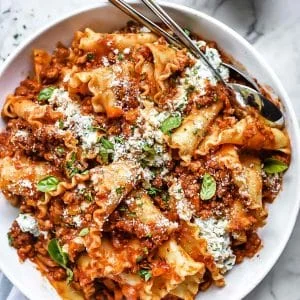
Turkey Bolognese Lasagna Toss pairs lasagna noodles with a slowly simmered turkey and tomato sauce, finished with a herby ricotta topping. It brings the comforting flavours of lasagna to the table without layering the ingredients in a baking dish.
Ingredients
- 1 packagelasagna noodles
- to tastekosher salt
- 60 ml (¼ cup)extra-virgin olive oil
- 454 g (1 lb)lean ground turkey
- 3 clovesgarlic, pressed or minced
- 1 cup (about 130 g)carrots, cut into small dice
- 1 cup (about 160 g)onion, cut into small dice
- 1 cup (about 100 g)celery, cut into small dice
- 240 ml (1 cup)milk
- 240 ml (1 cup)white wine
- 2 × 794 g (2 × 28 oz)cans crushed tomatoes
- 2 tablespoons (30 ml)balsamic vinegar
- 3bay leaves
- 1½ teaspoonskosher salt
- 1 teaspoonfreshly ground black pepper
- 227 g (8 oz)ricotta cheese
- ½ cup (about 56 g)mozzarella cheese, shredded
- ¼ cup (about 15 g)parsley, chopped
- ¼ cup (about 10 g)basil leaves, chopped
- a generous pinchkosher salt
Instructions
- 1
Brown the turkey
Heat the olive oil in a large frying pan over medium-high heat. Add the turkey and break it into small pieces with a spatula as it cooks. Fry for about 4–5 minutes, until no longer pink.
- 2
Soften the vegetables
Add the garlic, carrots, onion and celery. Cook, stirring occasionally, for another 4–5 minutes, until the vegetables start to soften. Stir in the milk and cook for about 3–4 minutes, until it has evaporated; repeat with the wine.
- 3
Simmer the sauce
Add the tomatoes, balsamic vinegar and bay leaves, then season with the measured kosher salt and freshly ground black pepper. Bring to the boil, then lower the heat to maintain a lively simmer. Cook for 2–3 hours, stirring occasionally, until rich and thick; add water if needed to loosen the sauce as it cooks.
- 4
Mix the topping
Combine the ricotta, mozzarella, parsley, basil and generous pinch of kosher salt in a small bowl. Refrigerate until ready to serve.
- 5
Cook the noodles
When ready to serve, bring a large stockpot of water to the boil over high heat and salt it generously. Cook the lasagna noodles until just al dente, then drain and toss them with the sauce.
- 6
Finish and serve
Serve the noodle and sauce mixture with spoonfuls of the ricotta topping. If desired, garnish with more Parmesan and fresh herbs or parsley.
What is a lasagna toss?
This dish takes the familiar ingredients and flavours of lasagna and serves them tossed together rather than layered and baked. Its Italian-inspired meat sauce is paired with pasta and a separate ricotta topping.
Here, turkey makes the meat sauce, while a long simmer builds a thick, savoury base. Balsamic vinegar adds a tangy counterpoint to the tomatoes.
Nutrition and macros by portion
The nutrition label shows one serving as written: 1030 calories, 56g protein, 116g carbs, 37g fat.
| Portion | Adjustment | kcal | Protein | Carbs | Fat |
|---|---|---|---|---|---|
| Lighter | Use less pasta | 721 kcal | 39g | 81g | 26g |
| This serving | As written | 1030 kcal | 56g | 116g | 37g |
| Hungry | Serve a larger portion | 1545 kcal | 84g | 174g | 56g |
Most of the carbohydrates come from the lasagna noodles and tomatoes; the olive oil and cheeses contribute much of the fat, while turkey and ricotta provide protein. Pair a serving with a green salad or another vegetable to round out the plate.
Building the sauce base
Turkey: Break the meat into small pieces as it browns so it distributes easily through the finished sauce.
Vegetables: The small dice helps the carrot, onion and celery soften evenly and meld into the sauce. Give them their full 4–5 minutes before adding the liquids.
Why the liquids go in stages
Milk: Let it cook down until it has evaporated before moving on. The method gives it 3–4 minutes.
Wine: Add it after the milk and allow it to evaporate too. Taking the liquids one at a time helps keep the sauce from becoming thin before the tomatoes go in.
Getting the right sauce texture
Simmer: Keep the sauce at a lively simmer, not a hard rolling boil, and stir it from time to time during its 2–3 hours on the heat. It is ready when it looks rich and thick.
Loosen: If the sauce gets too thick before it is ready, stir in a little water. Remove the bay leaves before serving.
Cooking the noodles
Water: Use a large stockpot and salt the boiling water generously, as directed in the method. This gives the noodles room to cook.
Doneness: Cook the pasta just to al dente, then drain and toss it with the sauce. Avoid cooking it until soft, since it will be served coated in the hot sauce.
A cool, herby finish
Ricotta: Mix the cheeses, herbs and pinch of salt, then chill the topping while the sauce cooks. Spoon it onto the hot pasta just before serving.
To serve: Tossing the noodles with sauce ensures each portion gets some, while the ricotta adds a creamy contrast. The suggested Parmesan and extra herbs are optional garnishes.
Recipe notes & tips
- Cut the carrot, onion and celery into similarly sized small dice so they soften at a similar rate.
- Let the milk and wine evaporate separately before adding the tomatoes.
- Stir the sauce occasionally during its long simmer, especially as it thickens.
- Add water a little at a time if the sauce becomes too thick before the simmer is complete.
- Cook the noodles only when you are close to serving so they can be tossed with the sauce while hot.
Variations
- Use another pasta: Replace the lasagna noodles with a pasta shape that catches the thick sauce.
- Add heat: Include chilli flakes in the sauce for a spicier finish.
- Change the herbs: Use extra parsley or basil in the ricotta topping to suit your preference.
- Make it meatier: Use ground beef in place of turkey for a different Bolognese-style sauce.
Common mistakes to avoid
- Crowding the pan: Brown the turkey in a large skillet and break it up as it cooks so it browns rather than clumping.
- Rushing the vegetables: Cook them for the full 4–5 minutes, until they begin to soften.
- Adding liquids together: Let the milk evaporate before adding the wine, then let the wine evaporate before adding tomatoes.
- Boiling the sauce hard: Reduce the heat after it comes to the boil and keep it at a lively simmer.
- Overcooking the pasta: Drain the noodles when just al dente so they do not become too soft.
How to store
The sauce can be frozen, as noted in the recipe description; cool it before storing in a sealed freezer-safe container. Refrigerate any leftover sauce or assembled pasta promptly and use within 3–4 days. Reheat the sauce gently in a pan, loosening it with a little water if needed; cook fresh noodles for the best texture.
Frequently asked questions
Can I make the turkey sauce ahead?
Yes. The sauce can be prepared ahead, refrigerated or frozen, then reheated when you are ready to serve. Cook the noodles and mix the ricotta topping close to serving time.
Can I freeze the sauce?
Yes, the recipe description says the sauce freezes well. Freeze it in a sealed container and thaw before reheating.
How do I know when the sauce is ready?
After 2–3 hours of simmering, it should look rich and thick. Add water if it thickens too much while cooking.
Why add balsamic vinegar?
The small amount of vinegar helps balance the acidity of the tomatoes, as described with the recipe.
Can I make the ricotta topping ahead?
Yes. Mix the ingredients and refrigerate the topping until you are ready to serve.
What does al dente mean here?
The noodles should be cooked through but still have a slight firmness when bitten. Drain them at that point and toss with the sauce.
Cook it from the original
This recipe comes from foodiecrush.com. Their page has the author’s own photos, notes and tips — the best place to cook it from.
Open the recipe on foodiecrush.com