
Ground Beef And Potatoes
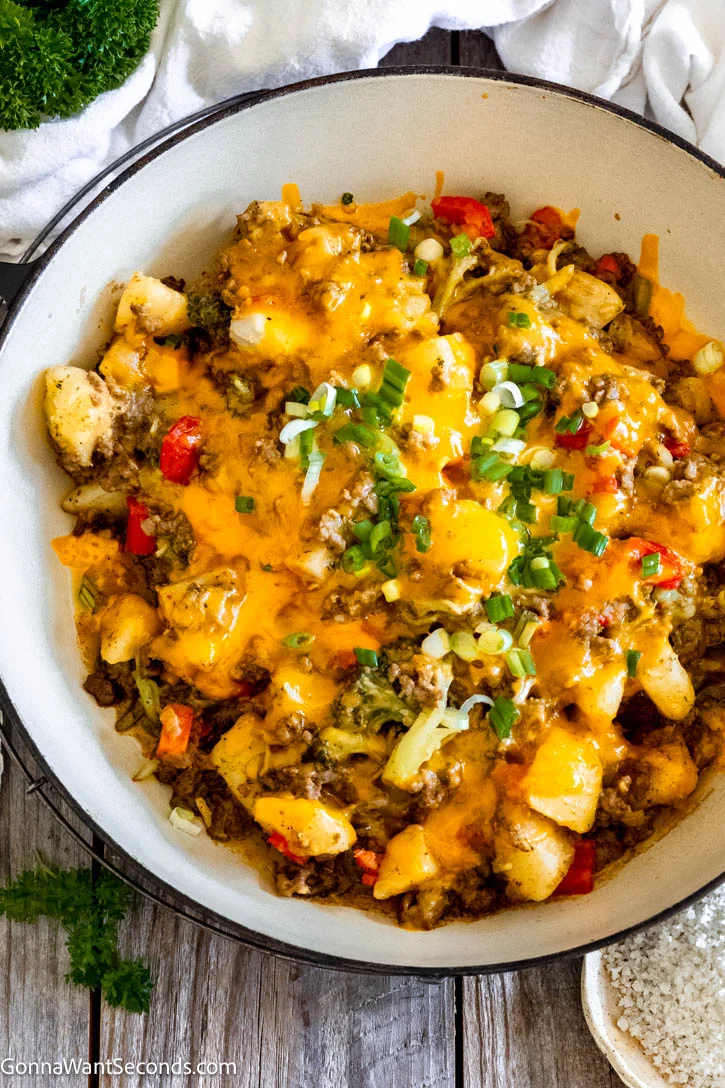
This one-pan American skillet combines seasoned ground beef, potatoes and vegetables in a savoury gravy, finished with melted Cheddar. It makes a hearty meal in about 30 minutes, with minimal washing up.
Ingredients
- 454 g (1 pound)80/20 ground beef
- ¾ teaspoonsalt
- ¼ teaspoonblack pepper
- 2 tablespoons, plus more as neededunsalted butter
- 454 g (1 pound)Russet potatoes, peeled and cut into pieces about 1.3 cm (½ inch) or slightly smaller (about 3 cups)
- 1 cupchopped onion
- 1 mediumred bell pepper, ribs and seeds removed, then chopped
- ¼ cupdiced carrot
- ¾ teaspoonCajun seasoning
- ½ teaspoonsmoked paprika
- 1 heaping tablespoonminced garlic
- ¼ cupplain flour
- 1½ cups, plus more if neededlow-sodium beef stock
- 1 tablespoonWorcestershire sauce
- ½ cupshredded mature Cheddar
- ¼ cupthinly sliced spring onions
Instructions
- 1
Brown the beef
Put the beef, ¾ teaspoon salt and ¼ teaspoon black pepper in a large, deep-sided frying pan. Cook, breaking up the meat, until no pink remains. Transfer it to a plate and drain away all but 2 tablespoons of the fat.
- 2
Cook the vegetables
Melt 2 tablespoons of butter in the pan, then add the potatoes, onion, red pepper and carrot. Cook, stirring often and turning the vegetables every few minutes, for about 10–12 minutes, until the carrot and pepper are tender and the potatoes are nearly cooked and soft when pierced with a knife. If the potatoes are not nearly done after 10 minutes, cover the pan and continue cooking until fork-tender, lowering the heat if needed.
- 3
Add the spices
Sprinkle over the Cajun seasoning and smoked paprika, then toss to coat the vegetables evenly. Add the garlic and cook for about 1 minute, stirring and turning the mixture.
- 4
Thicken the mixture
Return the cooked beef to the pan. Sprinkle over ¼ cup flour and toss until the beef and vegetables are evenly coated.
- 5
Simmer with stock
Pour in 1½ cups beef stock and the Worcestershire sauce. Cover and cook over low heat, stirring occasionally, for about 2–4 minutes, until the potatoes are tender. Add more stock if needed, taking care not to make the gravy too thin.
- 6
Melt the cheese
Uncover the pan and sprinkle over the Cheddar. Set the heat to low, cover and cook for about 1–2 minutes, until the cheese melts. Finish with the spring onions and serve.
What is ground beef and potatoes?
This American-style skillet brings browned ground beef together with potatoes and chopped vegetables in a lightly thickened, savoury gravy. It is a practical one-pan meal built around familiar, filling ingredients.
This version gets its flavour from Cajun seasoning, smoked paprika and Worcestershire sauce, then uses melted Cheddar and spring onions as a finishing touch. Cooking the potatoes in the same pan lets them take on the flavour of the beef and seasonings.
Nutrition and macros by portion
The nutrition label shows one serving as written: 615 calories, 32g protein, 35g carbs, 39g fat.
| Portion | Adjustment | kcal | Protein | Carbs | Fat |
|---|---|---|---|---|---|
| Lighter | Use less Cheddar | 431 kcal | 22g | 25g | 27g |
| This serving | As written | 615 kcal | 32g | 35g | 39g |
| Hungry | Serve a larger portion | 923 kcal | 48g | 53g | 59g |
The potatoes and flour provide most of the carbohydrates, while the beef and Cheddar contribute much of the protein. The beef, butter and cheese account for much of the fat. To balance the plate, serve a portion with a generous side of leafy salad or steamed vegetables.
Choosing the ingredients
Potatoes: Russets become tender and absorb the gravy well. Cut them into small, similar-sized pieces so they cook at roughly the same rate.
Beef: The recipe specifies 80/20 ground beef, which gives the dish a rich base. Drain the pan but leave 2 tablespoons of fat to cook the vegetables.
Seasoning: Cajun seasoning, smoked paprika and garlic build the savoury flavour. Since Cajun blends vary, taste the finished dish before adding any extra salt.
Getting the potatoes tender
The potatoes need more time than the quick-cooking beef, so they go into the pan with the other vegetables while the beef rests. Stir and turn them regularly to help them cook evenly.
If they are still firm after about 10 minutes, cover the pan and continue over a lower heat. Check a piece with a knife or fork before adding the flour and stock; the later simmer is brief.
Building the gravy
Flour: Toss it thoroughly through the beef and vegetables before adding liquid. This helps it combine with the stock rather than forming lumps.
Stock: Add 1½ cups first and simmer covered for 2–4 minutes. The mixture should turn into a coating gravy; add extra stock gradually if it looks too thick, rather than pouring in a large amount at once.
Finishing and serving
Cheese: Scatter the Cheddar over the top and cover the pan on low heat for 1–2 minutes, just until melted. Keeping the heat low helps prevent the bottom from catching while the cheese softens.
Spring onions: Add them just before serving for a fresh, gently sharp contrast to the rich beef and gravy. Serve straight from the pan, or pair with a simple green salad or steamed greens.
Keeping the texture right
Give the vegetables room to cook in the pan and stir often, especially as the potatoes soften. If the pan is crowded, the ingredients can cook less evenly, so use a large, deep-sided skillet.
Once the stock goes in, stir occasionally rather than constantly. The potatoes are ready when a fork passes through easily, and the gravy should cling to the mixture without becoming watery.
Recipe notes & tips
- Cut the potatoes into evenly sized pieces so they become tender at a similar pace.
- Keep 2 tablespoons of beef fat in the pan after draining; it is used to cook the vegetables.
- Lower the heat and cover the pan if the potatoes need extra time before the stock is added.
- Sprinkle the flour evenly and toss well before pouring in the stock.
- Add extra stock a little at a time so the gravy does not become too thin.
- Keep the heat low while melting the Cheddar to stop the bottom of the pan catching.
Variations
- Add mushrooms: Cook sliced mushrooms with the vegetables until tender.
- Change the cheese: Use another good-melting cheese in place of the Cheddar.
- Adjust the spice: Use less Cajun seasoning for a milder skillet.
- Add herbs: Finish with chopped parsley for a fresh, herbal note.
- Include peas: Stir in peas near the end of the simmer so they heat through.
Common mistakes to avoid
- Uneven potato pieces: Cut them to a similar size so they cook through together.
- Draining all the fat: Leave 2 tablespoons in the pan to cook the vegetables.
- Adding flour after the stock: Coat the mixture with flour first to help avoid lumps.
- Adding too much stock: Pour in extra gradually and stop when the gravy coats the ingredients.
- Rushing the potatoes: Cover the pan and cook over lower heat until a fork passes through easily.
- Using high heat for the cheese: Turn the heat to low and cover only until the Cheddar melts.
How to store
Refrigerate leftovers in a sealed container for up to 3 days. Reheat gently in a covered pan or in the microwave, adding a small splash of beef stock if the gravy has thickened; heat until piping hot throughout.
Frequently asked questions
Can I use a different type of potato?
Yes. Use a potato that holds its shape reasonably well, and cut it into small, even pieces. Cooking time may vary, so check tenderness before adding the flour and stock.
How do I know when the potatoes are cooked?
Pierce a piece with a knife or fork; it should feel tender rather than firm. The recipe allows extra covered cooking time if they are not nearly done after 10 minutes.
Can I make the gravy thicker or thinner?
For thicker gravy, simmer briefly uncovered after the potatoes are tender. For thinner gravy, add beef stock a little at a time until it reaches the consistency you want.
Can I prepare this ahead?
You can cook it ahead and refrigerate it once cooled. Reheat gently, adding a splash of stock if needed, and check that it is piping hot before serving.
What can I serve with it?
A green salad or steamed greens make a fresh side alongside the rich skillet. You can also serve it on its own as a complete meal.
Cook it from the original
This recipe comes from gonnawantseconds.com. Their page has the author’s own photos, notes and tips — the best place to cook it from.
Open the recipe on gonnawantseconds.com