
Blistered Padron Peppers with Olive-and-Basil Salt
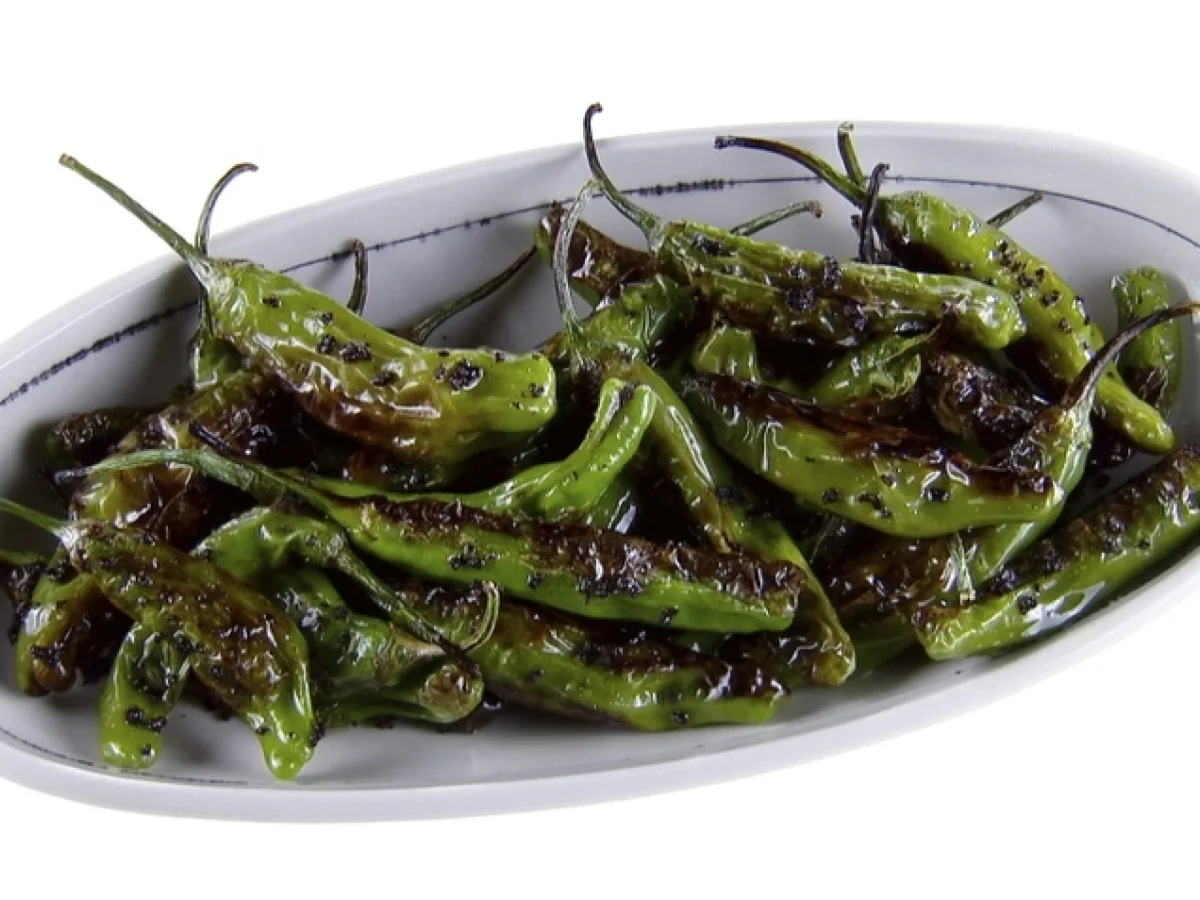
Blistered Padron peppers are a simple, salty pre-dinner nibble, finished with a fragrant seasoning made from olives and basil. Make the salt ahead, then fry the peppers in batches for a quick, blistered finish.
Ingredients
- 110 g (¾ cup)pitted oil-cured olives
- about 24 g (¾ cup), choppedfresh basil
- about 80 g (⅓ cup)kosher salt
- 60 ml (¼ cup)grapeseed or vegetable oil
- 454 g (1 pound)Padron peppers
Instructions
- 1
Make the flavoured salt
Preheat the oven to 120°C. Put the olives and basil in a food processor and process until finely chopped. Add the salt and pulse to combine. Spread the mixture on a baking sheet and bake for 30 minutes, or until quite dry. Leave it to cool, then break it apart with your fingers.
- 2
Heat the oil
Set a large skillet over medium-high heat. Add the oil and let it heat for 1 minute.
- 3
Fry the peppers
Cook the peppers in batches to avoid overcrowding the pan, frying for 2 or 3 minutes per side until blistered all over. Use tongs or a slotted spoon to transfer them to a paper-towel-lined plate and immediately sprinkle with some flavoured salt. Use about 2 tablespoons of the salt mixture; keep the rest in an airtight container in the refrigerator for later.
What are Padron peppers?
Padron peppers are small green peppers commonly served as a tapas-style snack in Spain. They are usually cooked simply, so their blistered skins and fresh pepper flavour take centre stage.
This version adds a savoury seasoning of chopped olives, basil and salt. Drying the mixture in the oven makes it easier to crumble and sprinkle over the hot peppers.
Nutrition and macros by portion
The nutrition label shows one serving as written: 210 calories, 4g protein, 14g carbs, 16g fat.
| Portion | Adjustment | kcal | Protein | Carbs | Fat |
|---|---|---|---|---|---|
| Lighter | Use less oil | 147 kcal | 3g | 10g | 11g |
| This serving | As written | 210 kcal | 4g | 14g | 16g |
| Hungry | Serve with extra bread | 315 kcal | 6g | 21g | 24g |
The peppers provide most of the carbohydrates, while the oil and oil-cured olives contribute most of the fat; the basil and olives add only a little protein. The flavoured salt contributes sodium, so balance the plate with unsalted bread or other lightly seasoned dishes.
Why make the salt ahead?
Olives and basil: A food processor chops these finely so they combine evenly with the salt.
Drying time: Bake the mixture at 120°C for 30 minutes, until quite dry. Let it cool fully before breaking it apart, then it is ready to sprinkle.
How to blister the peppers
Hot oil: Give the oil 1 minute to heat in the skillet over medium-high heat before adding the peppers.
Room to cook: Fry in batches rather than crowding the pan. Turn the peppers so each side has time to blister, allowing 2 or 3 minutes per side.
When are they ready?
Look for blistering across the peppers rather than relying on a precise colour or softness. The method’s cue is 2 or 3 minutes per side, with the peppers blistered on all sides.
Transfer them to the paper-towel-lined plate and season while they are still hot. The warm surface helps the flavoured salt adhere.
How much salt to use
The recipe uses about 2 tablespoons of the olive-and-basil salt for the peppers. Sprinkle it over the peppers as soon as they come out of the skillet, then taste before adding any more.
The remaining salt is intended for later use, so store it separately in an airtight container in the refrigerator.
What to serve with them
Serve the peppers warm as a pre-dinner nibble, with small plates of other tapas or a simple spread of bread and olives. Their savoury seasoning works well alongside milder dishes that do not compete with it.
Put out napkins and serve the peppers soon after cooking, while their skins are still blistered and the salt is fresh on the surface.
Recipe notes & tips
- Process the olives and basil until finely chopped so they mix evenly with the salt.
- Let the salt mixture cool before breaking it apart with your fingers.
- Heat the oil for the full minute before frying the first batch.
- Keep each batch small enough that the peppers are not crowded in the skillet.
- Sprinkle the flavoured salt over the peppers as soon as they leave the pan.
Variations
- Choose the oil: Use grapeseed oil or vegetable oil as the recipe allows.
- Adjust the seasoning: Start with the suggested 2 tablespoons of flavoured salt, then add more to taste.
- Serve as tapas: Pair the peppers with bread and other small plates for a snack spread.
- Save the extra salt: Store it in an airtight container in the refrigerator and use it to season another dish.
Common mistakes to avoid
- Crowding the skillet: The peppers need space to blister, so fry them in batches.
- Underheating the oil: Give it 1 minute over medium-high heat before adding the peppers.
- Turning too soon: Allow 2 or 3 minutes per side so the peppers can blister before turning.
- Adding salt late: Sprinkle it on immediately after frying, while the peppers are hot.
- Storing the salt warm: Let the mixture cool before breaking it apart and refrigerating the remainder.
How to store
Keep the unused flavoured salt in an airtight container in the refrigerator, as directed in the recipe. The peppers are best served straight after frying; the recipe does not specify storage or reheating instructions for cooked peppers.
Frequently asked questions
Can I make the flavoured salt ahead?
Yes. Bake the olive and basil mixture until quite dry, let it cool and store the remainder in an airtight container in the refrigerator.
How much flavoured salt should I use?
The recipe calls for about 2 tablespoons over the peppers. Sprinkle it on while they are hot, then taste before adding any more.
Why fry the peppers in batches?
The method advises against overcrowding the pan. Cooking in batches gives the peppers room to blister on all sides.
Can I use vegetable oil instead of grapeseed oil?
Yes. The recipe gives grapeseed or vegetable oil as options.
How do I know when the peppers are done?
They should be blistered on all sides. The recipe suggests frying for 2 or 3 minutes per side.
Cook it from the original
This recipe comes from foodnetwork.co.uk. Their page has the author’s own photos, notes and tips — the best place to cook it from.
Open the recipe on foodnetwork.co.uk