
Vegetable Fried Idli
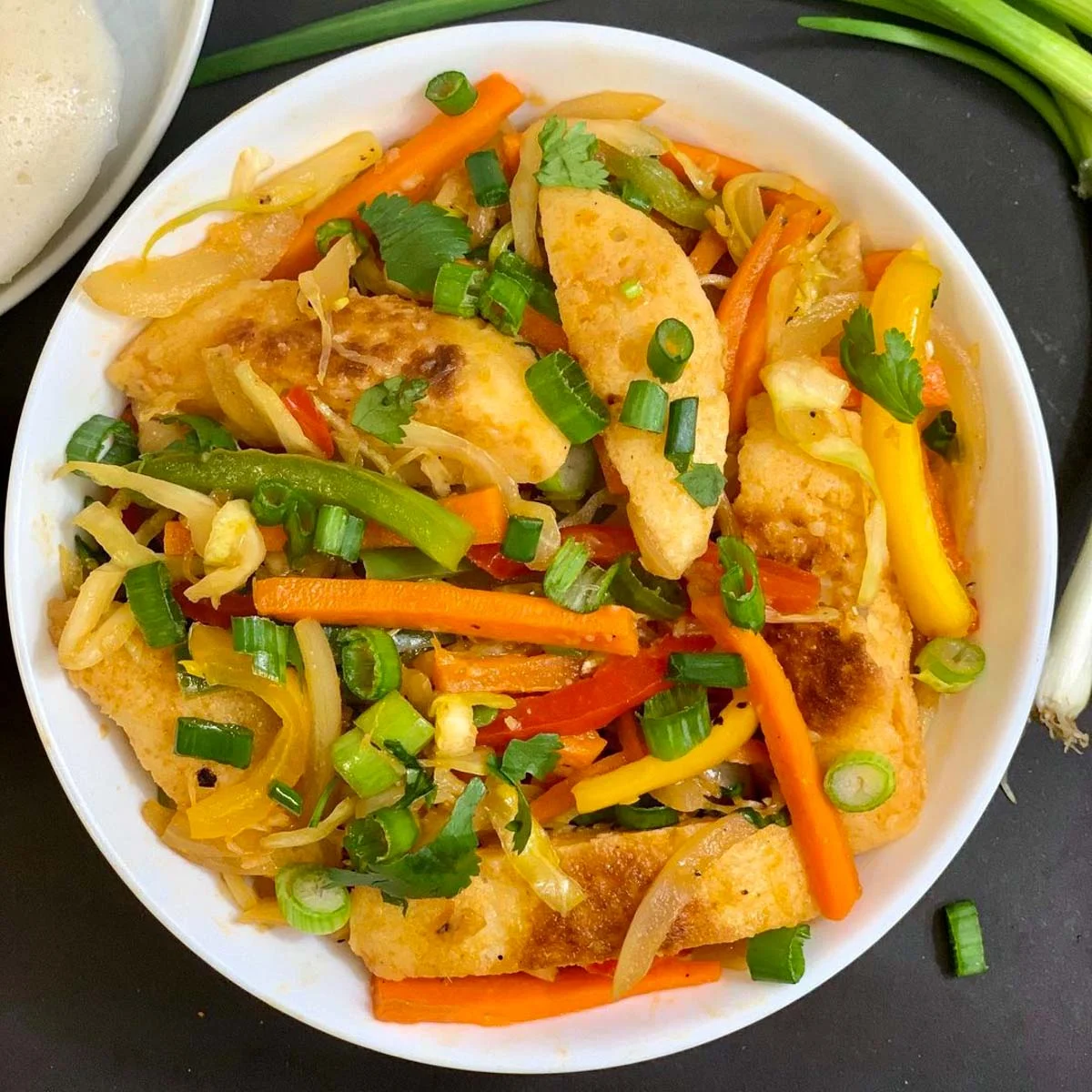
Vegetable fried idli turns soft idlis into a quick Indo-Chinese-style stir-fry with crisp-tender vegetables and a savoury, tangy sauce. It is a handy way to use leftovers for an evening snack or lunchbox.
Ingredients
- 5leftover idlis
- 15 ml (1 tablespoon)oil
- 15 ml (1 tablespoon)ginger-garlic paste
- 1 smallonion, thinly sliced
- 480 ml (2 cups)mixed vegetables: carrot, bell pepper and cabbage
- 15 ml (1 tablespoon)soy sauce
- 15 ml (1 tablespoon)tomato ketchup
- 5 ml (1 teaspoon)vinegar
- to tastesalt and ground black pepper
- to garnishspring onions, sliced
Instructions
- 1
Fry the idlis
If you like, fry the leftover idlis in a pan with a little oil until golden brown. This step is optional.
- 2
Cut the idlis
Leave the idlis to cool, then cut them into long rectangular pieces and set aside.
- 3
Cook the aromatics
Heat 1 tablespoon of sesame or olive oil in a skillet or wok over medium-high heat. Add the ginger-garlic paste and sauté for 30 seconds, or until fragrant.
- 4
Soften the onion
Add the sliced onion and cook for about 2 minutes, until soft.
- 5
Stir-fry vegetables
Add the carrot, bell pepper and cabbage. Stir-fry over high heat until tender but still crisp.
- 6
Mix the sauces
Add the soy sauce, tomato ketchup and vinegar, then mix well.
- 7
Toss and warm
Add the idli pieces, salt and ground black pepper. Gently toss until coated in sauce, then cover and cook over low heat for 2–3 minutes. Turn off the heat.
- 8
Add the garnish
Sprinkle sliced spring onions over the dish just before serving.
What is vegetable fried idli?
Idli is a steamed South Indian rice-and-lentil cake, often served at breakfast. This version takes cooked idli and stir-fries it with vegetables and a punchy mix of sauces.
The Indo-Chinese approach brings together the soft, mild idli and savoury, tangy seasonings. Cutting the cakes into strips gives them plenty of surface area to pick up the sauce.
Nutrition and macros by portion
The nutrition label shows one serving as written: 156 calories, 5g protein, 29g carbs, 2g fat.
| Portion | Adjustment | kcal | Protein | Carbs | Fat |
|---|---|---|---|---|---|
| Lighter | Use less oil | 109 kcal | 4g | 20g | 1g |
| This serving | As written | 156 kcal | 5g | 29g | 2g |
| Hungry | Add another idli | 234 kcal | 8g | 44g | 3g |
The idli supplies most of the carbohydrates, while the oil contributes most of the fat; the idli and vegetables provide some protein. Pair a serving with extra vegetables or a fresh salad for a more substantial plate.
Make the most of leftover idli
Leftover idli: chilled cakes are easier to cut and handle in the wok. Freshly cooked ones work too; let them cool first so the pieces are less likely to break.
Optional browning: briefly frying the idli before cutting adds a golden exterior. Skip this if you want to keep the preparation simpler.
Keep the vegetables crisp
High heat: stir-fry the vegetables quickly so they soften without losing all their bite. Cut them into similarly sized pieces to help them cook at the same pace.
Pan space: a roomy wok or skillet makes it easier to toss the vegetables rather than letting them steam in a crowded pan.
Build the flavour in stages
Ginger and garlic: give the paste about 30 seconds in the hot oil, just until fragrant. Keep it moving so it does not catch on the pan.
Sauce balance: soy sauce brings savouriness, ketchup adds sweetness and body, and vinegar gives a sharper finish. Mix these together before adding the idli.
Coat the idli gently
Gentle tossing: fold the idli through the sauce rather than stirring vigorously, which can break the pieces. Stop once they are evenly coated.
Covered finish: the final 2–3 minutes on low heat warms the idli through and lets it take on the sauce. Avoid cooking it for much longer if you want the vegetables to stay crisp.
Serve it while warm
Spring onions: add them just before serving for a fresh, lightly sharp garnish. They also provide a bright contrast to the darker sauce.
On the side: serve the stir-fry as a snack or pack it for lunch. For a fuller meal, pair it with a simple salad or extra vegetables.
Recipe notes & tips
- Let freshly cooked idlis cool before cutting so they hold their shape.
- Slice the vegetables evenly to help them cook at the same rate.
- Have the sauces measured and ready before you start stir-frying.
- Use high heat for the vegetables, but lower it for the covered finish.
- Toss the idli carefully to keep the pieces intact.
Variations
- Add chilli: stir in chopped green chilli with the ginger-garlic paste for extra heat.
- Change the vegetables: use other quick-cooking vegetables in place of the listed mix.
- Add more tang: adjust the vinegar slightly to suit your taste.
- Use fresh idli: cool freshly made idlis before cutting and stir-frying.
- Skip the browning: omit the optional pre-frying step for a simpler preparation.
Common mistakes to avoid
- Cutting warm idli: it can crumble; let it cool before slicing.
- Burning the paste: ginger-garlic can catch quickly, so sauté it only until fragrant.
- Overcooking the vegetables: they lose their crisp bite; stir-fry briefly over high heat.
- Rough tossing: the idli pieces may break; fold them through the sauce gently.
- Cooking too long at the end: the vegetables can turn soft; keep the covered finish to 2–3 minutes.
How to store
Refrigerate leftovers in a covered container and eat within 2 days. Reheat in a skillet over medium heat until hot, adding a small splash of water if the sauce seems dry.
Frequently asked questions
Can I use freshly made idli?
Yes. Let it cool before cutting so it is easier to handle and less likely to break in the pan.
Do I have to fry the idli first?
No, that step is optional. The idli can go straight into the stir-fry after cooling and cutting.
Which oil should I use?
The method suggests sesame or olive oil for the stir-fry. Use the oil you have available and enjoy the flavour it brings.
How do I keep the vegetables crisp?
Stir-fry them over high heat and avoid overcrowding the pan. Cook until tender but still crisp.
Can I make this ahead?
It is best served soon after cooking, while the vegetables are crisp. You can prepare and cut the cooled idli in advance, then stir-fry it when ready to eat.
Cook it from the original
This recipe comes from indianveggiedelight.com. Their page has the author’s own photos, notes and tips — the best place to cook it from.
Open the recipe on indianveggiedelight.com