
Roasted Vegetable Lasagna
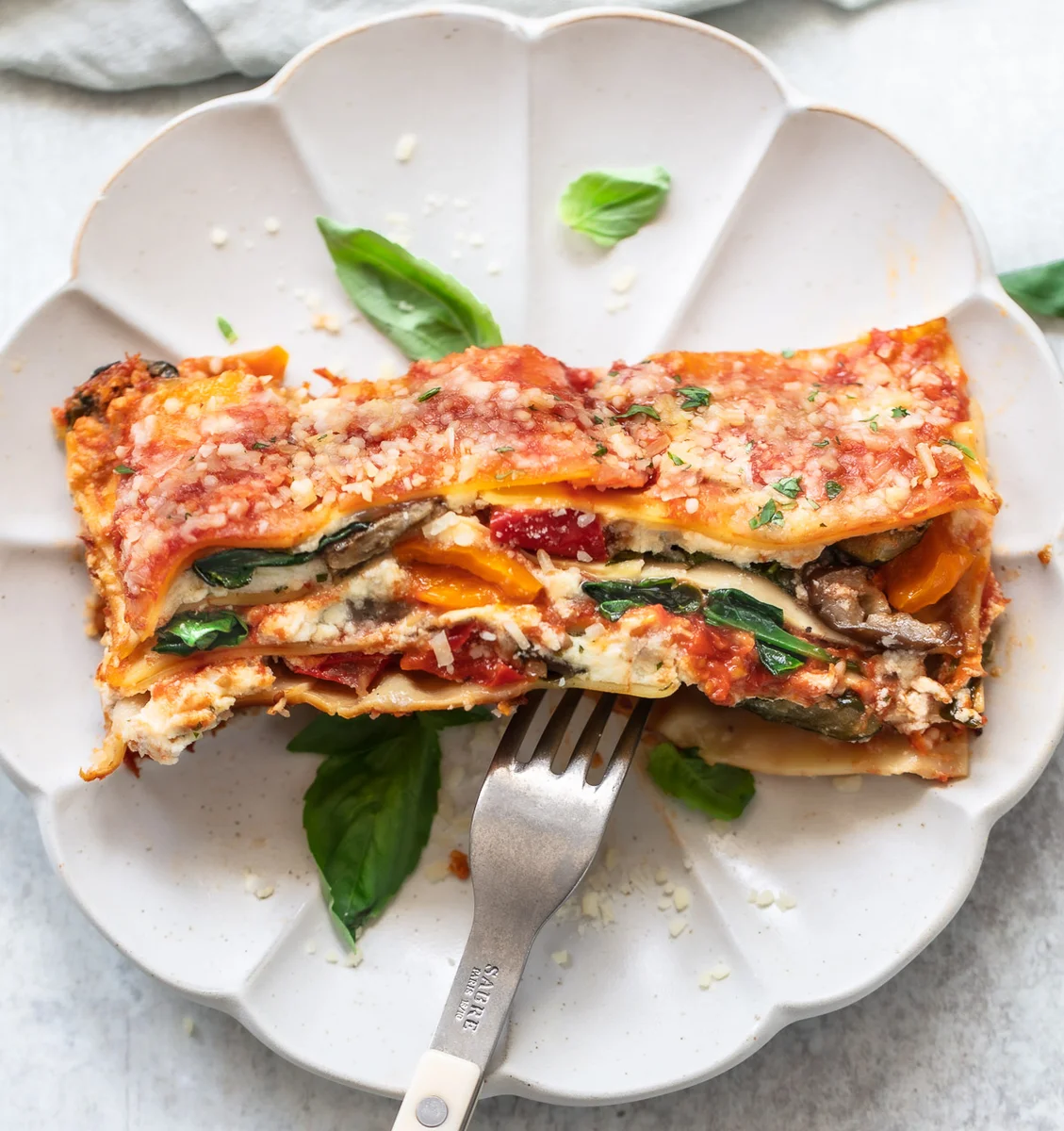
This Italian-inspired lasagna layers roasted vegetables, no-boil pasta and three cheeses under a tangy roasted tomato sauce. Roasting the vegetables first deepens their flavour and keeps the finished bake rich and satisfying.
Ingredients
- 907 g (2 lb)whole cherry tomatoes, or vine tomatoes cut into quarters
- 2garlic cloves, peeled
- 30 ml (2 tablespoons)extra-virgin olive oil
- 1 teaspoonsalt
- 1 mediumaubergine, peeled if desired and cut into 2.5 cm (1-inch) cubes
- 2bell peppers, red, orange or yellow, cut into 2.5 cm (1-inch) cubes
- 1 mediumcourgette, cut into 2.5 cm (1-inch) cubes
- 1red onion, thinly sliced
- 1½ teaspoonssalt
- to tastefreshly ground black pepper
- 45 ml (3 tablespoons)extra-virgin olive oil
- about 60 g (2 cups)baby spinach leaves or other leafy greens
- 454 g (1 lb)whole-milk ricotta
- about 75 g (¾ cup)freshly grated Parmesan cheese
- 2 tablespoonschopped parsley or fresh basil, plus more for garnish
- 227 g (½ lb)fontina, low-moisture mozzarella or havarti cheese
- 12no-boil lasagna pasta sheets
Instructions
- 1
Heat the oven
Heat the oven to 220°C (425°F), with a rack in the centre.
- 2
Roast the tomatoes
Put the tomatoes on a rimmed baking sheet with the garlic cloves, 30 ml (2 tablespoons) olive oil and 1 teaspoon salt. Roast for about 20–25 minutes, until the tomatoes are very soft.
- 3
Blend the sauce
Transfer the tomatoes and all the juices from the tray to a blender or food processor and blend until smooth. The sauce can be made up to one week ahead and kept in the fridge.
- 4
Season vegetables
Put the aubergine, peppers, courgette and red onion on a rimmed baking sheet. Add 1½ teaspoons salt, black pepper and 45 ml (3 tablespoons) olive oil, then toss to coat.
- 5
Roast vegetables
Roast the vegetables alongside the tomatoes for 20–25 minutes, stirring halfway through, until soft and slightly browned. Take them out of the oven, add the spinach straight away and toss with tongs until the greens wilt.
- 6
Lower the temperature
Reduce the oven to 200°C (400°F). Lightly coat a 20 × 20 cm (8 × 8-inch) baking pan with olive oil.
- 7
Mix the ricotta
In a small bowl, combine the ricotta, ¼ cup of the Parmesan and the chopped parsley or basil.
- 8
Layer the lasagna
Spread ⅓ cup tomato sauce over the bottom of the pan. Arrange 3 pasta sheets over it, overlapping them slightly. Spread a third of the vegetables, ricotta mixture and grated fontina over the pasta, then add ⅓ cup sauce. Repeat these layers twice more, gently pressing the pasta down each time. Finish with all the remaining sauce and ½ cup Parmesan.
- 9
Bake until tender
Cover the pan with foil and set it on a baking sheet to catch spills. Bake for 30 minutes, then check under the foil: the sauce should bubble, the cheese should be melted and the pasta should be tender. If needed, cover again and bake for a further 5–10 minutes.
- 10
Cool and serve
Take the pan out of the oven and leave it to cool for 30–60 minutes. Sprinkle with chopped parsley, cut into portions and serve.
What is roasted vegetable lasagna?
Lasagna is an Italian baked pasta dish built from layers of pasta, sauce and fillings. This version combines roasted vegetables with ricotta, Parmesan and a melty cheese, all held together by a smooth sauce made from roasted tomatoes.
Roasting both the tomatoes and vegetables brings out their sweetness and gives the filling a softer, more rounded flavour. No-boil pasta sheets make the layering straightforward and cook in the moisture from the sauce.
Nutrition and macros by portion
The nutrition label shows one serving as written: 481 calories, 24g protein, 36g carbs, 28g fat.
| Portion | Adjustment | kcal | Protein | Carbs | Fat |
|---|---|---|---|---|---|
| Lighter | More greens, less cheese | 337 kcal | 17g | 25g | 20g |
| This serving | As written | 481 kcal | 24g | 36g | 28g |
| Hungry | Larger lasagna slice | 722 kcal | 36g | 54g | 42g |
The pasta sheets and vegetables provide most of the carbohydrates, while ricotta and the other cheeses contribute much of the protein and fat. Serve a slice with a crisp salad or extra leafy greens for a fresh contrast.
Roasting the vegetables
Even pieces: Cut the aubergine, peppers and courgette to roughly the same size so they soften at a similar pace. Spread them out on the baking sheet to encourage browning rather than steaming.
Add greens last: Toss the spinach with the hot vegetables after roasting. It wilts from their residual heat without becoming overly soft in the oven.
Building the tomato sauce
Tomatoes and garlic: Roasting them together softens the tomatoes and mellows the garlic. Blend in all the tray juices, which carry flavour from the oil and tomatoes.
Smooth texture: A blender or food processor makes an even sauce that spreads easily between the pasta layers. The sauce can be prepared ahead and refrigerated for up to one week.
Layering for an even bake
Sauce underneath: Start with a thin layer of tomato sauce so the bottom pasta sheets have moisture to cook in. Slightly overlap the sheets to cover the pan.
Divide the filling: Spread the vegetables, ricotta mixture, grated cheese and sauce across the layers as evenly as possible. Press gently on the pasta each time to help the layers settle without crushing the filling.
Checking when it is done
Visual cues: After 30 minutes covered, look for bubbling sauce and melted cheese, then check that the pasta is tender. If it still feels firm, cover the pan again and bake for another 5–10 minutes.
Rest before slicing: Cooling the lasagna for 30–60 minutes helps the layers settle, making portions easier to lift from the pan.
Cheese and flavour choices
Creamy base: Whole-milk ricotta makes the filling soft and rich, while Parmesan adds a savoury, salty note. Mix them with parsley or basil before spreading.
Melting layer: Fontina, low-moisture mozzarella or havarti can be used for the grated cheese layer. Choose one and grate it so it distributes evenly.
What to serve alongside
A crisp green salad with a simple vinaigrette balances the soft, cheesy layers. For a fuller meal, serve with bread to mop up any tomato sauce left on the plate.
Recipe notes & tips
- Use rimmed baking sheets so the tomato juices and olive oil stay contained.
- Give the vegetables room on the tray so they can brown rather than steam.
- If your baking sheets do not fit side by side, roast the tomatoes and vegetables in separate batches.
- Spread the ricotta mixture gently so it reaches across each layer without pulling up the pasta.
- Set the baking pan on a separate baking sheet before it goes into the oven to catch any spills.
- Allow the finished lasagna to rest before cutting for neater slices.
Variations
- Use basil: Swap the parsley for fresh basil in the ricotta mixture and as a finishing garnish.
- Change the greens: Replace baby spinach with another leafy green, as suggested in the ingredient list.
- Choose another melting cheese: Use low-moisture mozzarella or havarti instead of fontina.
- Use vine tomatoes: Quarter them and roast them in place of the cherry tomatoes.
- Keep the aubergine skin: Leave it on if you prefer a firmer texture in the roasted vegetable layers.
Common mistakes to avoid
- Crowded vegetables: They may steam instead of brown; spread them out across the tray.
- Skipping the tray juices: They carry flavour into the sauce; add them to the blender with the tomatoes.
- Uneven layers: Concentrated filling can leave some pasta dry; distribute each component across the sheets.
- Uncovered baking: The top can dry out before the pasta cooks; keep the pan covered with foil as directed.
- Cutting too soon: The layers may slide apart; rest the lasagna for 30–60 minutes before slicing.
How to store
Keep leftovers covered in the fridge and eat within 3–4 days. Reheat portions in the oven, covered, until hot throughout, or use a microwave for a quicker serving.
Frequently asked questions
Can I make the tomato sauce ahead?
Yes. The method allows the sauce to be made up to one week in advance and stored in the fridge.
Do I need to boil the pasta sheets first?
No. This recipe uses no-boil lasagna sheets, which cook in the moisture from the sauce as the lasagna bakes.
Can I use a different cheese from fontina?
Yes. Low-moisture mozzarella or havarti are listed alternatives. Grate the chosen cheese for the layers.
How can I tell when the lasagna is cooked?
After 30 minutes covered, check that the sauce is bubbling, the cheese has melted and the pasta is tender. If the pasta is still firm, cover the pan and bake for another 5–10 minutes.
Why does the lasagna need to rest before serving?
Resting for 30–60 minutes lets the layers settle, so the lasagna is easier to portion and serve.
Cook it from the original
This recipe comes from familystylefood.com. Their page has the author’s own photos, notes and tips — the best place to cook it from.
Open the recipe on familystylefood.com