
Tomato Basil Shrimp and Polenta
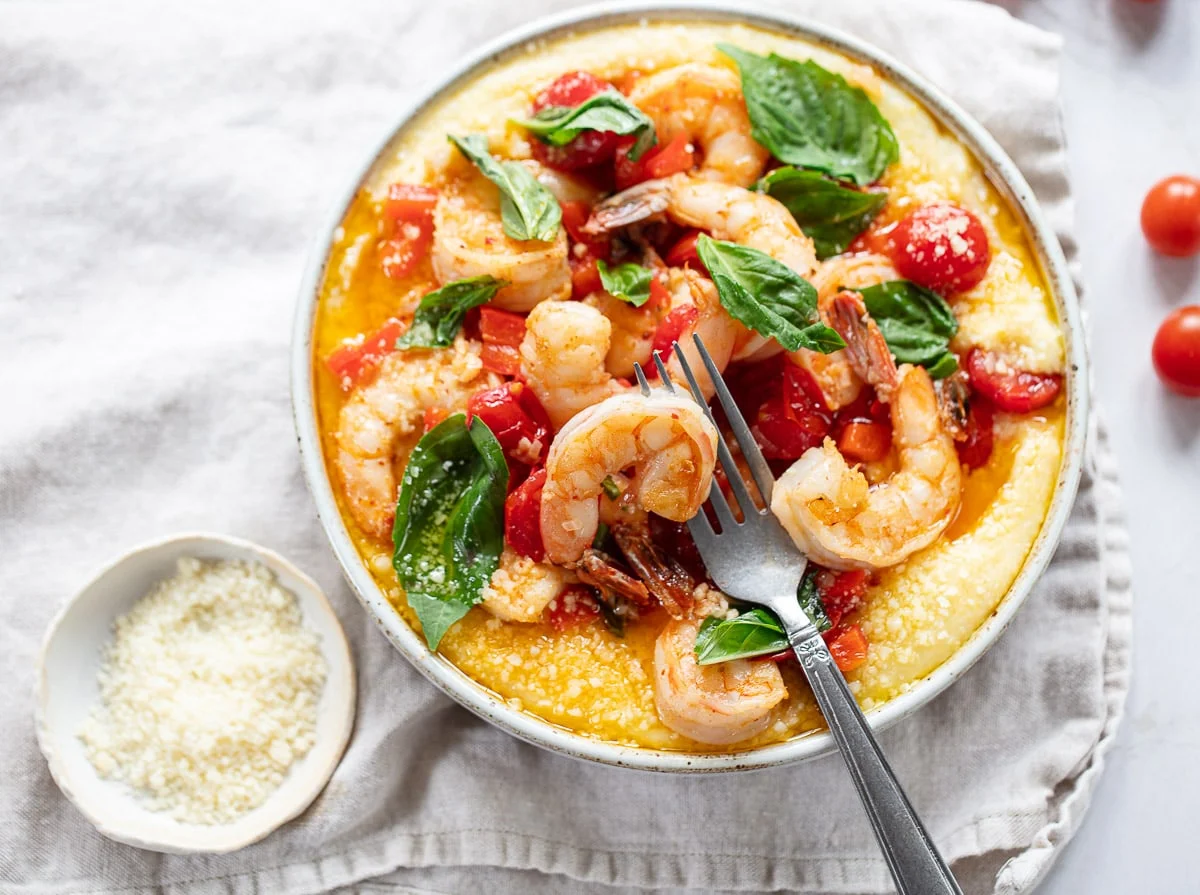
Tomato basil shrimp and creamy Parmesan polenta make a comforting Italian-inspired meal with a gentle chilli kick. It is a good choice when you want something special enough for the weekend but ready in about 45 minutes.
Ingredients
- 1.18 litres (5 cups), or 950 ml water (4 cups) plus 240 ml milk (1 cup)water, with optional milk for creamier polenta
- 7.5 ml (1½ teaspoons), plus more to tastesalt
- 160 g (1 cup)coarse cornmeal
- 30 g (2 tablespoons)butter or extra-virgin olive oil
- 25 g (¼ cup), plus more for servinggrated Parmesan cheese
- 60 ml (¼ cup)extra-virgin olive oil
- 454 g (1 pound)extra-large shrimp, peeled and deveined
- 300 g (2 cups)cherry tomatoes, halved
- 150 g (1 cup)red bell pepper, chopped
- 30 g (2 tablespoons)shallot or onion, finely chopped
- 30 g (2 tablespoons), about 3 plump clovesgarlic, grated or pressed
- 2.5–5 ml (½–1 teaspoon), to tastecrushed red chilli pepper
- 30 ml (2 tablespoons)fresh lemon juice or dry white wine
- ½ teaspoonKosher salt
- about 40 g (2 cups)fresh basil leaves
Instructions
- 1
Boil the liquid
Bring the water, and the milk if using, to a boil in a heavy saucepan or Dutch oven. Stir in the salt.
- 2
Cook the polenta
Whisk while gradually sprinkling in the cornmeal. Reduce the heat to a very low simmer and cover the pan. Cook for 25–30 minutes, stirring occasionally to prevent sticking, until thick and fluffy and beginning to pull away from the sides.
- 3
Finish the polenta
Take the pan off the heat and stir in the butter or olive oil and Parmesan. Add more salt if you like.
- 4
Start the shrimp
Pour the olive oil into a 25–30 cm (10–12-inch) skillet and set it over medium-high heat. Once the oil shimmers, arrange the shrimp in one layer and cook for about 2 minutes, until the undersides begin to turn opaque.
- 5
Simmer the sauce
Turn over the shrimp and add the tomatoes, red pepper, shallot, garlic, crushed red chilli, lemon juice or wine, and ½ teaspoon salt. Bring to a simmer and cook for about 5 minutes, until the tomatoes soften and release their juices and the shrimp are pink and cooked through. Scatter the basil over the shrimp.
- 6
Serve the bowls
Spoon the polenta into shallow bowls and top with the shrimp and sauce. Finish with more Parmesan.
What is tomato basil shrimp and polenta?
Polenta is a cornmeal dish associated with northern Italian cooking, served here as a soft, creamy base for shrimp in a tomato and basil sauce. The combination has a little of the comfort of shrimp and grits, with Italian-style flavours from olive oil, garlic and Parmesan.
This version works because the juicy tomatoes make a quick sauce in the pan while the polenta cooks separately. A little chilli adds warmth without taking over the fresh basil and sweet shrimp.
Nutrition and macros by portion
The nutrition label shows one serving as written: 518 calories, 31g protein, 37g carbs, 27g fat.
| Portion | Adjustment | kcal | Protein | Carbs | Fat |
|---|---|---|---|---|---|
| Lighter | Use less finishing oil | 363 kcal | 22g | 26g | 19g |
| This serving | As written | 518 kcal | 31g | 37g | 27g |
| Hungry | Serve a larger portion | 777 kcal | 47g | 56g | 41g |
The polenta supplies most of the carbohydrates, while olive oil, butter and Parmesan contribute much of the fat. Shrimp provides the main protein, with a smaller amount from the Parmesan; serve the bowl with a side of vegetables or salad for extra variety.
Choosing the polenta ingredients
Coarse cornmeal: this gives the polenta its characteristic texture and needs a slow simmer to soften. Sprinkle it in gradually while whisking to help prevent lumps.
Water or milk: water keeps the base simple, while replacing one cup of water with milk makes it creamier. Butter or olive oil and Parmesan are stirred in once the polenta is cooked.
Building the quick tomato sauce
Olive oil and aromatics: the shallot or onion, garlic and crushed chilli flavour the pan, while red pepper brings sweetness. Grate or press the garlic finely so it blends into the sauce.
Tomatoes and basil: halved cherry tomatoes soften and release their juices during the short simmer. Add the basil at the end so it stays fresh and fragrant.
Getting the shrimp right
One layer: give the shrimp space in the skillet so they begin cooking in contact with the hot oil. If they do not fit comfortably, cook them in batches.
Doneness: turn them when the undersides start to turn opaque, then simmer with the sauce until pink and cooked through. The recipe allows about 2 minutes for the first side and about 5 minutes after the other ingredients go in.
How to judge the polenta
The polenta is ready when it is thick and fluffy and starts to pull away from the sides of the pan. Stir it occasionally during its 25–30-minute simmer to stop it catching on the bottom.
Keep the heat very low once the cornmeal is added. If it thickens before it has cooked for the full time, continue gently and use the texture cues as your guide.
Serving the dish
Spoon the polenta into shallow bowls, then add the shrimp and plenty of the tomato juices. A final sprinkle of Parmesan brings the two parts together.
For a more balanced plate, add a simple green salad or another vegetable alongside. Serve promptly so the polenta is warm and soft.
Recipe notes & tips
- Have the vegetables chopped and the shrimp ready before starting the sauce.
- Whisk continuously as you add the cornmeal to help keep the polenta smooth.
- Stir the polenta from time to time during its low simmer so it does not stick.
- Use a skillet large enough to keep the shrimp in a single layer.
- Taste the sauce before serving and adjust the salt or chilli to suit you.
Variations
- Use wine: choose dry white wine instead of lemon juice for the sauce.
- Make it creamier: use the stated option of 4 cups water and 1 cup milk for the polenta.
- Adjust the heat: use ½ teaspoon chilli for a gentler sauce or up to 1 teaspoon for more warmth.
- Try onion: use finely chopped onion in place of the shallot.
- Finish with olive oil: choose olive oil instead of butter to stir into the cooked polenta.
Common mistakes to avoid
- Adding cornmeal all at once: sprinkle it in gradually while whisking to help avoid lumps.
- Cooking polenta over high heat: keep it at a very low simmer and stir occasionally so it does not catch.
- Crowding the shrimp: arrange them in one layer, using batches if needed.
- Overcooking the shrimp: follow the recipe’s timing and remove them once pink and cooked through.
- Skipping the sauce juices: spoon the tomato liquid over the polenta along with the shrimp.
How to store
Refrigerate leftover shrimp and polenta in an airtight container for up to 2 days. Reheat gently until hot; loosen the polenta with a splash of water or milk if it has firmed up.
Frequently asked questions
Can I make the polenta with milk?
Yes. Use 4 cups of water and 1 cup of milk instead of 5 cups of water, as specified in the recipe.
How do I know when the polenta is done?
After 25–30 minutes, it should be thick and fluffy and begin to pull away from the sides of the pan.
Can I use frozen shrimp?
Yes, but thaw them fully and drain them before cooking so excess water does not dilute the sauce.
Can I use regular tomatoes instead of cherry tomatoes?
You can use chopped tomatoes, though the recipe specifies halved cherry tomatoes. Cook until the tomatoes soften and become juicy.
Can I make the polenta ahead?
It is best served warm and soft. If made ahead, reheat it gently with a splash of water or milk, stirring until smooth.
What can I serve with shrimp and polenta?
A simple green salad or a vegetable side works well alongside the rich polenta and tomato sauce.
Cook it from the original
This recipe comes from familystylefood.com. Their page has the author’s own photos, notes and tips — the best place to cook it from.
Open the recipe on familystylefood.com