
Erin’s Garlic Herb Pull-Apart Bread
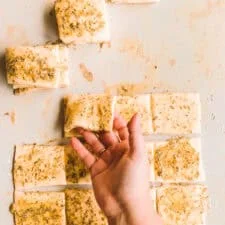
Erin’s garlic herb pull-apart bread is a soft, enriched loaf layered with roasted garlic, herbs and melted butter. It takes time to rise, but the pieces can be pulled straight from the pan for sharing.
Ingredients
- 80 ml (⅓ cup)water
- 7 g (2¼ teaspoons)instant dry yeast
- 180 ml (¾ cup)whole milk
- 450 g (3¾ cups)bread flour
- About 25 g (¼ cup)dry milk (optional)
- 25 g (2 tablespoons)granulated sugar
- 7.5 g (1½ teaspoons)fine sea salt
- 1 largeegg, at room temperature
- 28 g (2 tablespoons)unsalted butter, melted
- 30 g (2 tablespoons)sour cream or plain yoghurt
- As neededolive oil for greasing the bowl
- 2 headsgarlic
- 2 teaspoonsdried oregano
- 2 teaspoonsdried thyme
- 2 teaspoonsdried rosemary
- 113 g (½ cup; 1 stick)unsalted butter, melted
- 30 ml (2 tablespoons)double cream
- 1 teaspoongarlic powder
- ½ teaspoonfreshly cracked black pepper
Instructions
- 1
Wake the yeast
Put the water in the bowl of a stand mixer fitted with a dough hook. Sprinkle in the yeast and stir with a small spatula; a few clumps are fine. Leave it for 5 minutes.
- 2
Warm the milk
Heat the milk in a microwave-safe measuring jug until warm, about 43°C (110°F).
- 3
Mix the dough
Add the bread flour, dry milk, sugar and salt to the mixer bowl. Pour in the warm milk and add the egg, 28 g melted butter and sour cream or yoghurt. Use a rubber spatula to bring everything into a shaggy dough, then mix on low with the dough hook for 4 minutes, or until a soft dough gathers around the hook.
- 4
Knead until smooth
Stop the mixer and scrape down the sides of the bowl. Mix at medium speed for 3 minutes, until the dough is very smooth.
- 5
Let the dough rise
Lightly oil a medium bowl and transfer the dough to it. Turn the dough gently to coat it, then tuck it underneath to make a rounded shape. Cover with cling film and leave for 45 minutes to 1 hour, until visibly puffy and nearly doubled in size.
- 6
Roast the garlic
Place a rack in the upper third of the oven and heat it to 200°C (400°F). Slice the tops off both garlic heads and set them cut-side up on a generous piece of foil. Drizzle each with olive oil and sprinkle with fine sea salt, then wrap the foil around them to seal. Put the parcel on a small baking tray and roast for 35–45 minutes, until the cloves are tender and caramelised. Leave to cool until safe to handle, then squeeze the cloves into a medium bowl. Turn off the oven.
- 7
Make the filling
Stir the oregano, thyme, rosemary, 113 g melted butter, cream, garlic powder and black pepper into the roasted garlic. Set aside.
- 8
Prepare the tin
Grease a 23 × 13 cm (9 × 5-inch) loaf tin. Line it with baking parchment, leaving an overhang on two sides, and grease the parchment too.
- 9
Cut the dough
Once risen, turn the dough onto a lightly floured surface and roll it into a rectangle about 1.3 cm (½ inch) thick. It need not be exact; the original rectangle was about 51 × 30 cm (20 × 12 inches). Cut the longer side into 6 equal strips and the shorter side into 3 or 4 sections to make squares.
- 10
Layer the pieces
Spread the roasted garlic butter generously over the squares. Stack the pieces side by side in the prepared tin, then pour any remaining filling over them.
- 11
Proof and bake
Cover the tin loosely and leave the dough to rise for 1 hour 15 minutes. At the 1-hour mark, place a rack in the centre of the oven and heat it to 175°C (350°F). Bake for 35–40 minutes, until puffed and golden. Cool briefly and serve from the tin.
What is pull-apart bread?
Pull-apart bread is made from portions of dough baked together so that diners can separate them by hand. Enriched doughs and savoury fillings are common ways to make it especially tender and flavourful.
This version pairs a soft, milk-enriched loaf with roasted garlic, butter and dried herbs. Its stacked squares give the filling plenty of surfaces to cling to and make the finished loaf easy to share.
Nutrition and macros by portion
The nutrition label shows one serving as written: 840 calories, 20g protein, 101g carbs, 42g fat.
| Portion | Adjustment | kcal | Protein | Carbs | Fat |
|---|---|---|---|---|---|
| Lighter | Use less garlic butter | 588 kcal | 14g | 71g | 29g |
| This serving | As written | 840 kcal | 20g | 101g | 42g |
| Hungry | Serve a larger portion | 1260 kcal | 30g | 152g | 63g |
Most of the carbohydrates come from the bread flour, with smaller amounts from sugar and milk; butter carries much of the fat. The flour, egg and dairy contribute protein. Balance a serving with a generous salad or vegetables and a protein-rich main.
Why this dough is enriched
Milk, egg, butter and sour cream or yoghurt add richness and tenderness to the bread. The optional dry milk adds another dairy note without changing the dough’s liquid balance.
Bread flour gives the dough enough structure to hold the layers together. Measure it by weight if possible, as scooping can pack extra flour into a cup.
Roasting the garlic
Cutting the tops from the heads exposes the cloves so they roast evenly in the foil parcel. They are ready when soft enough to squeeze out and lightly caramelised.
Let the heads cool until you can handle them safely before squeezing out the cloves. The recipe calls for olive oil and a sprinkle of sea salt for roasting; take care when opening the hot parcel.
Getting the layers right
Roll the dough to an even thickness so the squares bake at a similar rate. Neat edges are not important, but cutting the long side into six strips and the short side into three or four sections makes pieces that fit the tin.
Coat the squares generously, then stand them side by side in the tin. Pouring any leftover filling over the assembled pieces helps keep the top flavoursome.
Rising and baking cues
The first rise is ready when the dough looks puffy and has nearly doubled; the stated 45 minutes to 1 hour is a guide. Room temperature can affect how quickly it rises.
After stacking, allow the full 1 hour 15 minutes for the second rise. Bake until the loaf is puffed and golden, checking within the 35–40-minute window.
Serving the loaf
Serve the bread warm from its tin while the pieces are easy to pull apart. It works alongside soup, a salad or a main meal that can share the plate with a rich, buttery side.
If serving it as part of a meal, pair it with vegetables and a protein-rich dish. The bread is already filling, so smaller pieces can work well alongside other sides.
Recipe notes & tips
- Use a thermometer to bring the milk to about 43°C rather than letting it get hot.
- Scrape the mixer bowl before the medium-speed mixing stage so the dough combines evenly.
- Oil your hands lightly if the risen dough is sticky when you transfer it.
- Leave the roasted garlic to cool before squeezing out the cloves.
- Use the parchment overhang to help lift the loaf from the tin if needed.
- Let the loaf cool briefly before serving so the layers hold together more easily.
Variations
- Fresh herbs: Replace the dried herbs with chopped fresh herbs, adjusting to taste.
- Cheesy filling: Sprinkle grated cheese between the coated dough squares before stacking.
- Chilli warmth: Add a pinch of chilli flakes to the garlic butter.
- Yoghurt option: Use plain yoghurt instead of sour cream in the dough.
- Herb mix: Swap one of the listed dried herbs for another dried herb you enjoy.
Common mistakes to avoid
- Milk too hot: It can impair the yeast; warm it only to about 43°C.
- Rushed first rise: Wait until the dough is visibly puffy and nearly doubled before shaping.
- Garlic under-roasted: Roast until the cloves are tender enough to squeeze out easily.
- Uneven pieces: Cut the dough into similarly sized squares so they bake more evenly.
- Skipping the second rise: Give the assembled loaf the full 1 hour 15 minutes to become puffy.
- Overbaking: Check the loaf within the 35–40-minute window and take it out when golden.
How to store
Cool the bread, then store it covered in the fridge for up to 3 days. Reheat portions in a moderate oven until warm, or briefly in the microwave; the oven helps the outside regain some texture.
Frequently asked questions
Can I leave out the dry milk?
Yes. It is marked optional in the ingredient list, so you can omit it without replacing it.
Can I use plain yoghurt instead of sour cream?
Yes. The recipe gives plain yoghurt as an alternative in the dough.
How can I tell when the dough has risen enough?
After the first rise it should look visibly puffy and be close to twice its original size. The timing can vary, so use that appearance as your guide.
Can I make the garlic ahead?
Yes. Roast it in advance and refrigerate the squeezed-out cloves in a covered container. Bring them out when you are ready to mix the filling.
Why is the loaf proofed twice?
The first rise develops the dough before shaping; the second gives the stacked pieces time to puff in the tin before baking.
How do I know the bread is baked?
Look for a puffed, golden loaf after 35–40 minutes in the 175°C oven. If it is browning quickly, check it near the earlier end of that range.
Cook it from the original
This recipe comes from joythebaker.com. Their page has the author’s own photos, notes and tips — the best place to cook it from.
Open the recipe on joythebaker.com