
Cinnamon rolls
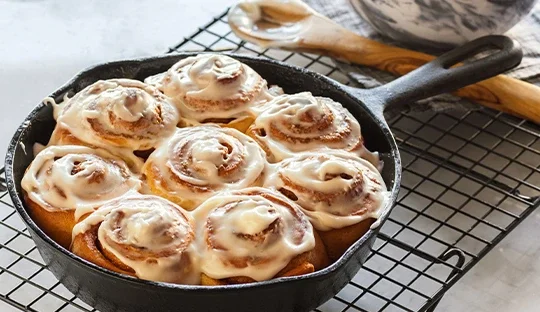
These cinnamon rolls are soft, enriched yeast dough spiralled with a buttery brown sugar and cinnamon filling, then finished with vanilla icing. They take time to rise, but make a generous batch for sharing warm from the oven.
Ingredients
- 450 gplain flour
- 2¼ tsp (about 12 g)dried yeast
- 2 tbspwarm water
- 250 mlwarm milk
- 100 gwhite sugar
- 1egg
- ¼ tspsea salt
- 85 gunsalted butter
- ½ tsp (optional)vanilla essence
- 70 gbutter
- 180 glight brown sugar
- 3 tbspground cinnamon
- 1 sachetvanilla icing mix
- 1 tbspwater
Instructions
- 1
Mix the yeast
In a bowl, combine the yeast with the warm milk and warm water. Stir in the sugar, then add the beaten egg and mix until combined; add the optional ½ tsp vanilla essence if using.
- 2
Make the dough
Mix in half the flour, then add the melted butter and the remaining flour with the salt. Work everything together until you have a sticky dough that pulls away from the bowl. Cover and leave to rise for 1½ hours, or until doubled in size.
- 3
Roll the dough
Turn the dough onto a lightly floured flat surface and roll it out into a rectangle.
- 4
Add the filling
Melt the butter and mix it with the brown sugar and ground cinnamon. Brush the mixture over the dough, covering the surface, then roll it up along its longer side and cut it into rolls about 1½–2 cm thick.
- 5
Proof the rolls
Arrange the rolls in a greased baking tray or dish, leaving space between them. Leave them to rise for at least 20 minutes, or until doubled in size.
- 6
Bake the rolls
Bake in an oven preheated to 180 °C for 20 minutes.
- 7
Add the icing
Mix the icing ingredients together and pour the mixture over the hot rolls.
What are cinnamon rolls?
Cinnamon rolls are enriched, yeasted pastries rolled around a spiced sugar filling and baked in a tray. They are found in several Northern European and North American baking traditions, with different names and finishes.
This version uses a generous brown sugar and cinnamon layer and a prepared vanilla icing mix. Two rises help the dough become lighter before baking.
Nutrition and macros by portion
The nutrition label shows one serving as written: 375 calories, 6g protein, 65g carbs, 12g fat.
| Portion | Adjustment | kcal | Protein | Carbs | Fat |
|---|---|---|---|---|---|
| Lighter | Use less filling | 263 kcal | 4g | 46g | 8g |
| This serving | As written | 375 kcal | 6g | 65g | 12g |
| Hungry | Serve two rolls | 563 kcal | 9g | 98g | 18g |
Most of the carbohydrates come from the flour and the white and brown sugars, while the butter supplies most of the fat. The egg and milk contribute some protein, though these rolls are primarily a sweet bake. Serve one with fruit or plain yoghurt for a more balanced plate.
Building the dough
Warm liquids: the milk and water should feel warm rather than hot when mixed with the yeast. Very hot liquid can interfere with the rise.
Butter and flour: adding the melted butter between portions of flour helps it mix through the dough. The finished dough is meant to be sticky, while still pulling away from the bowl.
Getting an even filling
Softened mixture: melt the butter before stirring in the brown sugar and cinnamon so the filling can be brushed over the dough. Spread it across the full surface for a consistent spiral.
Tight roll: roll from the longer side to make a long log, then cut it into the stated 1½–2 cm pieces. Keep the cuts even so the rolls bake at a similar rate.
Two rises matter
First rise: cover the dough and wait about 1½ hours, or until its volume has doubled. The time can vary, so use the change in size as the cue.
Second rise: space the rolls in a greased tray and let them double again for at least 20 minutes. Leave room around each one for expansion.
Checking the bake
Oven: preheat to 180 °C and bake for 20 minutes, as directed. The rolls should look risen and lightly coloured when ready.
Finish: pour the mixed icing over the rolls while they are hot. It will soften over the surface and settle into the cinnamon spirals.
Serving and sharing
Serve the rolls warm, when the dough is soft and the icing is still slightly runny. They work well as a sweet breakfast or an afternoon bake.
For a more balanced plate, serve one roll alongside plain yoghurt or fresh fruit. Coffee, tea or milk also makes a simple accompaniment.
Recipe notes & tips
- Measure the flour before starting so both portions are ready to add.
- Keep the dough covered during its first rise to stop the surface drying out.
- Flour the work surface lightly so the dough stays easy to roll without picking up too much extra flour.
- Leave a little room between the rolls in the greased tray so they can expand.
- Mix the icing just before pouring it over the hot rolls.
Variations
- Add nuts: scatter chopped pecans or walnuts over the cinnamon filling before rolling.
- Add citrus: mix a little finely grated orange zest into the filling for a fragrant note.
- Use cream cheese icing: replace the packet icing with a simple cream cheese topping.
- Include raisins: sprinkle raisins over the filling before rolling the dough.
- Make smaller rolls: cut thinner pieces and check them during baking, as they may cook sooner.
Common mistakes to avoid
- Hot liquids: very hot milk or water can hinder the yeast; use liquids that are warm, not hot.
- Too much flour: adding extra flour too quickly can make the rolls dense; keep the dough slightly sticky as directed.
- Uneven filling: leaving bare patches gives some rolls less cinnamon flavour; brush the mixture over the whole surface.
- Crowded tray: rolls that touch before proofing have less room to expand; leave space between them.
- Skipping the second rise: baking immediately after shaping can leave the rolls tight; wait until they have doubled in size.
How to store
Keep cooled rolls in an airtight container at room temperature for up to 2 days, or refrigerate for up to 4 days. Reheat briefly in the microwave or in a low oven until warm.
Frequently asked questions
Can I make the dough ahead?
The recipe gives rise times but no overnight method. For best results, follow the two rises and bake the rolls on the day.
How do I know the dough has risen enough?
Look for it to have doubled in volume during the first rise. After shaping, use the same doubling cue for the rolls.
Can I use instant yeast?
The recipe specifies dried yeast. If using instant yeast, check its packet guidance for any adjustment to the amount or mixing method.
Why is the dough sticky?
It is meant to be sticky but should pull away from the bowl. Use a lightly floured surface when rolling rather than adding lots of extra flour to the dough.
Can I leave out the vanilla essence?
Yes. It is listed as optional, so the dough can be made without it.
When should I add the icing?
Mix the icing ingredients and pour the icing over the rolls while they are hot, as directed.
Cook it from the original
This recipe comes from gourmet.cl. Their page has the author’s own photos, notes and tips — the best place to cook it from.
Open the recipe on gourmet.cl