
Crispy Parmesan Crusted Chicken
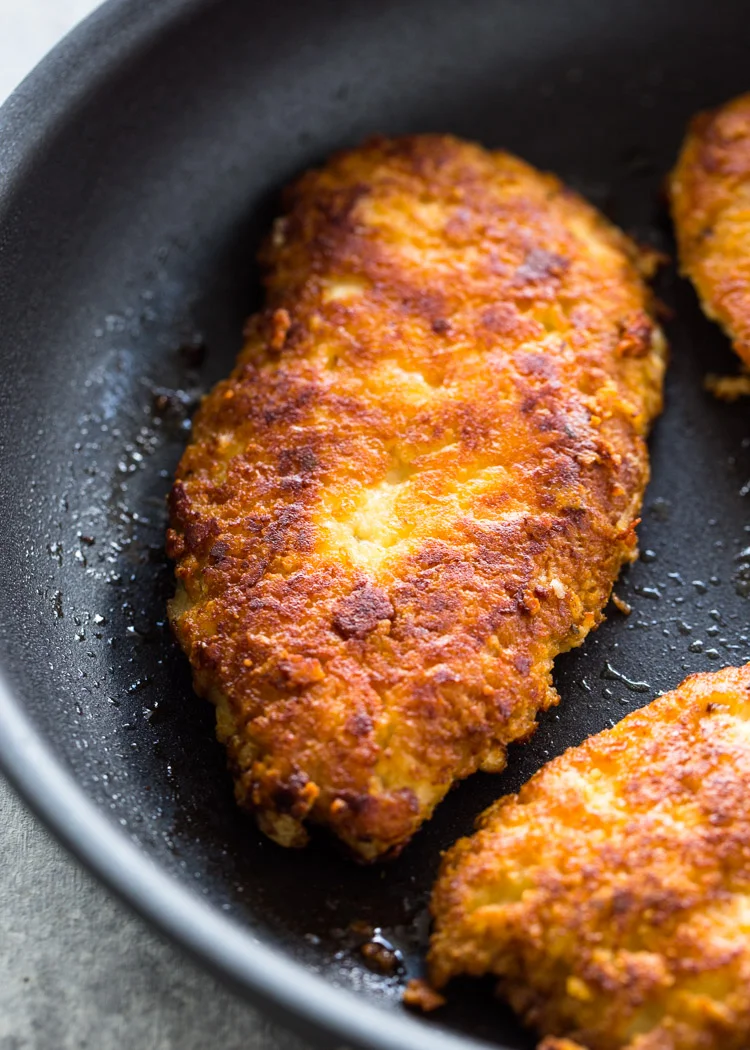
Chicken cutlets coated in Parmesan and almond flour are pan-fried until crisp and golden, with tender meat inside. They make a quick American-style main for a weeknight dinner, ready in about 15 minutes.
Ingredients
- 454 g (1 pound; 2–3 chicken breasts)chicken breasts
- 5 ml (1 teaspoon)Italian seasoning, or seasoning of choice
- 2.5 ml (1/2 teaspoon)garlic powder
- Pinchsalt and pepper
- About 100 g (1 cup)grated or finely zested Parmesan cheese
- About 50 g (1/2 cup)almond flour, or panko breadcrumbs
- 2eggs
- 45 ml (3 tablespoons)olive oil, or butter or oil of choice
Instructions
- 1
Season the chicken
Lay the chicken breasts on a cutting board and slice each in half horizontally to make thinner cutlets. Season them generously with the Italian seasoning, garlic powder, salt and pepper, then set aside.
- 2
Prepare the coatings
Mix the Parmesan and almond flour in a medium shallow bowl. In a separate bowl, whisk the eggs.
- 3
Coat the cutlets
Dip each chicken cutlet into the egg, then press it into the Parmesan mixture. Shake off any excess coating and repeat until all the cutlets are covered.
- 4
Pan-fry the chicken
Heat the oil or butter in a large, heavy-duty non-stick pan. Add the cutlets in a single layer and cook for 5–6 minutes on each side, until golden and crisp. Wait until the Parmesan is golden on the first side before turning so the coating stays in place. Cook the remaining cutlets in batches as needed.
What is Parmesan crusted chicken?
It is chicken coated in egg and a savoury Parmesan mixture, then cooked in a pan until the outside is crisp. This American-style preparation takes inspiration from familiar breaded cutlets, with almond flour standing in for breadcrumbs.
Thinly sliced chicken cooks quickly, while the cheese browns into a savoury crust. The recipe keeps the ingredient list short and offers panko as an alternative to almond flour.
Nutrition and macros by portion
The nutrition label shows one serving as written: 364 calories, 36g protein, 1g carbs, 22g fat.
| Portion | Adjustment | kcal | Protein | Carbs | Fat |
|---|---|---|---|---|---|
| Lighter | Use less cooking oil | 255 kcal | 25g | 1g | 15g |
| This serving | As written | 364 kcal | 36g | 1g | 22g |
| Hungry | Add a larger side | 546 kcal | 54g | 2g | 33g |
The chicken supplies most of the protein, while the almond flour contributes some carbohydrate and the Parmesan and cooking oil provide much of the fat. Pair a cutlet with vegetables or salad for a more balanced plate.
Why cut the chicken horizontally?
Even thickness: Halving each breast horizontally makes thinner cutlets that are easier to cook through in the short pan-frying time. Try to keep the pieces a similar thickness so they finish together.
Seasoning: Apply the Italian seasoning, garlic powder, salt and pepper before coating. This puts flavour directly on the chicken rather than relying only on the crust.
How the coating works
Egg layer: Whisk the eggs until blended, then dip each cutlet so the surface is lightly covered. Let excess egg drip off before moving to the dry mixture.
Parmesan mixture: Combine the cheese and almond flour in a shallow bowl to make coating the cutlets easier. Press the chicken into the mixture, then shake off loose excess so it is less likely to fall into the pan.
Getting a crisp crust
Hot pan: Let the oil or butter heat before adding the chicken, and keep the cutlets in a single layer. If they do not fit without crowding, cook them in batches.
Patient flip: Leave the first side undisturbed until the Parmesan has turned golden. Turning too soon can pull the cheese coating away from the chicken.
How to tell it is done
Colour: Look for a golden, crisp coating on both sides rather than relying on colour alone. The recipe allows 5–6 minutes per side, though cutlet thickness and pan heat can affect the timing.
Centre: Check the thickest part of a cutlet before serving; it should be cooked through with no raw-looking centre. Avoid cutting every piece open, which can let juices escape.
What to serve alongside
Fresh sides: A green salad, steamed green beans or roasted vegetables bring freshness alongside the savoury coating. Choose a side that can be prepared while the chicken cooks.
Heartier plate: Serve with potatoes, rice or a grain if you want a more filling meal. A squeeze of lemon at the table can brighten the rich Parmesan crust.
Recipe notes & tips
- Use a sharp knife to split the chicken breasts into even cutlets.
- Set out the egg and Parmesan mixtures before you begin coating the chicken.
- Shake off loose coating so it does not collect in the pan.
- Cook in batches if needed to keep the cutlets in a single layer.
- Use a thin spatula to turn the cutlets once the first side is well browned.
Variations
- Use panko: Swap the almond flour for panko breadcrumbs for a more traditional crumb.
- Change the seasoning: Replace the Italian seasoning with another seasoning blend you enjoy.
- Add lemon: Serve with lemon wedges for a fresh, tangy finish.
- Try another oil: Use butter or another cooking oil in place of olive oil.
- Add herbs: Stir finely chopped fresh herbs into the Parmesan mixture before coating.
Common mistakes to avoid
- Uneven cutlets: Slice the breasts to a similar thickness so they cook at roughly the same pace.
- Turning too early: Wait for the first side to become golden so the crust is less likely to slide off.
- Crowding the pan: Cook in batches if the pieces would overlap or touch closely.
- Excess coating: Shake off loose Parmesan mixture before frying to limit debris in the pan.
- Pan not hot enough: Heat the oil or butter before adding the cutlets so the coating can brown.
How to store
Refrigerate leftovers in an airtight container for up to 3 days. Reheat in a lightly oiled pan over medium heat, turning once, until hot; the coating may soften in the microwave.
Frequently asked questions
Can I use panko instead of almond flour?
Yes. The ingredient list gives panko breadcrumbs as an alternative; use the same stated quantity.
Can I use butter instead of olive oil?
Yes, butter or another cooking oil can be used. Keep the pan at a moderate heat so the coating browns without scorching.
Why is the Parmesan coating falling off?
The first side may need more time to turn golden before flipping. Shake off excess coating before frying and turn the cutlet gently.
Can I cook all the cutlets at once?
Only if they fit in a single layer in the pan. Otherwise, cook in batches to avoid crowding.
How do I know when the chicken is cooked through?
Check the thickest part of a cutlet; it should be cooked through with no raw-looking centre. The recipe's guide is 5–6 minutes per side, depending on thickness and pan heat.
Cook it from the original
This recipe comes from gimmedelicious.com. Their page has the author’s own photos, notes and tips — the best place to cook it from.
Open the recipe on gimmedelicious.com