
Chickpea hummus
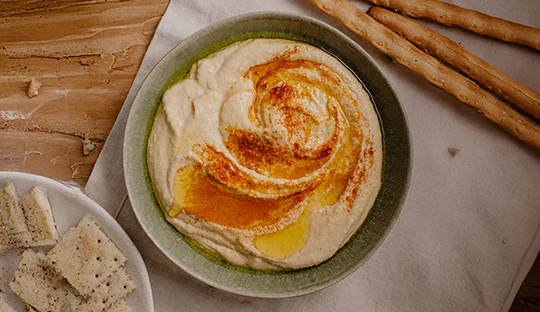
This quick chickpea hummus blends cooked chickpeas with tahini, lemon, olive oil and cumin for a creamy dip finished with paprika. Serve it with pita bread as a snack or part of a shared spread.
Ingredients
- 22.5 mltahini (sesame paste)
- 30 mllemon juice
- 37.5 mlolive oil
- ½ small clovegarlic, finely chopped
- 1 tspsalt
- ½ tspground cumin
- 360 ml (1½ cups)cooked chickpeas, al dente
- 30–60 mlwater
- 1 tspolive oil, for drizzling
- 1 tsppaprika
Instructions
- 1
Blend tahini
Put the tahini and lemon juice in a food processor or blender and process for 1 minute.
- 2
Add the seasonings
Add the olive oil, garlic, salt and cumin, then process until combined.
- 3
Blend chickpeas
Add the chickpeas and 30 ml of water, then process until creamy. If the mixture is too thick, add more water gradually until it reaches the consistency you want.
- 4
Finish the hummus
Spoon the hummus into a bowl, drizzle with olive oil and sprinkle with paprika.
- 5
Serve with pita
Serve the hummus with pita bread.
What is chickpea hummus?
Hummus is a dip associated with Arab cuisine, made by blending chickpeas with tahini and seasonings. This version uses lemon, garlic and cumin for a savoury, gently tangy flavour.
The method builds flavour by blending the tahini and lemon first, then adding the chickpeas. A little water helps adjust the texture without adding more oil.
Nutrition and macros by portion
The nutrition label shows one serving as written: 222 calories, 8g protein, 18g carbs, 11g fat.
| Portion | Adjustment | kcal | Protein | Carbs | Fat |
|---|---|---|---|---|---|
| Lighter | Less oil, more water | 155 kcal | 6g | 13g | 8g |
| This serving | As written | 222 kcal | 8g | 18g | 11g |
| Hungry | Larger hummus portion | 333 kcal | 12g | 27g | 17g |
Chickpeas provide most of the carbohydrates, fibre and some of the protein, while tahini and olive oil contribute much of the fat. Serve a moderate scoop with plenty of fresh vegetables and pita to make a more balanced plate.
The key ingredients
Tahini and lemon: blending these together first helps create a smooth base and distributes the citrus throughout the dip.
Chickpeas: the recipe calls for cooked chickpeas that are al dente. They should blend readily while still giving the hummus its body.
Getting a creamy texture
Water: start with 30 ml, then add more a little at a time if the mixture is too thick. Stop when it is creamy and easy to scoop.
Blending: scrape down the sides if needed so there are no unblended chickpeas left around the bowl of the processor.
Balancing the flavour
Lemon and cumin: lemon brings a fresh, sharp note, while cumin adds warmth. The garlic is kept to half a small clove, so it seasons the dip without overwhelming it.
Paprika: the final dusting adds colour and a mild, savoury finish. Sprinkle it over the hummus just before serving.
A quick recipe
The listed preparation takes 10 minutes and uses a food processor or blender. Have the ingredients ready before you begin so you can move through the blending stages without stopping.
The chickpeas are added after the tahini mixture and seasonings, which helps the flavouring blend evenly before the mixture thickens.
How to serve it
Pita bread is the suggested accompaniment and makes the hummus easy to scoop. You can also set it out as part of a snack spread alongside fresh vegetables.
For a fuller meal, serve it with a generous portion of vegetables and another source of protein.
Recipe notes & tips
- Measure the water separately so you can add it gradually.
- Use a small amount of garlic first if you prefer a milder flavour.
- Blend the tahini and lemon for the full minute before adding the other ingredients.
- Taste the blended hummus before serving and adjust the seasoning to your preference.
- Drizzle and sprinkle the toppings over the hummus just before it reaches the table.
Variations
- Extra lemon: add a little more lemon juice for a brighter flavour.
- More garlic: use a larger clove for a stronger savoury note.
- Chilli finish: replace some of the paprika with chilli powder for extra heat.
- Herb topping: scatter chopped parsley over the finished hummus.
- Vegetable dippers: serve with sliced cucumber, carrot or pepper alongside the pita.
Common mistakes to avoid
- Adding all the water at once: the hummus may become too loose, so add it gradually.
- Skipping the first blend: process the tahini and lemon for 1 minute to make a smooth starting base.
- Using too much garlic: stick to half a small clove for the measured, balanced flavour.
- Stopping while chickpeas remain whole: keep processing until the mixture is creamy.
- Adding the garnish too early: drizzle on the oil and paprika just before serving for a fresh finish.
How to store
Store leftover hummus in a covered container in the fridge and use within 3–4 days. Stir it before serving; it is usually best served cold or at room temperature, so reheating is not needed.
Frequently asked questions
Can I use canned chickpeas?
Yes. Drain and rinse them before measuring the amount needed, and use them in place of the cooked chickpeas.
How much water should I add?
Begin with 30 ml, then add more gradually if the hummus is too thick. The recipe allows up to 60 ml.
What if I do not have a food processor?
A blender can be used as the recipe suggests. You may need to pause and scrape down the sides so the chickpeas blend evenly.
Can I make the hummus ahead?
Yes. Keep it covered in the fridge and add the oil and paprika topping when you are ready to serve.
What can I serve with hummus besides pita?
Fresh vegetable sticks such as cucumber, carrot and pepper work well for dipping.
Why is my hummus too thick?
Blend in water a little at a time until it becomes creamy and easy to scoop.
Cook it from the original
This recipe comes from gourmet.cl. Their page has the author’s own photos, notes and tips — the best place to cook it from.
Open the recipe on gourmet.cl