
Breaded prawns
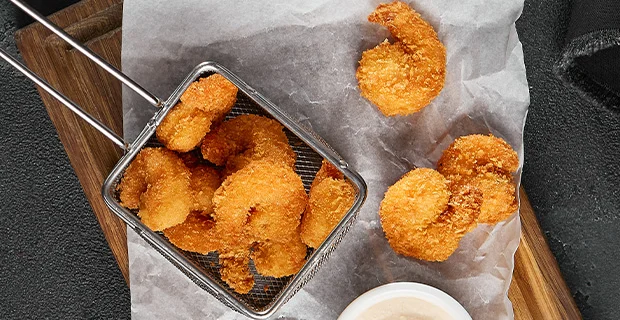
Crisp, double-coated prawns are fried until golden and served with a quick lemony mayonnaise and ketchup sauce. The short chill helps the coating cling, making this a handy starter or sharing plate.
Ingredients
- 16large prawns, peeled
- to tastesalt
- to tasteground black pepper
- a few dropslemon juice
- 2eggs
- 2 tablespoonsgranulated garlic (optional)
- 1 tablespoonchopped parsley
- 60 g (½ cup)plain flour
- as neededoil for frying
- 240 ml (1 cup)mayonnaise
- 60 ml (¼ cup)ketchup
- to tastesalt
- to tasteground black pepper
- 1 tablespoonlemon juice
- a pinchsugar
- 1 teaspoonwater
Instructions
- 1
Season the prawns
Put the peeled prawns in a bowl and season with salt, ground black pepper and a few drops of lemon juice.
- 2
Beat the eggs
Add 1 teaspoon of water to the eggs in a bowl and beat them together.
- 3
Mix the coating
In a separate bowl, combine the granulated garlic, chopped parsley and flour.
- 4
Coat and chill
Dip each prawn in the flour mixture, then in the beaten egg, then once more in the flour mixture. Refrigerate for 5–10 minutes.
- 5
Heat the oil
Heat enough frying oil in a pan over medium heat. Take care to avoid burns while frying.
- 6
Fry the prawns
Fry the prawns in small batches for 2–3 minutes per side, or until crisp. Remove them and drain on absorbent paper.
- 7
Mix the sauce
Put the sauce ingredients in a bowl and stir until combined.
- 8
Serve with sauce
Serve the prawns with the sauce alongside.
What are breaded prawns?
Breaded prawns are shellfish coated in a seasoned flour mixture, dipped in egg and coated again before frying. Versions of this simple appetiser are found in many cuisines, so there is no single origin to pin down.
Here, garlic and parsley flavour the crisp coating, while a mayonnaise, ketchup and lemon sauce gives the prawns a creamy, tangy dip.
Nutrition and macros by portion
The nutrition label shows one serving as written: 560 calories, 22g protein, 22g carbs, 43g fat.
| Portion | Adjustment | kcal | Protein | Carbs | Fat |
|---|---|---|---|---|---|
| Lighter | Less sauce, more salad | 392 kcal | 15g | 15g | 30g |
| This serving | As written | 560 kcal | 22g | 22g | 43g |
| Hungry | Add extra prawns | 840 kcal | 33g | 33g | 65g |
The prawns provide most of the protein, while the flour and coating contribute carbohydrates. Mayonnaise and the oil absorbed during frying are the main sources of fat, so serve a modest amount of sauce and add salad or vegetables to balance the plate.
The coating ingredients
Prawns: peeled large prawns are easy to eat and give the coating plenty of surface to cling to. Season them before breading so the flavour reaches the shellfish itself.
Flour and egg: the seasoned flour forms the outer layer, and beaten egg helps another layer of flour adhere. Granulated garlic is optional, while parsley adds a fresh herbal note.
Getting an even coating
Dip in order: coat each prawn in the flour mixture, then egg, then flour again. Let excess egg drip off before returning it to the flour so the coating stays fairly even.
Chill briefly: refrigerating the coated prawns for 5–10 minutes gives the layers a chance to settle. Keep them in a single layer if possible.
Frying for crispness
Oil level: use enough oil to fry the prawns, but leave room in the pan and work in small batches. Adding too many at once can make the oil cool and the coating less crisp.
Doneness: follow the recipe’s 2–3 minutes per side and look for a crisp, golden coating. Prawns cook quickly, so avoid leaving them in the pan longer than needed.
Making the dipping sauce
Mixing: stir the mayonnaise, ketchup, lemon juice, salt, pepper and pinch of sugar until evenly combined. Taste and adjust the seasoning to suit the prawns.
Serving: offer the sauce on the side so the coating stays crisp until each prawn is dipped.
What to serve alongside
Serve these prawns as a starter or sharing dish while they are freshly fried. A green salad or simply dressed vegetables can add a fresh contrast.
For a more substantial meal, pair them with boiled or roasted potatoes and extra lemon wedges.
Recipe notes & tips
- Pat the peeled prawns dry before seasoning if they are wet, so the coating has a better chance of adhering.
- Set out the egg and flour bowls before beginning the coating step to keep the process tidy.
- Fry a small test prawn first to check that the oil is hot enough for the coating to crisp.
- Use tongs or a slotted spoon to turn and lift the prawns carefully.
- Drain the cooked prawns on absorbent paper and serve them promptly.
Variations
- Skip the garlic: leave out the optional granulated garlic for a milder coating.
- Add chilli: mix a little chilli powder into the flour for gentle heat.
- Use lime: replace the lemon juice with lime juice for a sharper citrus note.
- Fresh herb swap: use finely chopped coriander instead of parsley.
- Serve with wedges: add lemon wedges at the table for extra citrus.
Common mistakes to avoid
- Wet prawns: excess moisture can make the coating slip; pat them dry before seasoning.
- Uneven coating: missed patches can leave bare spots; turn each prawn through every coating stage.
- Crowded pan: too many prawns at once can reduce crispness; fry them in small batches.
- Overcooking: prawns can turn firm if fried too long; check them after 2–3 minutes per side.
- Skipping the chill: the coating may be less settled; refrigerate the coated prawns for 5–10 minutes.
How to store
Refrigerate leftover prawns and sauce separately in covered containers and eat within 2 days. Reheat the prawns in an oven or air fryer until hot and crisp; the coating may soften in a microwave.
Frequently asked questions
Can I prepare the prawns ahead?
You can coat them and refrigerate for the recipe’s 5–10 minutes before frying. For best texture, fry them close to serving time.
How can I tell when the prawns are cooked?
The coating should be crisp and golden after about 2–3 minutes per side. Prawns cook quickly, so check them as they fry.
Can I use frozen prawns?
Yes, thaw them fully first and pat them dry before seasoning and coating. Excess water can stop the coating from adhering well.
Can I make these without granulated garlic?
Yes. The garlic is marked optional, so you can leave it out and use the flour and parsley mixture as written.
What can I use instead of frying?
The provided method is for frying, so another cooking method will give a different coating. For the intended crisp texture, follow the pan-frying method.
Cook it from the original
This recipe comes from gourmet.cl. Their page has the author’s own photos, notes and tips — the best place to cook it from.
Open the recipe on gourmet.cl