
Arabic rice
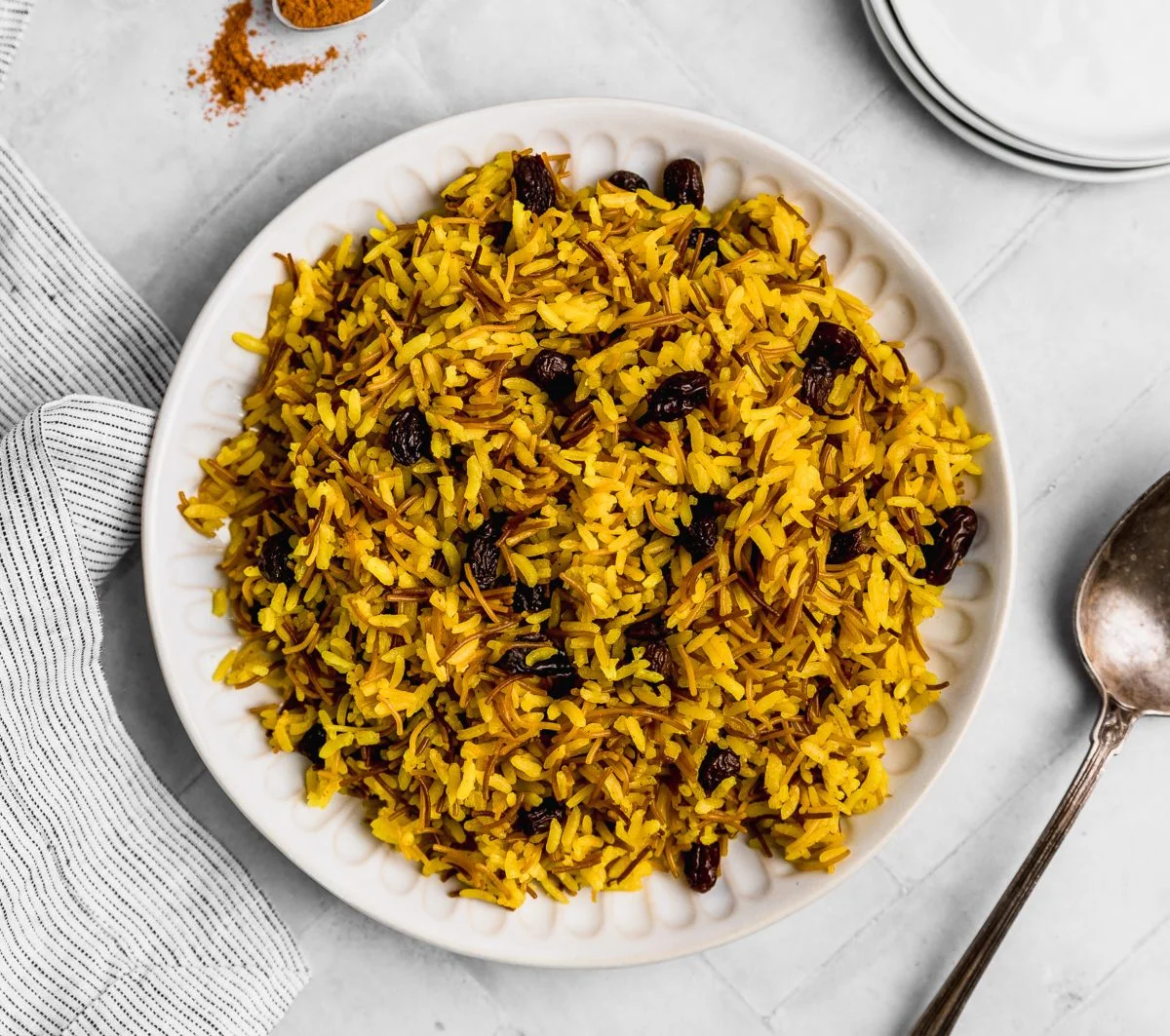
Arabic rice combines fluffy grains with golden angel-hair pasta, turmeric and sweet raisins. It is a straightforward one-pot side dish, ready in about 30 minutes and well suited to a shared meal.
Ingredients
- 15 ml (1 tbsp)olive oil
- About 50 g (1 cup)angel-hair pasta, broken into short pieces
- 15 ml (1 tbsp)ground turmeric
- 1 clovegarlic
- About 400 g (2 cups)rice
- 10 ml (2 tsp)sea salt
- 600 ml (2½ cups), boiledwater
- About 150 g (1 cup)raisins
Instructions
- 1
Toast the pasta
Warm a saucepan over medium heat. Add the olive oil and angel-hair pasta, stirring constantly until the pasta is golden.
- 2
Add rice
Stir in the garlic, salt and rice, mixing continuously for 1 minute.
- 3
Add water
Pour in the water and add the turmeric and raisins. Cook over medium heat until the mixture begins to boil.
- 4
Simmer covered
When it boils, cover the pan and turn the heat to its lowest setting. Cook for 15–20 minutes, until the rice is tender and the liquid has been absorbed.
- 5
Finish the rice
Fluff the rice with a fork, then cook uncovered for 1 more minute so it can dry out fully.
What is Arabic rice?
Arabic rice is a broad family of rice dishes found across the Middle East, with versions differing from place to place. This version pairs rice with toasted fine pasta, turmeric and raisins for a savoury, gently sweet side.
The pasta browns in oil before the rice goes in, bringing a toasted note to the pot. Turmeric colours the grains, while raisins soften as the rice cooks.
Nutrition and macros by portion
The nutrition label shows one serving as written: 350 calories, 6g protein, 76g carbs, 5g fat.
| Portion | Adjustment | kcal | Protein | Carbs | Fat |
|---|---|---|---|---|---|
| Lighter | Use fewer raisins | 245 kcal | 4g | 53g | 4g |
| This serving | As written | 350 kcal | 6g | 76g | 5g |
| Hungry | Serve a larger portion | 525 kcal | 9g | 114g | 8g |
Most of the carbohydrates come from the rice, angel-hair pasta and raisins; the olive oil supplies most of the fat, while the rice and pasta contribute a modest amount of protein. Pair a serving with vegetables and a protein-rich main to make a more balanced plate.
Toast the pasta carefully
Golden pasta: stir it constantly as it cooks in the oil so it colours evenly and does not catch on the bottom of the pan.
Even pieces: break long strands into shorter lengths before adding them, if needed, so they mix more easily with the rice.
Build flavour before simmering
Rice and garlic: stir them with the salt for the full minute, which coats the grains and briefly cooks the garlic before the liquid is added.
Turmeric and raisins: add these with the boiled water as directed. Stir them through so the seasoning and fruit are distributed around the pot.
Let the rice steam
Low heat: once the water boils, cover the pan and reduce the heat to its lowest setting. A steady, gentle simmer gives the rice time to absorb the liquid without scorching underneath.
Doneness: after 15–20 minutes, check that the grains are tender and the liquid has disappeared. If the rice is still firm, keep the lid on and continue cooking until it is done.
Fluff and dry the grains
Use a fork to loosen the rice rather than stirring it vigorously, which can break the grains and make the mixture clump.
The final uncovered minute helps excess moisture escape. Keep the pan over its lowest heat and watch that the rice does not stick.
Serve it as a side
This rice works alongside grilled or roasted meat, vegetables, or a bowl of beans. Its raisins bring sweetness, so fresh, tangy sides such as a tomato salad can provide contrast.
For a shared meal, bring the pot to the table while warm and fluff the rice once more just before serving.
Recipe notes & tips
- Use a saucepan with a close-fitting lid to retain steam during the simmer.
- Keep stirring the angel-hair pasta as it toasts so it browns without burning.
- Measure the boiled water before starting so it is ready to add after the rice.
- Once covered, keep the heat low and avoid lifting the lid repeatedly.
- Fluff gently with a fork to help keep the grains separate.
Variations
- Add toasted nuts: scatter almonds or pine nuts over the finished rice for crunch.
- Use sultanas: swap them for the raisins for a slightly different sweet note.
- Add warm spices: stir a little cinnamon or cumin in with the turmeric.
- Include fresh herbs: finish with chopped parsley for a fresh accent.
- Choose brown rice: use it only with an adjusted liquid amount and cooking time suited to the rice.
Common mistakes to avoid
- Burnt pasta: stir constantly and take the pan off the heat if the strands darken too quickly.
- Uneven browning: spread the pasta across the base of the pan and keep it moving.
- Too much stirring: once the rice is covered and simmering, leave it undisturbed so it can cook evenly.
- Lifting the lid: keep it on during the 15–20-minute simmer to hold in the steam.
- Wet finish: cook uncovered for the final minute as instructed to let excess moisture escape.
How to store
Cool leftovers promptly and refrigerate in a covered container for up to 3 days. Reheat until piping hot, adding a small splash of water if the rice seems dry.
Frequently asked questions
What kind of rice should I use?
The recipe simply specifies rice, so a plain white rice that cooks well by absorption is a practical choice. Cooking times can vary by variety, so check the grains for tenderness.
Do I need to rinse the rice?
The recipe does not specify rinsing. If you do rinse it, drain it well so you do not add extra water to the measured amount.
Can I use ordinary pasta instead of angel hair?
Angel-hair pasta is very fine and toasts quickly. If substituting another thin pasta, break it into short pieces and watch it closely as it browns.
How do I know when the rice is cooked?
The recipe is ready when the grains are tender and the liquid has been absorbed. If the grains are still firm, continue cooking covered until tender.
Can I make it ahead?
It is best freshly cooked, but you can refrigerate it and reheat it later. Add a little water during reheating if needed to loosen the grains.
Cook it from the original
This recipe comes from gourmet.cl. Their page has the author’s own photos, notes and tips — the best place to cook it from.
Open the recipe on gourmet.cl