
Boneless Rolled Turkey Breast with Brioche Stuffing
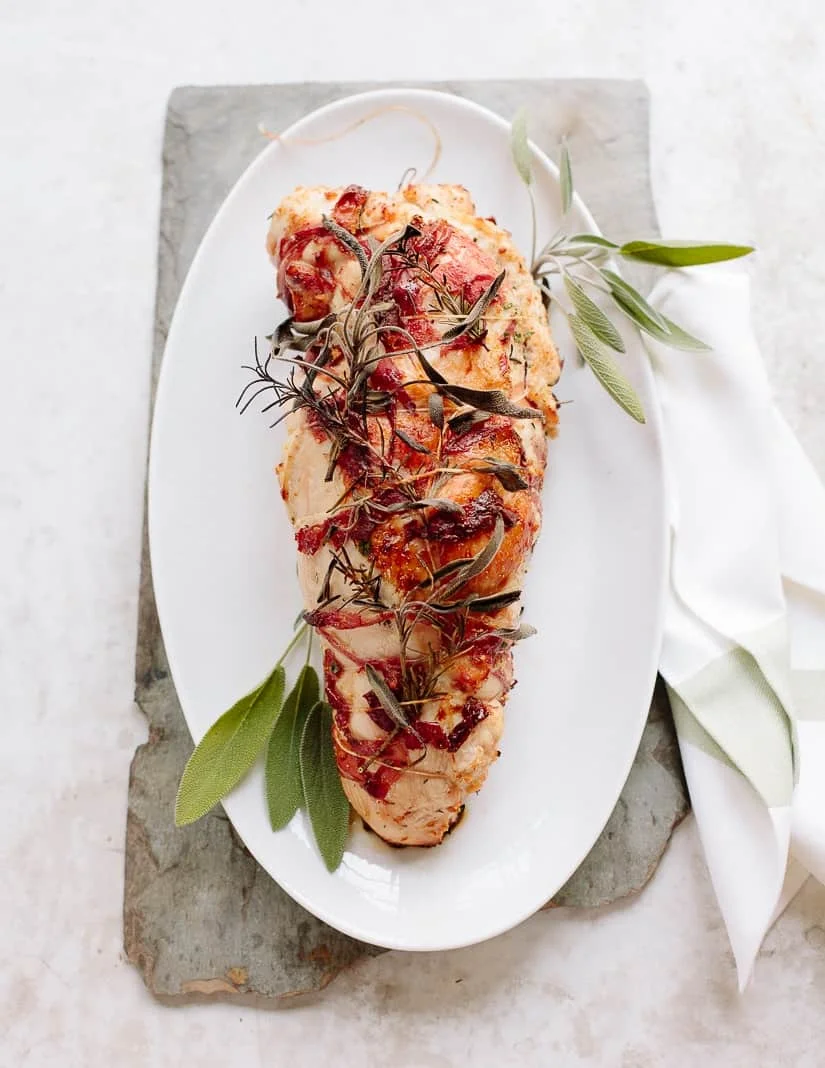
A boneless turkey breast is filled with garlicky brioche breadcrumbs, rolled in prosciutto and roasted with fresh herbs. It brings the flavours of a festive roast to a smaller gathering, with slices that are easy to serve.
Ingredients
- ½ breast (1.6–1.8 kg; 3½–4 lb)boneless turkey breast, with skin on
- al gustosal kosher
- al gustopimienta negra recién molida
- 6–8 lonchasprosciutto
- 135 g (3 tazas)pan brioche rallado fino, preparado triturando brioche en dados
- 15 g (¼ taza)perejil italiano picado
- 1 cucharadatomillo fresco picado
- 1 cucharadaromero fresco picado
- 25 g (¼ taza)parmesano recién rallado
- 2 dientesajo, rallado con un microplane o picado muy fino
- ½ cucharaditaguindilla roja triturada
- 30 ml (2 cucharadas)aceite de oliva virgen extra
- Un puñadoramitas de romero y salvia
- 180 ml (¾ taza)agua o caldo de pollo
Instructions
- 1
Calienta el horno
Calienta el horno a 220 °C (425 °F), con la rejilla en la posición central.
- 2
Abre la pechuga
Para abrirla en mariposa, haz un corte perpendicular que llegue hasta tres cuartas partes del grosor, a lo largo del lado más grueso. Ábrela como un libro y aplánala con un mazo hasta que tenga un grosor uniforme.
- 3
Coloca el prosciutto
Sobre la superficie de trabajo, coloca las lonchas de prosciutto en tres o cuatro filas de dos, con los lados largos en horizontal. Pon encima la pechuga con la piel hacia abajo.
- 4
Sazona la carne
Reparte 2 cucharaditas de sal por la pechuga y añade entre 10 y 12 vueltas de molinillo de pimienta.
- 5
Prepara el relleno
Mezcla en un bol el pan rallado, las hierbas picadas, el parmesano, el ajo, la guindilla y el aceite de oliva. Extiende la mezcla por toda la pechuga y presiónala suavemente para que se adhiera.
- 6
Enrolla y ata
Empieza por un lado largo y enrolla la pechuga junto con el prosciutto formando un cilindro compacto. Átalo con hilo de cocina cada 1,3 cm (½ pulgada) y coloca las ramitas de hierbas bajo el hilo.
- 7
Asa y reposa
Pon la pechuga en una bandeja grande con borde y ásala durante 25 minutos. Baja el horno a 190 °C (375 °F) y asa otros 35 minutos. El método indica comprobar con un termómetro que el centro de la parte más gruesa alcance al menos 145 °F (63 °C); por seguridad alimentaria, asegúrate de que el pavo llegue a 74 °C (165 °F). Retira la bandeja, cubre la carne sin apretar con papel de aluminio y déjala reposar 30 minutos.
- 8
Recoge los jugos
Pasa el pavo a una fuente. Vierte 180 ml (¾ taza) de agua o caldo de pollo en la bandeja y ponla a fuego bajo, raspando los restos dorados. Reserva el jugo para servir.
- 9
Corta y sirve
Corta el pavo en rodajas de aproximadamente 1,3 cm (½ pulgada) y sírvelo.
What is rolled turkey breast?
This American-style roast takes the familiar flavours of a holiday turkey dinner and gathers them into a boneless breast. Butterflying the meat makes room for a savoury filling, while rolling it gives you neat slices for serving.
Brioche, herbs, Parmesan and garlic make a rich, aromatic stuffing, and prosciutto wraps the outside. The combination offers a smaller-scale alternative to roasting a whole bird.
Nutrition and macros by portion
The nutrition label shows one serving as written: 537 calories, 24g protein, 41g carbs, 31g fat.
| Portion | Adjustment | kcal | Protein | Carbs | Fat |
|---|---|---|---|---|---|
| Lighter | Serve with extra vegetables | 376 kcal | 17g | 29g | 22g |
| This serving | As written | 537 kcal | 24g | 41g | 31g |
| Hungry | Larger slice of turkey | 806 kcal | 36g | 62g | 47g |
The brioche breadcrumbs provide most of the carbohydrates, while the olive oil, prosciutto and brioche contribute fat. Turkey supplies the main protein, with smaller amounts from the prosciutto and Parmesan. Pair a serving with vegetables or salad for a more balanced plate.
Choose the right turkey breast
Skin-on breast: Keeping the skin attached helps protect the meat as it roasts and gives the outside a savoury finish. Ask the butcher for a boneless half breast if you do not want to bone it yourself.
Even thickness: Butterfly the thick side, then gently pound the meat until it is fairly even. This helps the roll cook more consistently and makes it easier to shape.
Build a filling that holds
Fine breadcrumbs: Brioche crumbs absorb the oil and herbs while staying within the rolled breast. Pulse cubes briefly in a food processor so the crumbs are fine, not paste-like.
Herb mixture: Parsley, thyme, rosemary, garlic, Parmesan and chilli bring savoury flavour throughout the filling. Mix them with the oil before spreading the mixture in an even layer.
Roll and tie it securely
Prosciutto base: Arrange the slices in overlapping rows before setting down the turkey. A tidy base makes it easier to wrap the meat evenly as you roll.
Kitchen twine: Tie the log at regular intervals so the filling stays enclosed. Tuck the rosemary and sage sprigs under the string, rather than placing them loose on the tray.
Roast for colour and doneness
Two oven temperatures: The recipe starts at 220 °C for 25 minutes, then lowers the oven to 190 °C for another 35 minutes. Use the cooking time as a guide, since the shape and thickness of the roll affect how quickly it cooks.
Temperature check: Insert a meat thermometer into the thickest part. The listed method gives 63 °C as its target, but for food safety, cook turkey to 74 °C and check that temperature before resting.
Rest, slice and serve
Resting time: Loosely cover the roast and leave it for 30 minutes before cutting. This gives the meat time to settle and makes it easier to slice without the filling spilling out.
Tray juices: Scrape the browned bits into the water or stock over low heat, then save the liquid to spoon over the slices. Serve with roast potatoes, vegetables or a crisp salad.
Recipe notes & tips
- Pulse the brioche in short bursts so it stays as fine crumbs rather than turning into a paste.
- Keep the prosciutto rows close together so the turkey is wrapped evenly.
- Spread the stuffing to the edges in a fairly even layer, but avoid packing it too firmly.
- Tie the roll at regular intervals to help it keep its shape in the oven.
- Use a thermometer in the thickest part of the roll rather than relying on colour alone.
- Let the roast rest for the full 30 minutes before slicing.
Variations
- Use sourdough crumbs: Swap the brioche for fine sourdough breadcrumbs for a less sweet, tangier filling.
- Add lemon zest: Mix a little zest into the herbs for a brighter flavour.
- Adjust the chilli: Reduce or omit the crushed chilli for a milder stuffing.
- Change the herbs: Use extra thyme or parsley if you do not have fresh rosemary.
- Make it without prosciutto: Roast the tied, stuffed breast without the outer prosciutto layer.
Common mistakes to avoid
- Uneven butterflying: The roll may cook unevenly; pound the opened breast to a consistent thickness.
- Over-processing the brioche: The crumbs can become pasty; pulse the cubes briefly and check their texture.
- Loose tying: The roll may open as it cooks; secure it with twine at regular intervals.
- Skipping the thermometer: Cooking time alone can be misleading; check the thickest part and cook the turkey to 74 °C.
- Cutting too soon: The filling may escape and the slices can fall apart; rest the roast for 30 minutes first.
How to store
Refrigerate leftover turkey in a covered container within 2 hours of cooking and use within 3–4 days. Reheat slices until steaming hot throughout, with a little reserved juice or stock to help keep them moist.
Frequently asked questions
Can I prepare the turkey roll ahead?
You can butterfly, fill, roll and tie it ahead, then keep it covered in the fridge. Roast it as directed, and check the centre temperature before serving.
How do I know when the turkey is cooked?
Check the thickest part with a meat thermometer. For food safety, the turkey should reach 74 °C (165 °F); do not rely on the cooking time or appearance alone.
Can I use dried herbs instead of fresh?
Fresh herbs are specified for the filling and the sprigs, but dried herbs can be used in the breadcrumb mixture if needed. They will give a different texture and a more concentrated flavour.
Why does the recipe rest the turkey for 30 minutes?
The rest helps the meat settle before slicing and gives the filling a chance to hold together. Keep the roast loosely covered with foil while it rests.
What can I serve with rolled turkey breast?
Serve it with roast potatoes and seasonal vegetables for a festive plate, or choose a crisp salad for a lighter accompaniment. Spoon the reserved tray juices over the sliced meat.
Cook it from the original
This recipe comes from familystylefood.com. Their page has the author’s own photos, notes and tips — the best place to cook it from.
Open the recipe on familystylefood.com