
Habichuelas Guisadas (Puerto Rican Stewed Beans)
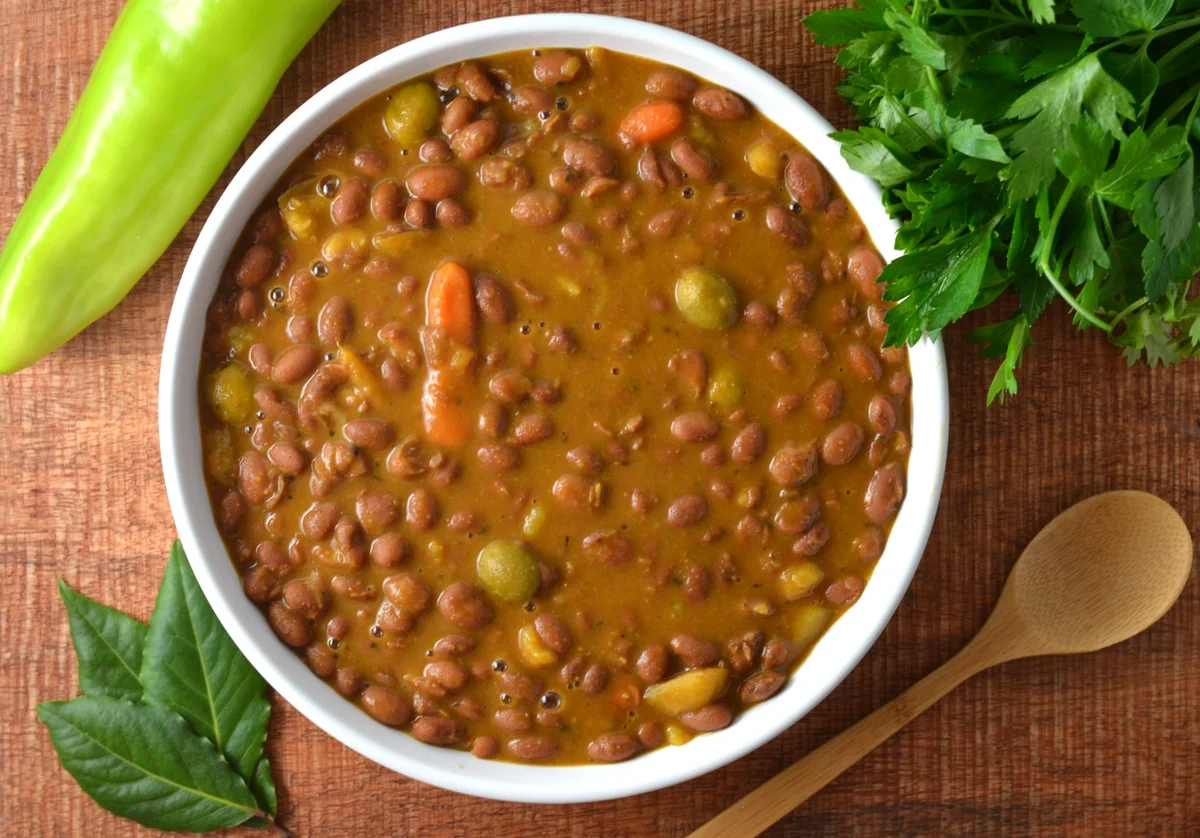
Habichuelas guisadas are Puerto Rican stewed beans simmered with sofrito, tomato, herbs and olives until tender and creamy. They make a flavourful side for rice and are straightforward to prepare in one saucepan.
Ingredients
- 15 ml (1 tablespoon)olive oil
- about 35 g (1/4 cup)diced country ham or bacon (omit if vegetarian)
- 60 ml (1/4 cup)Puerto Rican sofrito
- 60 ml (1/4 cup)tomato sauce
- 7.5 ml (1 1/2 tsp)sazón con achiote y culantro
- 1.25 ml (1/4 teaspoon)ground cumin
- 2.5 ml (1/2 teaspoon)dried oregano
- 2dried bay leaves
- 475 ml (2 cups)low-sodium chicken broth (or vegetable broth)
- 2 cans, 425 g (15 oz) eachpink beans (habichuelas rosadas), undrained
- about 50 g (1/3 cup)diced potato, pumpkin and/or baby carrots
- 8pimento-stuffed olives
- about 8 g (2 tablespoons)chopped fresh coriander, for garnish
- to tasteAdobo seasoning (or salt)
Instructions
- 1
Brown the ham
Warm the olive oil in a medium saucepan over a medium heat. Add the chopped ham and sauté for 2–3 minutes, until it begins to caramelise.
- 2
Fry the sofrito
Stir in the sofrito and sazón, then sauté for 2 minutes, until fragrant.
- 3
Add the seasonings
Add the tomato sauce, oregano, bay leaves and cumin. Sauté for 1 minute.
- 4
Add beans and broth
Add the broth, beans with their liquid, chopped potato, pumpkin or carrot, olives and chopped coriander. Cover the pan and bring the mixture to the boil.
- 5
Simmer until creamy
Once boiling, lower the heat and simmer for 30–40 minutes, stirring occasionally. Cook until the flavours have melded, the beans are very tender and the pumpkin or carrots are cooked; the consistency should be creamy rather than soupy.
- 6
Adjust seasoning
Taste and add Adobo seasoning or salt if needed.
- 7
Serve with rice
Serve over white or yellow rice, with an extra sprinkle of coriander if you like.
What are habichuelas guisadas?
Habichuelas guisadas means stewed beans in Spanish, and the dish is a familiar part of Puerto Rican home cooking. It is commonly served alongside rice, where the savoury cooking liquid can soak into the grains.
This version builds flavour with sofrito, sazón, tomato and olives, then simmers canned pink beans with broth and small pieces of vegetables. Keeping the beans and their canning liquid helps the finished stew turn creamy.
Nutrition and macros by portion
The nutrition label shows one serving as written: 190 calories, 10g protein, 26g carbs, 6g fat.
| Portion | Adjustment | kcal | Protein | Carbs | Fat |
|---|---|---|---|---|---|
| Lighter | Skip ham, smaller rice portion | 133 kcal | 7g | 18g | 4g |
| This serving | As written | 190 kcal | 10g | 26g | 6g |
| Hungry | Larger serving with rice | 285 kcal | 15g | 39g | 9g |
The beans and rice served alongside them provide most of the carbohydrates, while the beans also contribute protein. Oil and any ham or bacon add fat, so pair a portion with extra vegetables if you want a more balanced plate.
Build flavour in stages
Ham: A short sauté in oil gives the diced meat a chance to brown before the aromatics go in. For a vegetarian version, leave it out and use vegetable broth.
The sofrito base
Sofrito and sazón: Fry these briefly until fragrant, then add the tomato and dry seasonings. This order lets the aromatics bloom in the oil without leaving them to cook for the full simmer.
Keep the cooking liquid
Beans: Add the pink beans undrained, as directed, so their liquid becomes part of the sauce. Stir gently now and then to prevent sticking while keeping the beans as intact as possible.
Aim for a creamy finish
Texture: The stew is ready when the beans are very tender and the vegetables have cooked through. It should coat a spoon rather than look watery; allow more simmering time if it is still thin.
Check the salt near the end
Seasoning: Ham, broth, sazón and olives can all contribute salt, so taste after simmering before adding Adobo or extra salt. If the flavour needs a lift, season a little at a time and taste again.
Make it a meal
Serving: Spoon the beans over white or yellow rice and finish with fresh coriander. The rice makes the savoury sauce part of the plate rather than leaving it behind.
Recipe notes & tips
- Dice the potato, pumpkin or carrots small so they cook through during the simmer.
- Keep the bean liquid in the cans; it helps thicken the stew.
- Stir occasionally, particularly towards the end, to stop the beans catching on the bottom.
- Taste for salt only after the stew has simmered, since several ingredients are already seasoned.
- If the stew looks too loose, simmer it uncovered briefly to reduce the liquid.
Variations
- Make it vegetarian: Omit the ham or bacon and choose vegetable broth.
- Choose the vegetables: Use diced potato, pumpkin, baby carrots or a combination, as listed.
- Use another bean: Try another mild, creamy bean if pink beans are unavailable.
- Add heat: Stir in a little chopped chilli with the sofrito for a spicier stew.
- Serve with yellow rice: Spoon the beans over yellow rice instead of white rice.
Common mistakes to avoid
- Draining the beans: Keep their liquid in the stew to help create the intended creamy texture.
- Adding salt too early: Taste at the end and season carefully because the ham, olives and sazón may already be salty.
- Cooking too fast: Keep the beans at a simmer after boiling so they become tender without vigorous bubbling.
- Skipping the occasional stir: Stir from time to time, especially as the sauce thickens, to prevent sticking.
- Serving while soupy: Simmer longer until the liquid is creamy and coats the beans.
How to store
Refrigerate leftovers in a covered container for up to 3 days. Reheat gently in a saucepan or microwave until piping hot, adding a splash of water or broth if the beans have thickened too much.
Frequently asked questions
Can I make these beans vegetarian?
Yes. Omit the ham or bacon and use vegetable broth instead of chicken broth, as the ingredient list suggests.
Should I drain the beans?
No. Add the beans with their liquid; it contributes to the stew's creamy consistency.
Which vegetables can I use?
The recipe calls for diced potato, pumpkin and/or baby carrots. You can use one or combine them.
How do I know when the beans are done?
They should be very tender, and the vegetables should be cooked through. The sauce should be creamy rather than soupy.
What should I serve with habichuelas guisadas?
Serve them over white or yellow rice, with a little extra chopped coriander if you like.
Can I use dried beans instead of tinned beans?
This method is written for tinned pink beans, including their liquid. Dried beans would need to be cooked separately until tender before using them here.
Cook it from the original
This recipe comes from delishdlites.com. Their page has the author’s own photos, notes and tips — the best place to cook it from.
Open the recipe on delishdlites.com