
Poached Pears with Cardamom
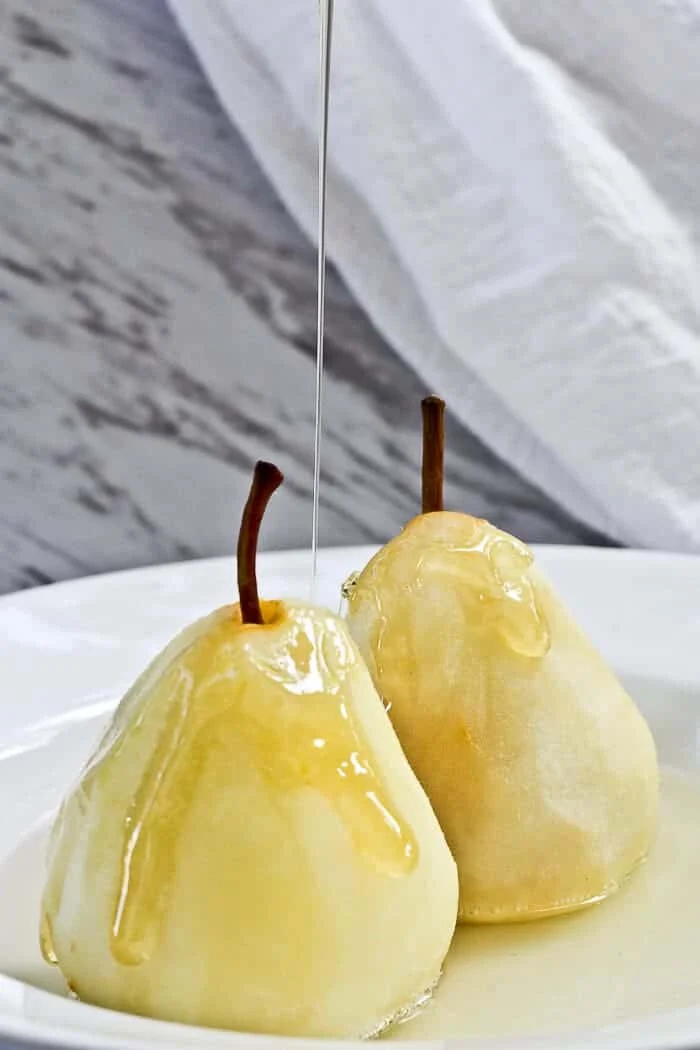
Ripe Bosc pears gently poach in white wine, honey and crushed cardamom until tender, then are served with their fragrant syrup. It is an elegant but straightforward dessert that can be made ahead and served warm or chilled.
Ingredients
- 2ripe Bosc pears, peeled
- 480 ml (2 cups)dry white wine
- 240 ml (1 cup)water
- 60 ml (¼ cup), plus more to servehoney (or molasses or sorghum)
- 1–2cardamom pods, crushed
- 1lemon or lime, juiced
Instructions
- 1
Bring syrup to boil
In a medium saucepan sized to hold the pears snugly, bring the wine, water, honey and crushed cardamom to a boil.
- 2
Poach the pears
Reduce the heat to medium and add the pears. Simmer for 10 minutes, then stir in the lemon or lime juice and simmer for 5 minutes more. The pears are ready when a fork pierces them easily.
- 3
Serve with syrup
Serve the pears with a generous spoonful or two of the poaching liquid. Add more honey if desired.
- 4
Store leftovers
Keep the pears in their poaching liquid in the refrigerator for up to 5 days. Rewarm them in the liquid before serving if you like.
What are poached pears?
Poached pears are fruit gently cooked in a flavoured liquid until tender, then served with some of that liquid as a light syrup. They are a familiar dessert across many cuisines, and this version pairs white wine and honey with aromatic cardamom.
The method is simple: the pears absorb flavour as they soften, while the poaching liquid becomes a fragrant accompaniment. Keeping the pears whole also makes for a particularly graceful presentation.
Nutrition and macros by portion
The nutrition label shows one serving as written: 228 calories, 1g protein, 50g carbs, 0g fat.
| Portion | Adjustment | kcal | Protein | Carbs | Fat |
|---|---|---|---|---|---|
| Lighter | Use less serving honey | 160 kcal | 1g | 35g | 0g |
| This serving | As written | 228 kcal | 1g | 50g | 0g |
| Hungry | Add a second pear | 342 kcal | 2g | 75g | 0g |
Most of the carbohydrates come from the pears and honey, with additional sugars in the poaching liquid. The wine contributes flavour, while the pears provide a small amount of protein and the dish is very low in fat. For a more balanced plate, serve a pear with plain yoghurt for a creamy protein-rich accompaniment.
Choosing the pears
Bosc pears: Their firm flesh holds its shape during simmering, making them a good fit for whole poached fruit. Choose ripe pears that still feel firm rather than very soft.
Keep them whole: Peeling the pears is all the preparation the recipe requires. Halving and coring is an option, but the finished pears will look different.
Building the poaching liquid
Wine and water: The wine brings flavour, while water helps create enough liquid to poach the fruit. Use a medium saucepan that fits the pears snugly so you do not need extra wine to cover them.
Honey and cardamom: Honey sweetens the liquid, and crushed cardamom releases its perfume as everything heats. Molasses or sorghum can replace the honey if preferred.
Getting the timing right
First simmer: Add the pears once the wine, water, honey and cardamom have reached a boil, then lower the heat to medium. Simmer for 10 minutes before adding the citrus juice.
Final simmer: Cook for 5 minutes more, checking tenderness with a fork. The pears are done when the fork slips in easily; the exact point can depend on how ripe they were to begin with.
Serving the pears
Syrup: Spoon a little of the poaching liquid over each pear so the wine, honey and cardamom flavours carry through the serving. A little extra honey is optional.
Pairing: Serve the pears on their own for a simple dessert, or alongside plain yoghurt or a scoop of ice cream if you want a creamy contrast.
Making them ahead
Chill in liquid: Store the pears submerged in their poaching liquid in the refrigerator for up to 5 days. The liquid helps keep them moist and provides the sauce when you serve them.
Serve warm or chilled: Rewarm the pears in their liquid if you prefer them warm, or serve them cold straight from the refrigerator.
Recipe notes & tips
- Pick a saucepan that holds the pears snugly to avoid needing extra poaching liquid.
- Crush the cardamom pods before adding them so their aroma can infuse the syrup.
- Add the lemon or lime juice after the first 10 minutes of simmering, as directed.
- Test the pears with a fork rather than relying only on the cooking time.
- Save the poaching liquid to spoon over the pears when serving.
Variations
- Use sorghum: Replace the honey with sorghum for a different sweet, earthy flavour.
- Try molasses: Substitute molasses for the honey, keeping in mind that its flavour is more pronounced.
- Choose citrus: Use either lemon or lime juice to give the syrup a bright edge.
- Serve with yoghurt: Add plain yoghurt alongside each pear for a cool, creamy contrast.
- Serve with ice cream: Pair the fruit and syrup with a scoop of ice cream for a richer dessert.
Common mistakes to avoid
- Using a pan that is too large: The pears may need more liquid to be covered; choose a medium saucepan that fits them snugly.
- Choosing very soft pears: They can lose their shape while simmering; start with ripe but still firm Bosc pears.
- Boiling too vigorously: The fruit can cook unevenly; reduce the heat to medium for the simmer.
- Skipping the fork test: Cooking time alone may not show whether the pears are tender; check that a fork pierces them easily.
- Discarding the syrup: It carries the poaching flavours; spoon some over the pears when serving.
How to store
Store the pears in their poaching liquid in a covered container in the refrigerator for up to 5 days. Rewarm them in the liquid before serving if desired, or serve chilled.
Frequently asked questions
Can I make the pears ahead?
Yes. Keep them in their poaching liquid in the refrigerator for up to 5 days, then serve chilled or rewarm them in the liquid.
How can I tell when the pears are done?
Pierce one with a fork. It should go in easily; if the pear is still firm, continue simmering and check again.
Do I need to peel the pears?
The recipe calls for peeled pears. Keeping them whole after peeling gives the prettiest presentation.
Can I halve and core the pears?
Yes, but the presentation will not be as pretty as with whole pears. Check them for tenderness as they simmer.
What can I use instead of honey?
The recipe suggests molasses or sorghum as substitutes. You can also add extra honey at serving if you want more sweetness.
Can I serve them cold?
Yes. They can be served chilled from the refrigerator, with some of the poaching liquid spooned over them.
Cook it from the original
This recipe comes from champagne-tastes.com. Their page has the author’s own photos, notes and tips — the best place to cook it from.
Open the recipe on champagne-tastes.com