
Green pesto pasta
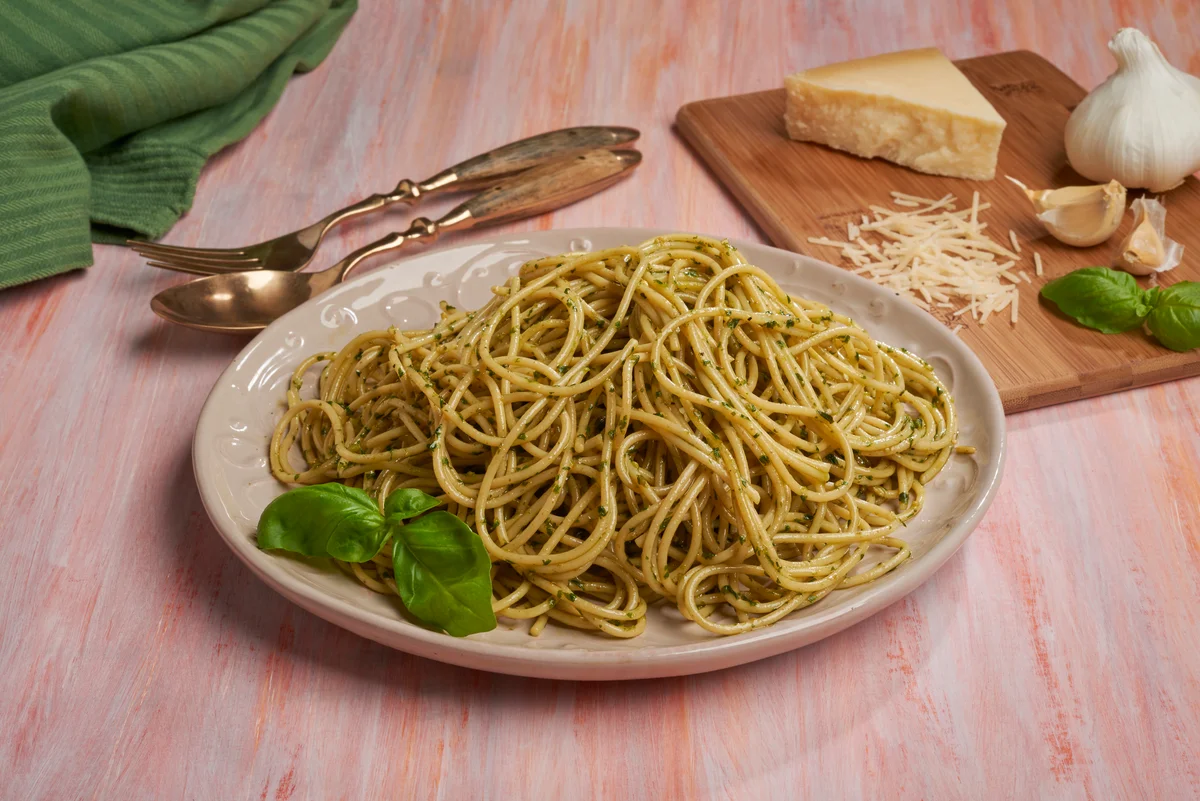
This green pesto pasta combines wholemeal spaghetti with a fresh basil, garlic and Parmesan sauce. It is a quick, straightforward dinner when you want to add plenty of herb flavour without a complicated cooking process.
Ingredients
- 170 g (6 oz)wholemeal spaghetti
- 480 ml (2 cups)fresh basil leaves
- 4 clovesgarlic
- 60 ml (¼ cup)olive oil
- 30 ml (2 tbsp)crushed Parmesan
- 1.25 ml (¼ tsp)black pepper
Instructions
- 1
Cook the pasta
Bring water to the boil and cook the pasta according to the packet instructions, without adding salt.
- 2
Drain the pasta
Drain the cooked pasta.
- 3
Prepare the pesto
Put the basil leaves, garlic and Parmesan in a food processor and pulse until chopped. Gradually pour in the olive oil, continuing to pulse.
- 4
Season the pesto
Add black pepper to taste.
- 5
Coat the pasta
Pour the basil pesto over the pasta and toss to coat before serving.
What is green pesto pasta?
Pesto is an Italian-style sauce traditionally made by crushing herbs with garlic, cheese and oil. This version uses fresh basil and a food processor for a quick sauce to toss through wholemeal spaghetti.
The basil gives it a fresh, green flavour, while Parmesan adds savouriness and olive oil brings the ingredients together.
Nutrition and macros by portion
The nutrition label shows one serving as written: 290 calories, 8g protein, 33g carbs, 16g fat.
| Portion | Adjustment | kcal | Protein | Carbs | Fat |
|---|---|---|---|---|---|
| Lighter | Use less olive oil | 203 kcal | 6g | 23g | 11g |
| This serving | As written | 290 kcal | 8g | 33g | 16g |
| Hungry | Serve a larger portion | 435 kcal | 12g | 50g | 24g |
The spaghetti supplies most of the carbohydrate, while olive oil contributes much of the fat; Parmesan adds some fat and protein, and the basil and garlic bring flavour. Pair a serving with vegetables or salad for a more balanced plate.
Why use wholemeal spaghetti?
Wholemeal spaghetti has a nuttier flavour and a firmer bite than pasta made from refined flour. Cook it according to the packet directions, since timing can vary between brands.
Getting the pesto texture right
Basil and garlic: pulse these with the Parmesan until chopped, rather than running the processor continuously.
Olive oil: pour it in gradually while pulsing so it combines with the chopped ingredients. Stop once the mixture is spreadable and cohesive.
A useful cooking order
Pasta first: start boiling the water and cook the spaghetti while preparing the pesto. The recipe gives a total time of 20 minutes, though the pasta packet's instructions determine its exact cooking time.
Pesto next: process the basil mixture while the pasta cooks, then drain the spaghetti and toss it with the sauce before serving.
Seasoning without added salt
The method specifies cooking the pasta without salt and uses black pepper to season the pesto. Parmesan contributes a savoury note, so taste the finished dish before deciding whether it needs any further seasoning.
What to serve alongside
Serve the pasta as a main or as part of a larger meal. A simple side of vegetables or salad adds colour and a fresh contrast to the rich, herby sauce.
Recipe notes & tips
- Use fresh basil leaves for the pesto's bright herbal flavour.
- Pulse the food processor in short bursts to chop the ingredients evenly.
- Add the olive oil gradually while the processor is running in pulses.
- Follow the spaghetti packet directions for its cooking time.
- Toss the pesto through the pasta just before serving so it coats the strands.
Variations
- Add vegetables: toss in cooked courgette or peas for extra colour.
- Use another pasta shape: choose a shape with ridges or curves to hold the pesto.
- Add lemon: mix in a little lemon zest for a sharper, fresher note.
- Make it cheesier: finish with a little extra Parmesan at the table.
- Add chilli: include a pinch of chilli flakes for gentle heat.
Common mistakes to avoid
- Salting the water: the method calls for unsalted pasta water, so leave the salt out.
- Over-processing the basil: pulse in short bursts to avoid turning the mixture into a very smooth paste.
- Adding all the oil at once: pour it in gradually while pulsing for a more even pesto.
- Guessing the pasta timing: use the packet instructions to avoid overcooking the spaghetti.
- Serving without tossing: mix the pesto through the pasta so the sauce is distributed.
How to store
Refrigerate leftovers in a covered container and use within 3 days. Reheat gently in a pan or microwave, stirring well; add a small splash of water if the pasta seems dry.
Frequently asked questions
Can I make the pesto without a food processor?
Yes. Finely chop the basil and garlic by hand, then stir them together with the Parmesan and olive oil.
Can I make the pesto ahead?
You can prepare it ahead and keep it covered in the fridge. Toss it with freshly cooked pasta when you are ready to serve.
How do I know when the pasta is cooked?
Follow the packet timing and taste a strand near the end. It should be tender but still have a slight firmness.
Can I use a different type of pasta?
Yes. Use another pasta shape you have on hand, adjusting the cooking time to its packet instructions.
Why is there no salt in the cooking water?
The recipe specifically instructs you to cook the pasta without salt. The Parmesan and black pepper provide seasoning in the finished dish.
Cook it from the original
This recipe comes from diabetesfoodhub.org. Their page has the author’s own photos, notes and tips — the best place to cook it from.
Open the recipe on diabetesfoodhub.org