
Soy Ginger Salmon
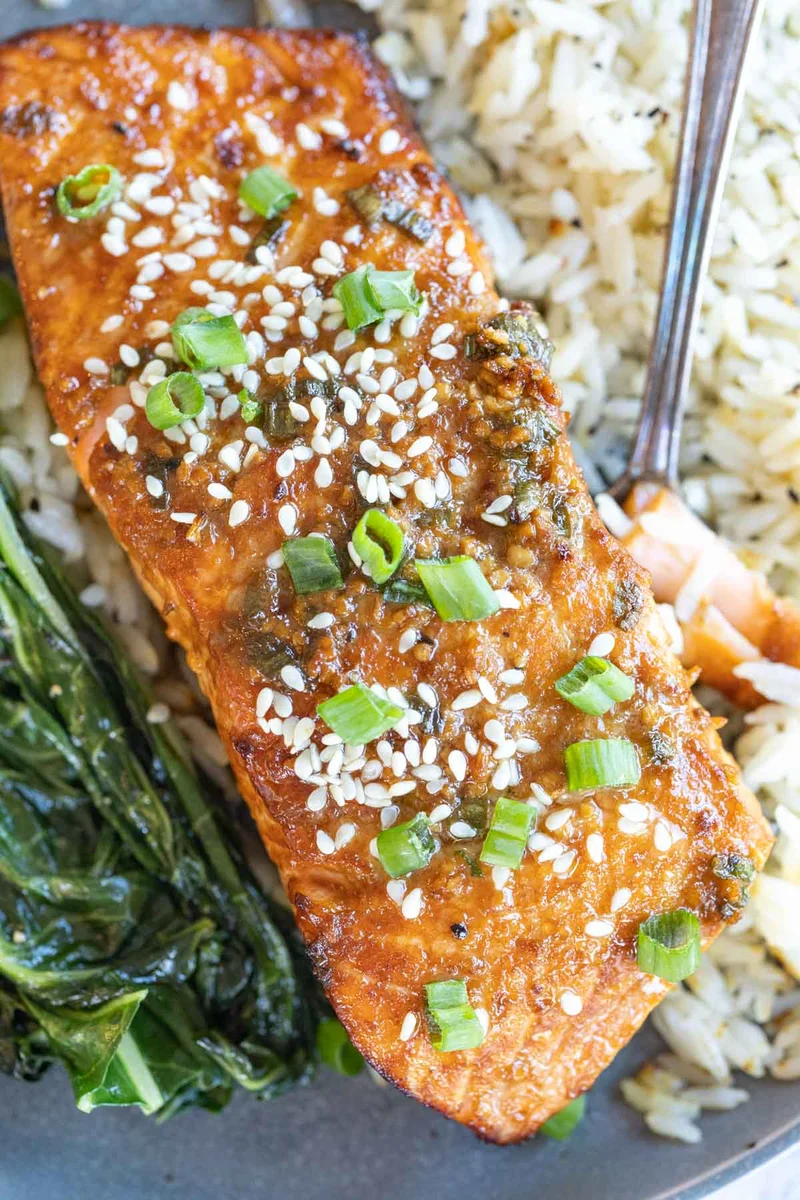
This baked salmon gets its bold, savoury flavour from a quick marinade of sesame oil, citrus, ginger and soy. It makes a straightforward dinner for two, with most of the preparation time spent letting the fish take on the flavours.
Ingredients
- 340 g (12 oz; 2 fillets, about 170 g/6 oz each)salmon fillets
- 45 ml (3 tablespoons)sesame oil
- 15 ml (1 tablespoon)lime juice
- 22.5 ml (1.5 tablespoons)orange juice
- 22.5 ml (1.5 tablespoons)minced ginger
- 15 ml (1 tablespoon)soy sauce or coconut aminos
- 1 pinch, or more or less to tastesalt and pepper
Instructions
- 1
Mix the marinade
Whisk the sesame oil, lime juice, orange juice, minced ginger, soy sauce and a pinch of salt and pepper together in a small non-reactive bowl. You can make the marinade up to a day ahead; cover it and keep it in the fridge until needed.
- 2
Dry the salmon
Pat the salmon fillets dry with paper towels, then place them in a glass baking dish or a heavy-duty zip-top storage bag.
- 3
Coat the fish
Pour the marinade over the salmon and turn the fillets so both sides are coated.
- 4
Marinate the salmon
Leave the salmon in the marinade at room temperature for 30 minutes, or cover it and refrigerate for up to an hour. Alternatively, seal the salmon with its marinade in a bag or container and freeze for 3–4 months.
- 5
Heat the oven
Preheat the oven to 204°C (400°F). Lift the fish from the marinade, shaking off any excess, and arrange it skin-side down in a foil-lined baking dish.
- 6
Add a little marinade
Spoon a little marinade over the salmon to help keep it moist as it cooks. Discard the rest; it is not safe to reuse.
- 7
Bake the salmon
Bake for 13–15 minutes, until the fish is cooked through and flakes easily when pierced with a fork.
What is soy ginger salmon?
Soy ginger salmon is a simple baked fish dish built around the savoury depth of soy and the bright, warming flavour of ginger. This version adds sesame oil and two kinds of citrus to make a quick marinade for individual fillets.
The combination suits salmon because its rich, naturally oily flesh stands up well to punchy seasoning. Baking the fish after marinating keeps the method straightforward and gives the citrus and ginger time to flavour the surface.
Nutrition and macros by portion
The nutrition label shows one serving as written: 444 calories, 35g protein, 3g carbs, 32g fat.
| Portion | Adjustment | kcal | Protein | Carbs | Fat |
|---|---|---|---|---|---|
| Lighter | More vegetables, less rice | 311 kcal | 25g | 2g | 22g |
| This serving | As written | 444 kcal | 35g | 3g | 32g |
| Hungry | Add a larger rice serving | 666 kcal | 53g | 5g | 48g |
The salmon provides most of the protein, while its natural fat and the sesame oil account for much of the fat. The small amount of juice and soy sauce contributes some carbohydrate. Pair a fillet with vegetables and a measured serving of rice or another grain to round out the meal.
The marinade ingredients
Ginger and soy: Minced ginger brings a fresh, aromatic edge, while soy sauce gives the marinade its salty savouriness. Coconut aminos can be used instead, as specified in the recipe.
Citrus and sesame: Lime and orange juices add brightness, while sesame oil rounds out the mixture with a nutty note. Whisk thoroughly so the ingredients are well combined before pouring them over the fish.
Marinating the salmon
Room temperature: The method calls for 30 minutes at room temperature, which fits the recipe's short marinating window. For a longer rest, cover the fish and put it in the fridge for up to an hour.
Even coating: Turn the fillets in the marinade so both sides are covered. A glass dish or sturdy zip-top bag helps keep the fish in contact with the mixture.
Set up for baking
Dry surface: Pat the salmon dry before it goes into the marinade; this removes excess moisture from the outside of the fillets. Place the fish skin-side down in a foil-lined baking dish before it goes into the oven.
Fresh marinade: Spoon only a little of the marinade over the fish for baking, then discard what remains. Marinade that has touched raw fish should not be reused.
Check for doneness
Timing: Bake at 204°C for 13–15 minutes, as directed. The precise time can vary with the thickness of the fillets, so use the recipe's doneness cues as well as the clock.
Texture: The salmon is ready when it is cooked through and flakes easily when pierced with a fork. Avoid leaving it in the oven longer than needed, as the flesh can become dry.
What to serve with it
A simple side: Serve the salmon with rice or another grain to complement the savoury marinade. Steamed or roasted vegetables make an easy addition and bring freshness to the plate.
For a lighter plate, pair each fillet with plenty of vegetables. If you want a more filling meal, add a larger serving of rice.
Recipe notes & tips
- Whisk the marinade until the oil and juices are well mixed before adding the salmon.
- Use a glass baking dish or a sturdy zip-top bag to hold the marinade around the fillets.
- Turn the salmon so both sides get coated before it marinates.
- Keep the skin-side down when arranging the fillets for baking.
- Discard marinade that has been in contact with the raw fish.
- Start checking the fillets at 13 minutes and use the flaking cue to judge doneness.
Variations
- Use coconut aminos: Swap them for the soy sauce as the recipe allows.
- Make it ahead: Whisk the marinade up to a day in advance and refrigerate it covered.
- Freeze for later: Seal the salmon with its marinade and freeze for 3–4 months.
- Adjust the seasoning: Use more or less salt and pepper to suit your taste.
- Serve with grains: Add rice or another grain for a more substantial meal.
Common mistakes to avoid
- Skipping the drying: Pat the fillets with paper towels before placing them in the marinade.
- Coating only one side: Turn the salmon so both sides are covered before marinating.
- Leaving it uncovered in the fridge: Cover the dish or seal the bag for the chilled marinating option.
- Reusing the marinade: Discard the remainder after it has touched raw fish.
- Overbaking the fillets: Check at 13 minutes and stop when the salmon flakes easily.
- Forgetting the skin-side-down position: Arrange the salmon skin-side down in the lined baking dish.
How to store
The recipe gives no specific storage time for cooked salmon. Refrigerate leftovers promptly in a covered container and reheat gently until hot throughout. Uncooked salmon can be frozen sealed in its marinade for 3–4 months, as directed.
Frequently asked questions
Can I prepare the marinade ahead?
Yes. Whisk it up to a day in advance, cover it and keep it in the refrigerator until you are ready to use it.
How long should I marinate the salmon?
Marinate it at room temperature for 30 minutes, or cover and refrigerate it for up to an hour.
Can I freeze the salmon in the marinade?
Yes. Seal the salmon with the marinade in a bag or container and freeze for 3–4 months.
Can I use coconut aminos instead of soy sauce?
Yes. The recipe lists coconut aminos as an alternative to soy sauce.
How do I know when the salmon is cooked?
Bake it for 13–15 minutes, then check that it is cooked through and flakes easily when pierced with a fork.
Can I use the leftover marinade as a sauce?
No. Discard any marinade that has been in contact with the raw salmon.
Cook it from the original
This recipe comes from cookathomemom.com. Their page has the author’s own photos, notes and tips — the best place to cook it from.
Open the recipe on cookathomemom.com