
Dijon Vinaigrette
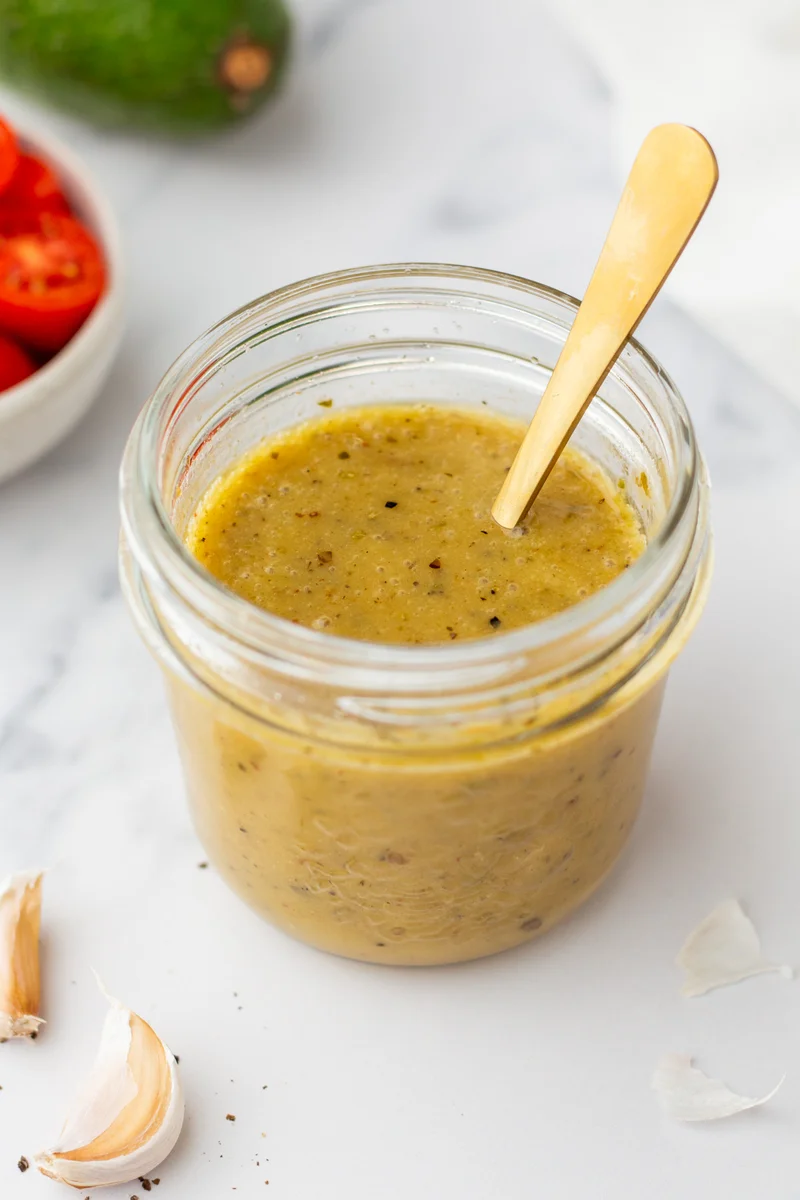
This quick Dijon vinaigrette combines olive oil, vinegar and mustard into a tangy, savoury dressing. Whisk it together for salads or keep it in the fridge to dress vegetables when needed.
Ingredients
- 80 ml (1/3 cup)olive oil
- 45 ml (3 tablespoons)red wine vinegar (or white balsamic vinegar)
- 5 ml (1 teaspoon)Dijon mustard
- 5 ml (1 teaspoon)Worcestershire sauce
- 2.5 ml (1/2 teaspoon)honey
- 1 small clove, finely mincedgarlic
- 2.5 ml (1/2 teaspoon)dried oregano
- 1.25 ml (1/4 teaspoon)salt
- 1.25 ml (1/4 teaspoon)black pepper
Instructions
- 1
Whisk the base
In a small bowl, whisk together all the ingredients except the olive oil.
- 2
Add the oil
Pour in the olive oil in a slow, steady stream while whisking continuously, helping the dressing emulsify and thicken.
- 3
Shake instead
As an alternative, put all the ingredients in a mason jar, seal it and shake well until combined.
- 4
Set aside
Set the vinaigrette aside, or keep it in a sealed container in the fridge.
What is Dijon vinaigrette?
A vinaigrette is a dressing made by combining oil with an acidic ingredient such as vinegar. This American-style version gets its savoury tang from Dijon mustard, with Worcestershire sauce, garlic and oregano adding extra flavour.
The mustard helps the oil and vinegar come together, while the brief preparation makes this a handy dressing to mix just before serving.
Nutrition and macros by portion
The nutrition label shows one serving as written: 168 calories, 0g protein, 2g carbs, 18g fat.
| Portion | Adjustment | kcal | Protein | Carbs | Fat |
|---|---|---|---|---|---|
| Lighter | Use less olive oil | 118 kcal | 0g | 1g | 13g |
| This serving | As written | 168 kcal | 0g | 2g | 18g |
| Hungry | Serve a larger salad | 252 kcal | 0g | 3g | 27g |
Most of the energy and fat in a serving come from the olive oil; the vinegar, mustard, seasonings and small amount of honey contribute flavour, with very little protein. Pair it with a salad containing beans, eggs or another protein source to make a more balanced plate.
Choosing the vinegar
Red wine vinegar: it gives the dressing a brisk, fruity acidity that works well with robust salad leaves.
White balsamic vinegar: use it as the listed alternative for a milder, slightly sweeter flavour.
Whisking for texture
Start by combining everything except the oil so the mustard, honey and seasonings are evenly dispersed. Then add the oil gradually while whisking without stopping.
A slow pour gives the mixture a better chance to emulsify and thicken. If the dressing separates later, whisk or shake it again before using.
Balancing the flavour
Dijon mustard and Worcestershire sauce make the dressing savoury, while vinegar brings acidity and honey softens the edge. Garlic and dried oregano round it out with aromatic notes.
The recipe includes salt and black pepper to season the mixture. Combine these with the other non-oil ingredients first, as directed.
Ways to mix it
Bowl and whisk: this method lets you control the slow stream of oil and watch the dressing thicken.
Mason jar: add all the ingredients, close the lid securely and shake until combined. This is also a convenient way to store the dressing.
Serving ideas
Drizzle the vinaigrette over leafy salads or use it to dress sliced tomatoes and other salad vegetables. Its tangy, savoury profile also suits simple grain or bean salads.
Add it shortly before serving so the leaves stay crisp, and toss gently to coat them evenly.
Recipe notes & tips
- Pour the olive oil in gradually for a thicker, more cohesive dressing.
- Finely mince the garlic so it distributes evenly through the vinaigrette.
- Use a small bowl to make whisking easier.
- Shake the dressing again if it separates while standing.
- Dress salad leaves just before serving to keep them crisp.
Variations
- White balsamic: use it instead of red wine vinegar for the listed alternative.
- More oregano: increase the dried oregano slightly for a more herbal flavour.
- Extra garlic: add another finely minced clove for a stronger garlic note.
- Peppery finish: add a little more black pepper to sharpen the savoury flavour.
Common mistakes to avoid
- Adding the oil too quickly: the dressing may not emulsify as well; pour it in slowly while whisking.
- Stopping the whisk: keep whisking as the oil goes in to help the mixture thicken.
- Using roughly chopped garlic: mince it finely so there are no large pieces in the dressing.
- Forgetting to reseal the jar: close the container securely before shaking or storing.
- Serving after it has separated: whisk or shake the vinaigrette again to recombine it.
How to store
Keep the dressing in a sealed container in the fridge and use it within 3–4 days. Shake or whisk it before serving, as the ingredients may separate while stored.
Frequently asked questions
Can I use white balsamic vinegar instead?
Yes. It is given as an alternative to red wine vinegar in the ingredients.
Can I make this without a whisk?
Yes. Put all the ingredients in a mason jar, seal it and shake until combined.
Why has my vinaigrette separated?
Oil and vinegar can separate as the dressing stands. Whisk or shake it again before serving.
How should I serve this dressing?
Toss it with salad leaves or drizzle it over salad vegetables just before serving.
How long does homemade Dijon vinaigrette keep?
Store it in a sealed container in the fridge and use it within 3–4 days.
Cook it from the original
This recipe comes from cookathomemom.com. Their page has the author’s own photos, notes and tips — the best place to cook it from.
Open the recipe on cookathomemom.com